
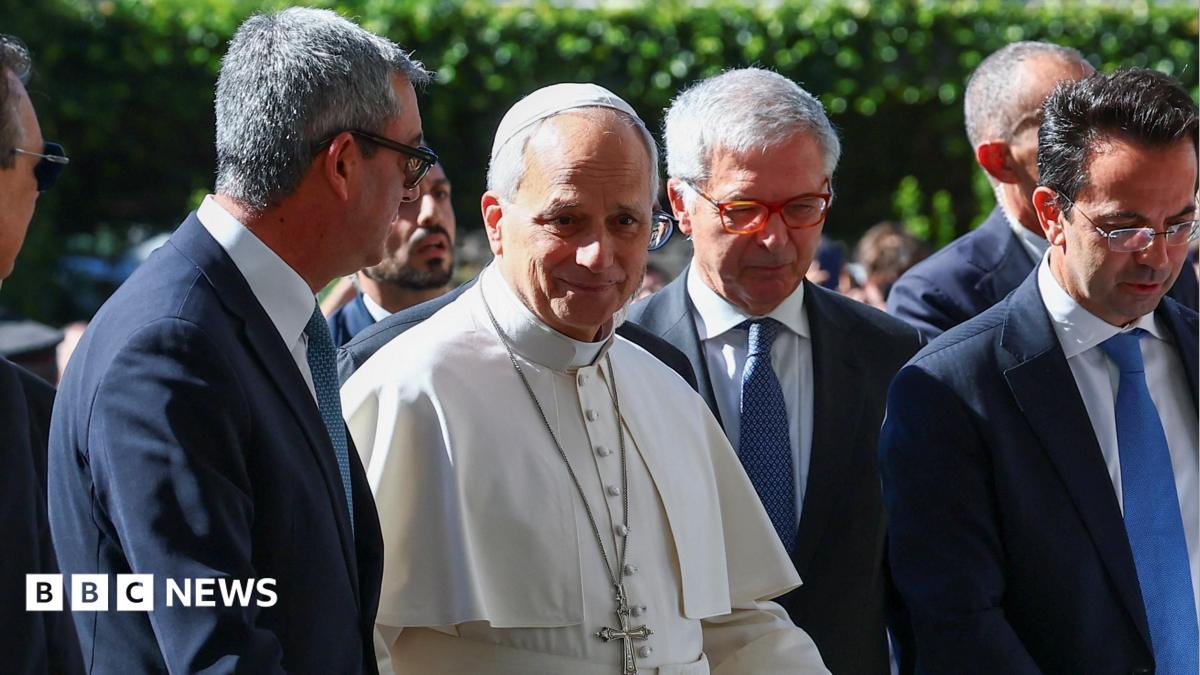
Pope Leo XIV has begun walking and has returned to a normal diet as he recuperates from surgery to remove part of his lung, according to a medical update released by the Vatican. The 71-year-old pontiff underwent an operation on Tuesday afternoon at Rome's Gemelli Hospital to take out the lower lobe of his right lung, a procedure that lasted approximately 90 minutes. In their latest statement, his doctors described his overall recovery as "progressing as expected," offering reassurance to Catholics around the world who have been anxiously awaiting news about the health of their spiritual leader.
The surgery itself was declared "successful" by the Vatican and was reported to have proceeded without complications. According to the medical team, the Pope awakened normally from the anesthesia and was moved back to his private room after a brief period of observation. He then spent what the Vatican characterized as a "peaceful night" at the hospital, a detail that appeared designed to calm concerns about his immediate post-operative condition.
On Wednesday morning, doctors carried out blood tests and an X-ray to assess how the Pope's body was responding to the operation. Both examinations indicated that his recovery was "proceeding normally," the medics said. In addition to these diagnostic checks, the pontiff has also started respiratory physiotherapy, a standard component of post-surgical care for patients who have had lung tissue removed. Such therapy is intended to help keep the remaining lung tissue clear, prevent complications such as pneumonia, and gradually restore breathing capacity.
The Vatican disclosed that the entire lower lobe of the Pope's right lung was removed in order, as it put it, to "ensure the procedure was radical." That phrasing suggests the surgical team wanted to eliminate any chance that malignant tissue could be left behind. The Pope is expected to remain at the Gemelli Hospital for approximately one week before returning to the Vatican to continue his convalescence.
The path to this surgery began on Sunday, when the Pope publicly announced during his weekly prayers that he would be admitted to the hospital for an operation. Addressing the crowd gathered in St Peter's Square, he explained that doctors had discovered a "well-contained" nodule on his lung "at an early stage" and had advised him to have it removed. His decision to share the news openly with the faithful was notable for its transparency, and it immediately prompted an outpouring of prayers and messages of support from Catholic communities worldwide.
Nodules in the lung are relatively common findings and are not necessarily malignant. However, once the tissue was examined after removal, the medical team confirmed that the growth was indeed cancerous, "as suspected by pre-operative tests," according to the Vatican. The Pope's diagnosis was specifically identified as lung adenocarcinoma, a type of cancer that begins in the cells responsible for producing mucus in the lungs.
A Vatican source told the news agency AFP that additional tests were being conducted to determine whether the cancer had spread beyond the lung. The results of those investigations are likely to shape the Pope's longer-term treatment plan and prognosis. The Vatican has nevertheless stressed that the pontiff, who is generally considered to be in good physical condition, displayed no symptoms of infection or illness prior to the discovery of the nodule.
Lung adenocarcinoma is among the most frequently diagnosed forms of lung cancer. Its long-term outlook varies considerably depending on factors such as the stage at which the disease is identified, the patient's underlying health, and how aggressively the tumor behaves. When adenocarcinoma is caught early—sometimes incidentally, through routine scans performed before any symptoms appear—the chances of successful treatment are significantly better. Medical advances over recent decades have also improved survival rates and quality of life for many patients. In its later stages, however, lung cancer can produce persistent coughing, shortness of breath, fatigue, and unexplained weight loss, making early detection especially valuable.
The news of the Pope's diagnosis has reverberated across the global Catholic Church, shaking believers who retain vivid memories of the hospitalizations of his predecessor, Pope Francis. Francis, who died last year, had part of one lung removed during his youth and later endured a series of respiratory infections in his old age. That history has given many Catholics a heightened sensitivity to papal health issues, and it has made the current pontiff's condition a subject of intense prayer and speculation.
Pope Leo's hospitalization has also raised inevitable questions among the faithful about what the future may hold for the leadership of the Church. While the Vatican has emphasized that his recovery is on track, any diagnosis of cancer in a sitting pope inevitably prompts reflection on succession, governance, and the continuity of the Church's mission. Commentators have noted that the Pope's willingness to speak candidly about his diagnosis reflects a broader openness about papal health that has characterized recent years.
For now, the focus remains on the Pope's immediate recuperation. Doctors have indicated that his progress is steady, that he has resumed eating normally, and that he has begun to move about on his feet—all encouraging signs after major thoracic surgery. Respiratory physiotherapy will continue as part of his rehabilitation, and further medical updates are expected in the coming days. The Vatican has not announced any changes to the Pope's schedule, though his public engagements will almost certainly be scaled back during the week-long hospital stay and the period of recovery that follows.







Comments (0)