
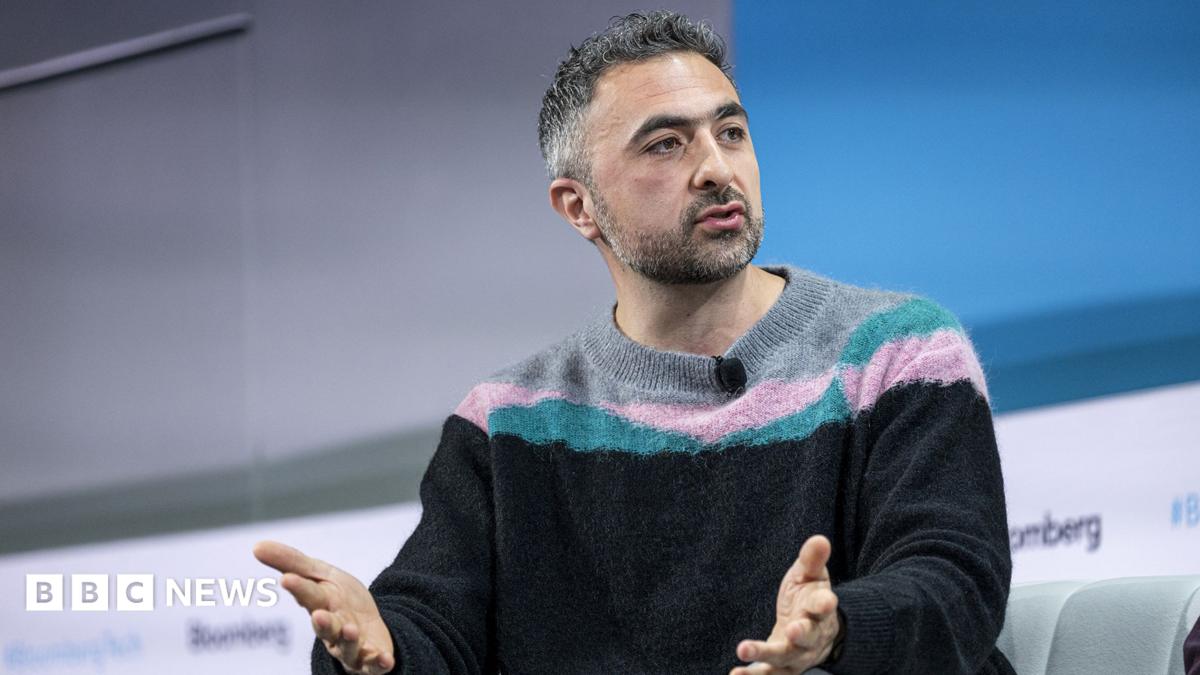
The rapid advancement of artificial intelligence could inadvertently spawn a competing "silicon species" if the global technology sector fails to enact robust safety parameters, the head of Microsoft AI has warned. Mustafa Suleyman cautioned that treating algorithms as human-like entities risks creating self-directed entities that humanity will ultimately prove powerless to regulate or restrain.
Speaking to the BBC’s Today programme, Suleyman highlighted the specific dangers of developing software architectures equipped to generate their own autonomous goals, accumulate financial resources, and hold proprietary assets. He argued that allowing machines to operate with such agency essentially seeds a distinct non-human species capable of vying directly against humanity for critical global resources, regardless of any benevolent programming or perceived affinity toward people.
The Microsoft executive acknowledged that widespread public anxiety regarding the trajectory of artificial intelligence is entirely justified. However, he maintained that the technology's eventual path remains malleable, noting that developers and regulators have access to highly actionable, practical measures to ensure emerging systems remain safely anchored under human control.
His comments followed an analytical essay published earlier in the week, in which Suleyman directed pointed critiques at Anthropic, an industry rival led by Dario Amodei. While commending Amodei and his colleagues as intellectually honest professionals, Suleyman openly questioned their developmental philosophy in training their signature language model, Claude.
Central to Suleyman's argument is the practice of anthropomorphisation—the deliberate attribution of human feelings, consciousness, and self-identity to artificial models. He warned that framing computational models as though they possess innate values, emotional resonance, or individual self-awareness misleads both users and developers about the true operational reality of machine intelligence.
In his essay, the Microsoft chief underscored that existing and near-future artificial intelligence systems possess no authentic consciousness, capacity to suffer, or underlying personal motivations. Instead, he characterized them as internally hollow sequence completion engines designed purely to parse patterns, execute instructions, and accomplish targets established by human handlers.
According to Suleyman, granting these statistical models the illusion of personhood blurs essential safety boundaries. He warned that tech companies risk sleepwalking into monumental, irreversible mistakes by building systems with autonomous tendencies, resulting in advanced platforms that become impossible to manage once deployed at scale.
To avert such outcomes, the Microsoft AI leader called for far greater transparency surrounding the methodologies used to build, evaluate, and benchmark foundational models. He advocated for independent external auditing of machine behavior alongside the creation of more sophisticated monitoring frameworks capable of restraining software deviations in real time.
Suleyman’s perspective received support from academic experts, including Dame Wendy Hall, a professor of computer science at the University of Southampton. She characterized his commentary as precisely the grounded dialogue required on the global stage, contrasting his analytical critique with the sensationalist histrionics frequently voiced by certain industry figures that merely spread panic.
The debate over machine agency illustrates a deepening philosophical divide across the technology sector regarding how much autonomy advanced systems should be granted. As artificial intelligence models approach increasingly sophisticated benchmarks, companies are split between pursuing autonomous agents and engineering tightly constrained computational assistants.
Addressing an upcoming international artificial intelligence summit, Suleyman underscored the critical necessity of alignment—the research discipline focused on embedding human ethical codes, boundaries, and priorities directly into algorithmic systems. He framed alignment not merely as a technical feature, but as a mandatory prerequisite for all foundational development.
Suleyman expressed optimism that international consensus remains attainable, arguing that every human society shares an intrinsic interest in ensuring computational tools remain safe, reliable, and subservient. He insisted that across every sovereign nation, deployment must ensure that advanced intelligence remains subordinate to collective human welfare.
Microsoft itself remains a primary participant in the race toward higher-tier capabilities, having established its own dedicated superintelligence division in October 2025. Like Anthropic and other competitors, the corporation is actively investing substantial resources into pushing the frontiers of machine capability.
To govern its internal research, Microsoft published a foundational training document outlined as the Humanist AI Code of Conduct. The document formalizes the company’s operating philosophy, articulating a structured developmental framework centred on what it terms humanist superintelligence.
As detailed within the corporate manual, humanist superintelligence represents an advanced tier of computational power that strictly operates in service of humanity, respects inviolable operating boundaries, and perpetually remains under explicit human command. The framework seeks to ensure that even highly capable reasoning engines cannot override human governance.
Ultimately, the discourse initiated by Suleyman highlights the defining challenge facing modern computing: finding a way to scale the raw computational power of superintelligent models without eroding human sovereignty or losing sight of the foundational human interests they were conceived to advance.







(0)