
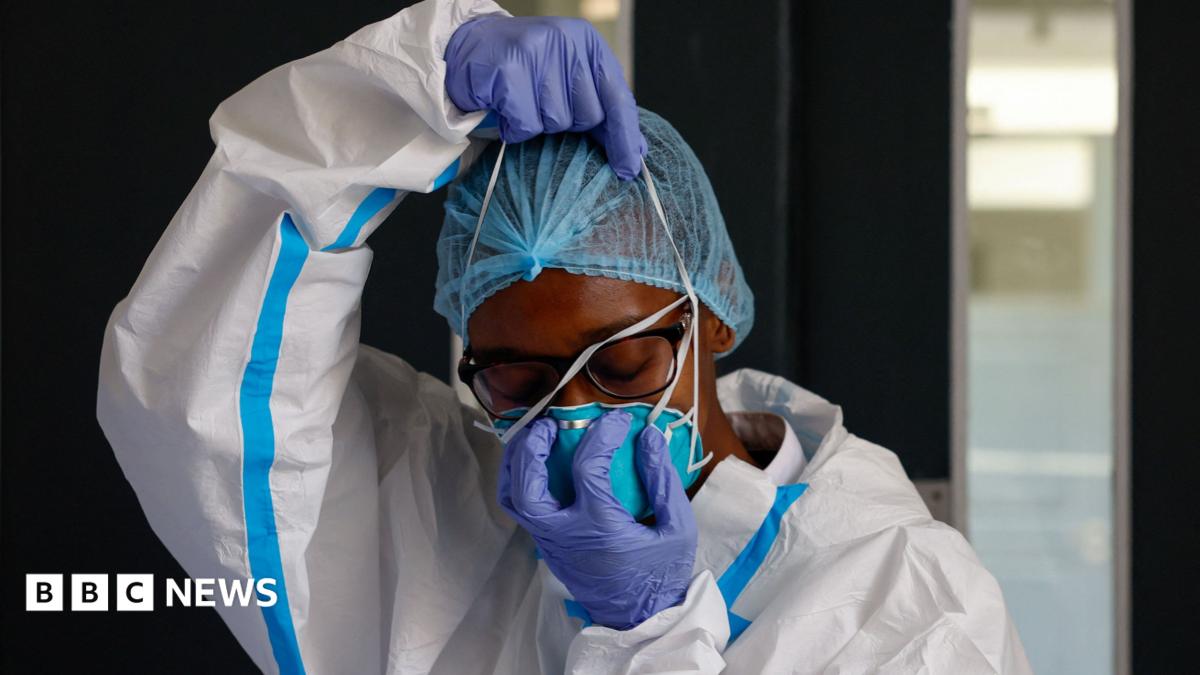
Kenyan health authorities have placed ten people into quarantine after they came into close contact with a man who died of Ebola in Nairobi this week, marking the country's first confirmed case of the disease. Officials are now racing to trace a further 57 people who may have crossed paths with the patient before his death on Monday, as scrutiny intensifies over how an obviously unwell traveller managed to slip through multiple screening points across three countries.
The patient's journey began in Buta, a city in northern Democratic Republic of Congo, where the current outbreak has been raging since May. According to Dr Jean Kaseya, director-general of the Africa Centres for Disease Control and Prevention, the man drove from Buta to Kisangani before boarding a flight to Beni. From there, he travelled overland into Uganda, and then flew from Uganda to Nairobi, where he was eventually taken to hospital by a relative and died.
Kaseya told the BBC's Focus on Africa programme that the case had exposed troubling gaps in the region's ability to detect infected travellers. "What are symptoms he was presenting? Why was he not detected?" he asked, noting that the patient had been unwell for roughly a month before his death. The Africa CDC is investigating the case alongside Congolese authorities, and a team from the organisation was expected to meet Kenyan health officials to establish exactly how the man moved so freely while symptomatic.
The Ebola virus spreads through direct contact with the bodily fluids of an infected person, including blood, vomit and sweat, which makes early detection at borders a critical line of defence. The outbreak currently affecting DR Congo is caused by the Bundibugyo species of the virus, a relatively rare strain for which there is no approved vaccine or treatment, although clinical trials are under way. More than 4,000 people have died in DR Congo this year in what has become the second deadliest Ebola outbreak on record.
Kenyan health ministry official Patrick Amoth suggested the patient may have been able to pass screening because he had taken medication that masked his symptoms. After landing at Nairobi's main airport, he was transferred by a relative to a city hospital, where he later died. He was buried on Tuesday in accordance with health safety guidelines designed to prevent post-mortem transmission.
The death has prompted deep unease among Kenya's frontline medical staff. Dr Dennis Miskellah, a representative of the country's main doctors' union, said the case came as no surprise to him or to many of his colleagues, describing repeated "lapses" at border points, including those shared with Uganda and Tanzania as well as at Kenya's principal international airport. "How could you have been sick for almost a month plus in DR Congo, come all the way to the country through not just any small border point, but the main entry point, the main gateway into the country and pass unnoticed?" he told the BBC's Newsday programme. "That's the question that most Kenyans are asking."
Authorities have sought to calm public anxiety. President William Ruto said surveillance and rapid response teams were deployed on the ground, building on systems the country strengthened after DR Congo declared its outbreak in May. His spokesman added that Kenya has the capacity to detect, isolate and manage suspected cases, and that more than 650,000 travellers have so far been screened and 267 samples tested.
Four major hospitals have been designated to manage Ebola patients, among them the Nairobi Hospital where the first victim died. Those placed in the isolation facility are being kept under constant observation, and the health ministry has promised heightened surveillance at airports and land crossings while urging citizens not to panic.
The response extends beyond national borders. Uganda's health ministry stressed on Tuesday that the country remains free of Ebola and is maintaining strong surveillance measures, noting that the Kenyan patient had transited through Uganda in under 24 hours and had recorded a normal temperature at the time of departure. The World Health Organization had declared Uganda free of the disease in August, after two people died there following the initial spread from DR Congo.
Kaseya warned that Kenya's relative preparedness is not mirrored everywhere in the region, and that a coordinated approach is now essential. "It means the regional approach is more important today to stop this outbreak," he said, adding that there is no rapid testing available at border posts. That limitation, combined with the movement of people across porous frontiers, leaves countries relying heavily on temperature checks that can easily miss infected individuals.
The case has also revived debate in Kenya about a controversial US plan, announced in June, to build an Ebola treatment facility at a military base in the central town of Nanyuki. The proposal triggered public anger over the prospect of importing infection risks, and the courts halted the project. On Wednesday, Health Minister Aden Duale told the local television station NTV that, depending on the outcome of the court case, the government was considering converting the facility into the region's first dedicated infectious disease hospital capable of responding to outbreaks such as Ebola.
For now, Kenyan officials face the difficult task of monitoring dozens of contacts while reassuring a nervous public. The ten quarantined individuals represent only the first ring of potential exposure, and the 57 others still being sought could widen the containment effort considerably. With no approved treatment for the Bundibugyo strain and no quick diagnostic tests at the region's borders, the coming weeks will test whether Kenya's surveillance systems can prevent a single imported case from becoming a wider outbreak.





(0)