
Eva Marie Saint, the Academy Award-winning actress whose poised, intelligent screen presence graced some of the most celebrated films of the 1950s, has died at the age of 102. Her family representative, Jeff Sanderson, confirmed that she passed away on Tuesday of natural causes at her home in Los Angeles, surrounded by family and loved ones.
Saint's death closes a remarkable chapter in Hollywood history. Until her passing, she was the oldest surviving Oscar winner and one of the last remaining links to the golden age of American cinema, a period when studio power, method acting, and larger-than-life directors reshaped the art form.
Her breakthrough could hardly have been more auspicious. In 1954, Saint made her feature film debut in Elia Kazan's crime drama "On the Waterfront," playing Edie Doyle, the tender-hearted love interest of Marlon Brando's tormented boxer-turned-docker, Terry Malloy. The performance earned her the Academy Award for best supporting actress, an extraordinary achievement for a first-time film actress.
Saint's path to that role began far from the soundstages of Hollywood. Born in Newark, New Jersey, in 1924, she initially planned to become a teacher and only later discovered a passion for the theatre. She trained in New York at the Herbert Berghof Studio and later at the Actors Studio, the legendary home of method acting co-founded by Kazan himself.
Working alongside Brando proved both exhilarating and unnerving for the young actress. She described her co-star as "adorable" but also "a little frightening," admitting that she felt he could see right through her. That intensity, however, was part of the creative electricity that made "On the Waterfront" an enduring classic and helped launch her career.
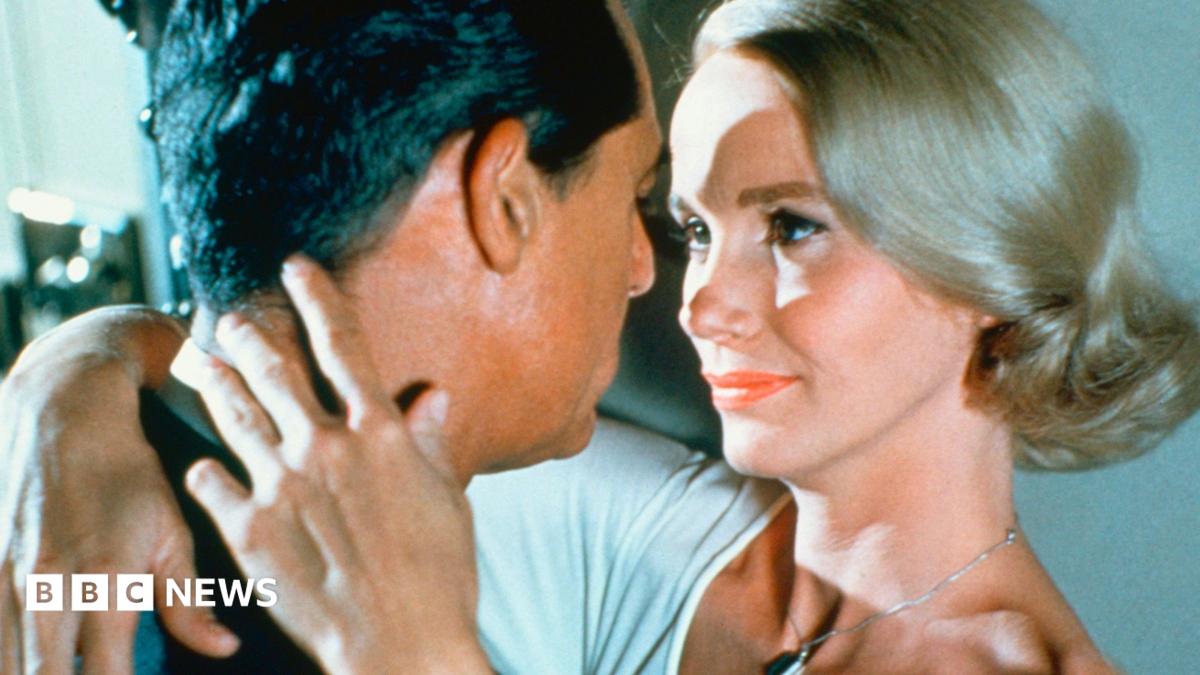
Five years later, Saint took on a very different challenge, starring as femme fatale Eve Kendall in Alfred Hitchcock's spy thriller "North by Northwest." Cast opposite Cary Grant, she played a mysterious woman who dangerously seduces his entangled advertising executive against the backdrop of a cross-country chase.
Her selection to join the ranks of what were then known as "Hitchcock's blondes" was considered something of a surprise. Yet she more than held her own opposite Grant, who was renowned for being exceptionally demanding of his leading ladies. Saint recalled that he meticulously shaped her exterior — her hair, makeup, shoes, jewellery, purse, and gloves — and that this careful construction gave her the sense of being a spy lady from the outside in.
Beyond those two signature roles, Saint built a body of work that demonstrated her range. She starred opposite Paul Newman in Otto Preminger's 1960 epic "Exodus," and she played Warren Beatty's love interest in John Frankenheimer's "All Fall Down." Her career, however, was not defined solely by her early triumphs.
In the years that followed, Saint deliberately scaled back her acting work to focus on raising a family with her husband, director Jeffrey Hayden. Their marriage endured for 65 years, until his death in 2016. She is survived by their two children. The decision to prioritise family over an unrelenting career reflected a pragmatism that those who knew her often noted.
Her career began in the late 1940s in live television, a demanding medium that required precision and nerve. She never entirely left the small screen, and in 1990 she won an Emmy Award for her career-capping role as the wealthy widow Lil Van Degan Altemus in the acclaimed miniseries "People Like Us," a portrait of New York high society.
Remarkably, Saint enjoyed a major big-screen comeback in her 80s, playing Superman's adoptive mother in the 2006 blockbuster "Superman Returns." The role introduced her to a new generation of filmgoers and demonstrated that her appeal was not confined to a bygone era. She later appeared in the supernatural fantasy "Winter's Tale" alongside Colin Farrell and Russell Crowe, and in the 2019 nun drama "Mariette in Ecstasy."
Saint's contributions to film and television were recognised with two stars on the Hollywood Walk of Fame, one for her movie work and another for her television performances. The honour underscored a career that moved fluidly between mediums and eras, from live television's earliest days to the modern blockbuster.
She often reflected on how longevity had enriched her craft. In a 2013 interview with Turner Classic Movies, she observed that the longer you live, the smarter you get, because you have been around and seen things. She spoke of going through different emotional experiences in life and, hopefully, understanding things better — qualities, she believed, that made her a better actress.
That perspective helps explain the depth she brought to her roles. Saint was never merely a decorative presence; her performances carried a quiet intelligence and emotional precision that set her apart from many of her contemporaries. Critics and film historians have long regarded her work in "On the Waterfront" and "North by Northwest" as essential viewing.
Her death prompted an outpouring of appreciation for a career that spanned more than seven decades. She remained, in the words of many tributes, one of the last true stars of Hollywood's golden age. With her passing, an era recedes further into history.
Saint's legacy rests not only on two iconic films but on a life lived with purpose and balance. She proved that an actress could achieve the industry's highest honour on her first try, step away to raise a family, and then return to the screen decades later on her own terms. That, perhaps, is the most enduring lesson of her remarkable life.








(0)