
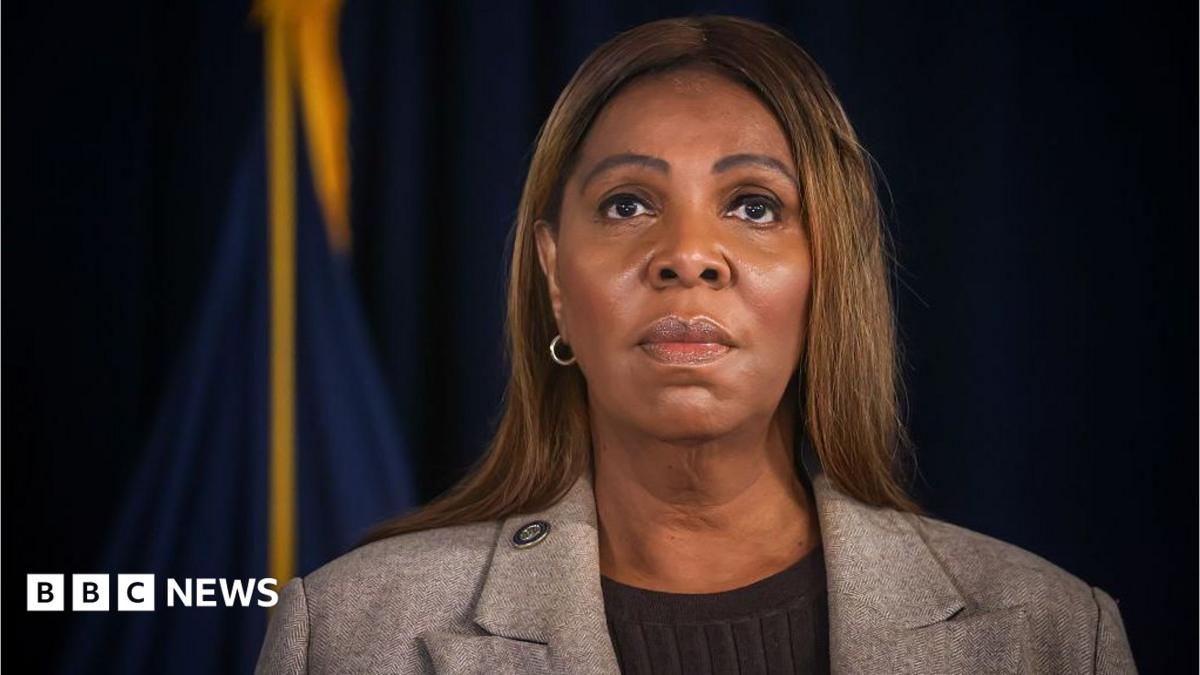
A defence attorney representing one of the seven men accused in a high-profile Cornell University gang rape case has formally requested that New York Attorney General Letitia James step aside from her role as special prosecutor, citing public statements she made before her appointment.
The lawyer argued that a social media post published by James on 28 September undermines the perceived neutrality of her investigation. In that post, James described what the complainant had allegedly endured as "horrific and unacceptable" and offered her support to survivors of sexual violence. The defence contends that such remarks create an avoidable question over the inquiry's "integrity and independence."
The statement was provided to CBS News, the BBC's US media partner. In it, the lawyer stressed that the request was not an allegation of corruption or bad faith on the part of the attorney general. "This is not an accusation that Attorney General James is corrupt, acting in bad faith or incapable of performing her duties professionally," the statement read. "Nor am I suggesting that a court has determined that she is legally disqualified. The point is much narrower: an avoidable question now hangs over this investigation, and voluntary recusal would remove it."
The case stems from an incident in October 2024 at a fraternity party, during which a woman identified in court filings as Jane Doe alleges she was drugged and raped by multiple men over a period of several hours. She has accused Cornell University of failing to protect her, and a lawsuit naming the seven men and the Ivy League institution has since ignited widespread outrage.
The allegations have convulsed the campus in upstate New York, prompting hundreds of students and faculty members to gather on Monday in a demonstration that underscored the depth of feeling surrounding the case. Protesters carried signs denouncing the university's handling of the matter, with messages including "CU, it's S.A. not essay. Stop protecting rapists" and "This is feminine rage. Do you hear us yet?" The unrest has also drawn national attention, amplifying scrutiny of how universities respond to reports of sexual violence.
In response to the mounting pressure, New York Governor Kathy Hochul appointed James as special prosecutor last week. Her mandate covers not only the underlying allegations but also the initial responses of law enforcement and university officials to the complaint. The appointment was intended to bring independent oversight to a case that has raised serious questions about institutional accountability.
The timing of the appointment has, however, become a point of contention. Days before she was named special prosecutor, James posted on X: "What this young woman has been forced to endure is horrific and unacceptable." She added: "I'm holding her in my heart and in my prayers. To her, and to all survivors: you're not alone. We stand with you." The defence argues that these expressions of sympathy, however well-intentioned, are incompatible with the dispassionate evaluation of evidence expected of a prosecutor.
When asked about impartiality concerns during a news conference, Governor Hochul defended the attorney general's capacity to conduct a fair investigation. She said James would "follow the facts" and "examine the evidence and go wherever it leads." Hochul further stated that if the evidence supports charges, James "will pursue them."
The controversy over James's remarks is not the only challenge facing Cornell. According to US media reports, the university's Faculty Senate — a governing body composed of professors and other academic staff — is preparing to vote next week on a resolution of no confidence in the university's leadership. A majority vote would be largely symbolic, but it would signal broad discontent among faculty and increase pressure on administrators to take decisive action. The BBC has contacted Cornell University for comment.
The university's administration has already come under fire for its alleged mishandling of the October 2024 incident. Cornell's president recently acknowledged that the university "must do better" in the wake of the rape allegations, a concession that followed days of student protests and growing demands for transparency. The proposed no-confidence vote represents the latest escalation in a crisis that shows no sign of abating.
Legal observers note that recusal requests of this nature are relatively rare, particularly when directed at a sitting attorney general. The defence's argument rests on the principle that even the appearance of bias can compromise public confidence in the outcome of a criminal investigation. Prosecutors are generally expected to avoid public comments that could be construed as prejudging the facts, especially in cases that have attracted intense media coverage.
At the same time, supporters of James point out that expressing empathy for an alleged victim does not equate to a prejudgment of guilt. Victim advocacy groups have long encouraged officials to speak out against sexual violence and to assure survivors that they will be taken seriously. The attorney general's remarks, they argue, were consistent with that duty and do not preclude an objective assessment of the evidence.
The case has also reignited broader debates about the prevalence of sexual assault on college campuses and the adequacy of institutional responses. Fraternities, in particular, have faced renewed criticism over the culture they are said to foster. Cornell, like many universities, has policies in place to address sexual misconduct, but critics contend that enforcement is inconsistent and that survivors are often left to navigate a labyrinthine reporting process.
For the seven accused men, the stakes are considerable. A criminal prosecution could result in severe penalties, while the civil lawsuit seeks accountability from both the individuals and the university. Their defence teams are likely to scrutinise every aspect of the investigation for potential procedural irregularities, and the recusal request may be an early indication that they intend to challenge the prosecution's conduct at every turn.
The next few weeks will be pivotal. The Faculty Senate vote will test the confidence that Cornell's academic community has in its leadership. Meanwhile, the question of whether James remains at the helm of the investigation could shape the legal trajectory of a case that has already become a flashpoint in the national conversation about sexual violence and institutional responsibility. Whether or not the attorney general steps aside, the demand for answers — from the campus, the public, and the courts — is unlikely to fade.




(0)