
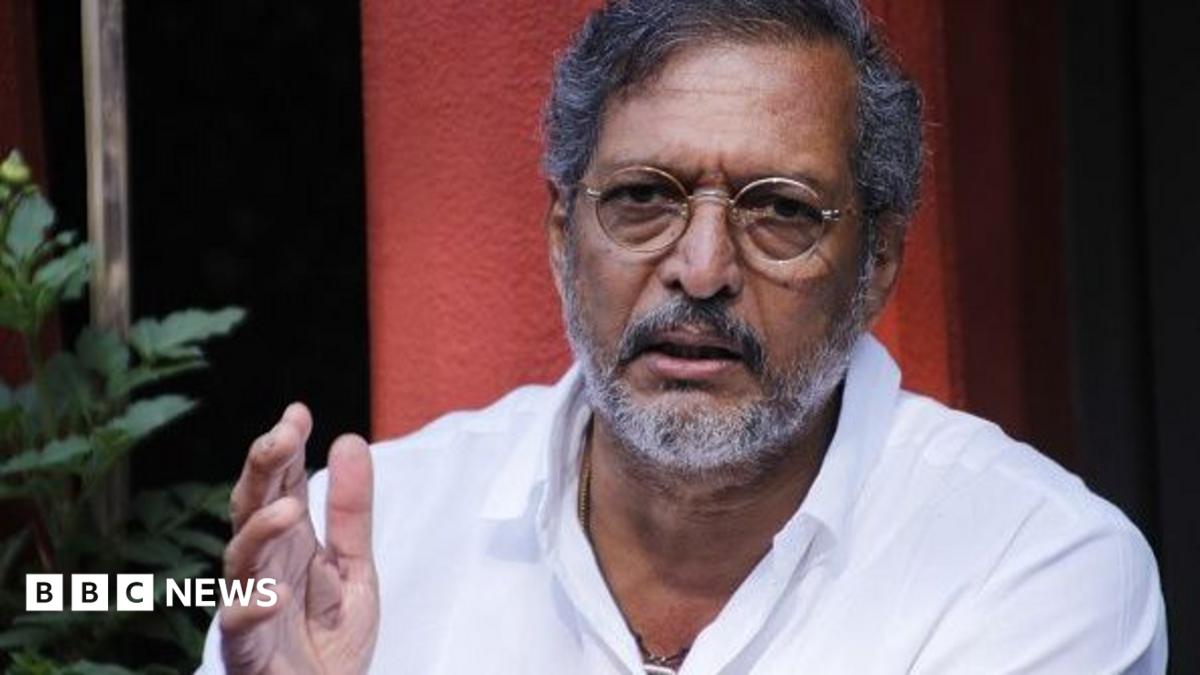
Nana Patekar, the celebrated Indian actor whose fierce screen presence and unmistakable baritone made him one of the most compelling figures in Hindi and Marathi cinema, has died at the age of 75. His son, Malhar, confirmed the news to BBC Marathi, ending a career that spanned more than four decades and earned him three National Film Awards.
According to medical officials in Goa, Patekar was discovered unconscious at his home in the coastal state during the early hours of Thursday. He was immediately taken to Manipal Hospital, where doctors attempted to revive him. Dr Shekhar Salkar told the ANI news agency that despite 45 minutes of continuous cardiopulmonary resuscitation, the actor could not be saved. The cause of death was reported as a cardiac arrest.
Tributes poured in swiftly from across India's political and entertainment establishment. Prime Minister Narendra Modi led the condolences, describing Patekar as a versatile and outspoken artist whose portrayals would "remain etched in the memory of generations." In a post on X, Modi said the actor's passing had created "a vast void in the artistic world," acknowledging both his professional achievements and his willingness to speak his mind on public issues.
Among those from the film industry who honoured his memory was Bollywood star Akshay Kumar, who shared the screen with Patekar in the 2007 comedy "Welcome." Kumar recalled him as a rare performer whose voice, intensity and honesty could hold an audience captive, a sentiment echoed by colleagues who worked with him across nearly 50 films.
Born in Maharashtra in 1951, Patekar began his performing life in theatre rather than cinema, a foundation that shaped the raw, grounded quality he later brought to the screen. He made his film debut in 1978 with "Gaman," but spent years in smaller roles before the breakthrough that would define his career. That moment arrived in 1989 with "Parinda," in which he played Anna, a volatile and gritty gangster. The performance won him both his first National Film Award and a Filmfare Award, transforming him into a household name across the country.
What followed was a remarkable run through the 1990s in which he demonstrated an unusual range. He portrayed Major Chauhan in "Prahaar," a film he also directed; the villainous Majid Khan in "Angaar"; the patriotic firebrand of "Tirangaa"; and, most memorably, Pratap Narayan Tilak in "Krantiveer," for which he claimed the National Film Award for best actor. The variety of these roles showcased both the depth of his talent and his command of his craft.
Critics who assumed that loud, commanding characters were his only register were proven wrong by his performance in "Khamoshi," where he played a man unable to hear or speak. The portrayal was widely praised as a demonstration of restraint and emotional precision, and it remains a reference point for those arguing that his talent extended well beyond the aggressive roles with which he is most associated.
His later career continued to add new dimensions. In director Prakash Jha's 2010 political drama "Rajneeti," Patekar's depiction of a shrewd and calculating politician was delivered with a precision that critics said elevated the entire film. His three National Awards, for "Parinda," "Krantiveer" and "Agni Sakshi," stand as formal recognition of a career that moved fluidly between Hindi and Marathi cinema, and occasionally behind the camera as a director and writer.
Theatre remained central to his identity throughout his life. Before cinema made him a familiar face, he spent years on stage, developing the gritty dialogue delivery and coiled intensity that became his trademarks. Among his best-known plays were "Purush" and "Hamidabai Chi Kothi." Even after achieving film stardom, he continued to return to the stage, treating theatre not as a stepping stone but as a lifelong discipline that kept his craft sharp.
Beyond acting, Patekar was known for his willingness to confront power. He criticised successive governments and individual ministers publicly, often with a directness that bordered on the brazen. Agricultural issues were particularly close to his heart, reflecting his roots in Maharashtra. In 2015, he and fellow actor Makarand Anaspure founded the Naam Foundation, an organisation that has worked on farmer welfare and water conservation in the state, translating his advocacy into concrete programmes.
His public life, however, was not free of controversy. In 2018, actor Tanushree Dutta accused Patekar of sexual harassment over an alleged incident on a film set roughly a decade earlier. The allegation became a catalyst for India's #MeToo movement, prompting a national reckoning over harassment in the entertainment industry. Patekar denied the allegations. In 2019, police said they had not found sufficient evidence against him and he was cleared of the charges.
News of his death prompted an outpouring of grief from fans and peers who recalled not only specific performances but the sheer physicality and conviction he brought to every role. Analysts of Indian cinema frequently point to Patekar as a bridge between the theatrical traditions of Marathi stage acting and the naturalism that increasingly came to define Hindi film performance from the 1980s onward. His characters were often difficult, sometimes unlikeable, but almost always recognisable as fully formed human beings.
Patekar is survived by his son, Malhar. Details of funeral arrangements were not immediately released. For an industry that has lost several of its foundational figures in recent years, his death removes one of the last great practitioners of a style of performance built on presence, voice and uncompromising commitment, a legacy that will continue to be studied by actors and admired by audiences for years to come.






(0)