
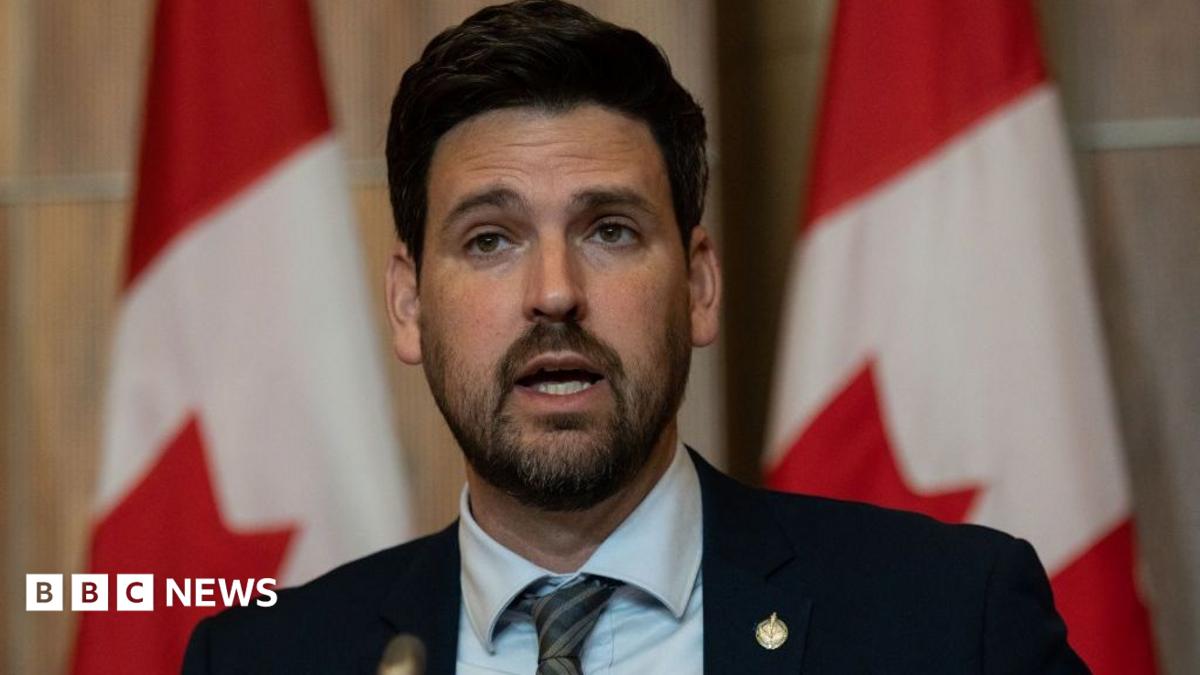
Canada has decided to indefinitely shelve its plan to broaden its medically assisted dying legislation to cover individuals whose only underlying condition is a mental illness, according to an announcement made Wednesday by Justice Minister Sean Fraser. The government cited an absence of agreement within the medical and legal communities over which patients would qualify under such an expansion.
The move reverses a long-anticipated change that would have allowed people suffering solely from psychiatric conditions to seek what is known in Canada as Maid — Medical Assistance in Dying. The expansion had been scheduled to take effect by March 2027, but Fraser confirmed that Canadians with mental illness as their sole condition will no longer be able to access the programme by that date.
Instead, the federal government intends to bring forward new legislation in the coming weeks that would suspend the expansion on an indefinite basis. Fraser described the decision as a difficult but necessary one, saying that while a perfect consensus does not exist on the matter, the government believes it has settled on the correct approach.
The announcement follows a recommendation earlier this year from a parliamentary panel, which concluded that assisted dying should not be extended to people whose only medical condition is a mental illness. That report, published in June, urged Canada to "indefinitely exclude" this group from eligibility.
Supporters of broadening the law have argued that excluding people with mental illness alone amounts to a violation of their constitutional rights and denies them equal access to healthcare. They contend that patients with psychiatric conditions should be afforded the same options as those with physical illnesses, including the right to choose a dignified death.
A federal court case is still pending, challenging an earlier government decision to delay access to Maid for people with mental illness. Fraser acknowledged that the Supreme Court could ultimately weigh in on the question, signalling that the legal battle over the issue is far from resolved.
The proposed legislation will also introduce a separate change: it would permit patients with a progressing incurable illness to give advance consent to assisted dying before their health declines to the point where they can no longer make such a decision themselves. Currently, such advanced requests are not legal in Canada.
Medically assisted dying was first legalised in Canada in 2016, initially limited to people with terminal illnesses. That group still represents the overwhelming majority of cases. In 2021, following a court ruling in Quebec, the programme was widened to include individuals with incurable conditions whose deaths were not imminent — a mechanism known in Canada as "track two" Maid.
That expansion has proven controversial. Disability advocacy organisations have reported instances in which assisted dying was offered to people with disabilities without the patient having requested it, raising concerns about coercion and the adequacy of safeguards.
Canada had originally planned to extend eligibility to people whose sole condition is mental illness in 2023, but the government delayed the change twice to allow more time to study how it might be implemented. The repeated postponements reflect deep unease about how to assess irremediable suffering in psychiatric cases.
Advocates for expansion point to patients like Claire Brosseau, a woman with treatment-resistant bipolar 1 disorder who is part of the federal case challenging Canada's current laws. She told the BBC earlier this year that euthanasia would offer her what she described as "a safe death."
Fraser said he was particularly troubled by the lack of medical agreement on whether certain mental illnesses can be considered irremediable — a key legal threshold for eligibility. He noted that this absence of consensus gives him real cause for concern, suggesting that the government is not confident the system can fairly determine who should qualify.
Beyond the question of eligibility, some experts have voiced broader worries that Canada's assisted dying programme has drifted from its original purpose. They argue it has become a means of easing the suffering of people who would be better served by improved access to affordable housing and healthcare, rather than functioning strictly as an option of last resort.
The decision to pause the expansion indefinitely marks a significant moment in Canada's evolving debate over Maid, balancing constitutional claims from patients against caution from medical professionals and disability advocates. For now, Canadians with mental illness as their sole condition will remain excluded from the programme, while the courts and Parliament continue to grapple with one of the country's most divisive social policy questions.
For anyone affected by the issues raised in this story, information and support can be found at the BBC's Action Line. In Canada, support is available through the Suicide Crisis Helpline by dialling 988.









(0)