
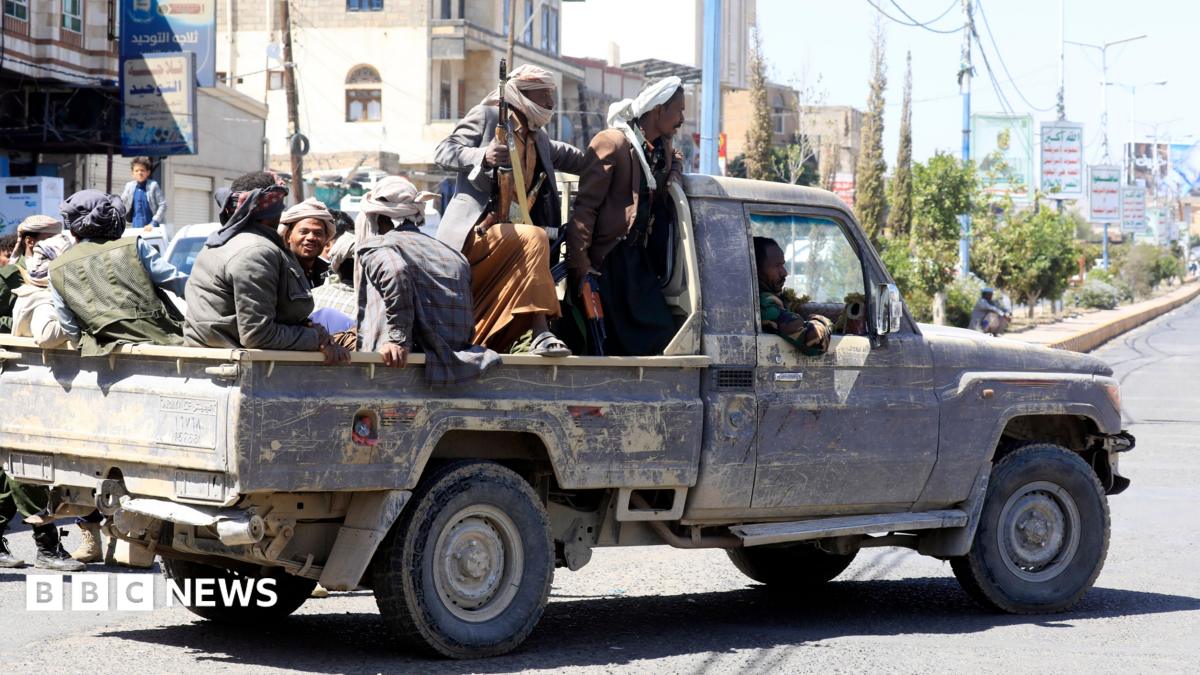
A fresh wave of violence tied to Yemen's civil war has spilled into Saudi Arabia, leaving three people dead and dozens wounded after airports in two Saudi cities came under attack. The strikes, which the Houthi movement has claimed responsibility for, mark a dangerous widening of a conflict that had appeared largely contained within Yemen's borders.
According to Saudi Arabia's General Authority of Civil Aviation, two people were killed and 28 others injured during an assault on Abha International Airport. The facility sits close to the kingdom's southern border with Yemen, making it particularly vulnerable to cross-border fire.
In a separate episode, one person was killed and eight more were wounded at King Khalid International Airport in Riyadh, the Saudi capital located deep in the country's interior. The fact that a major international hub in the capital was successfully targeted underscores the reach of the Houthis' missile and drone capabilities.
The aviation authority said the two airports were hit on 6 and 7 October but did not clarify which attack occurred on which day. It also declined to assign blame directly, leaving the identification of the perpetrators to the Houthis themselves.
The victims spanned several nationalities. Two women — one Moroccan and one Algerian — lost their lives in the Abha attack, while a Sudanese male resident was killed at the Riyadh airport. The injuries sustained in both incidents added to the toll of a conflict that has repeatedly drawn in civilians far from the front lines.
Houthi military spokesperson Yahya Saree stated that the group's armed forces launched ballistic missiles and drones at both Saudi airports. He framed the operations as retaliation for what he described as Saudi aggression against Yemen, claiming the kingdom had carried out 60 airstrikes and missile attacks within a 24-hour window.
Saree also said the Houthis struck Aden International Airport in Yemen on Wednesday. That facility serves as a key international gateway for parts of the country outside Houthi control and has been repeatedly targeted whenever fighting intensifies, highlighting how infrastructure has become a recurring casualty of the war.
The strikes on Saudi Arabia represent a significant escalation in the renewed conflict between Saudi-backed government forces and the Iran-aligned Houthis. The Houthis, who dominate much of Yemen's north-west, recently seized strategically vital stretches of the Red Sea coastline in a swift offensive that has reshaped the battlefield.
Among the captured territory was the port of Mokha, situated on the Bab al-Mandab Strait. That narrow waterway represents the tightest point of the Red Sea and functions as a critical chokepoint for global shipping, giving the Houthi advance implications that extend well beyond Yemen's borders.
In response, Yemeni pro-government forces backed by Saudi Arabia said they had "secured" the Bab al-Mandab Strait at the southern end of the Red Sea. They further declared an all-out war aimed at reclaiming all territory held by the Houthis, setting the stage for a potentially protracted and bloody campaign.
The Saudi-led coalition issued a forceful statement late on Wednesday, vowing that the Houthi attacks on Saudi airports "will not go unpunished." The coalition spokesperson said its forces had struck more than 80 Houthi military sites across the governorates of Saada, Al Hudaydah, Al Jawf and Ma'rib, signaling a determination to respond with overwhelming force.
That coalition was originally formed in 2015, when Arab nations banded together to prevent the Houthis from overrunning Yemen's internationally recognized government. A temporary ceasefire brokered in 2022 briefly stemmed the violence after years of airstrikes and ground combat killed hundreds of thousands of people, producing one of the world's most severe humanitarian crises.
UN Secretary General Antonio Guterres condemned what he called the continued Houthi cross-border attacks on Saudi Arabia and expressed deep concern about the sharp escalation in fighting. His intervention reflects mounting international alarm that the conflict is once again spiraling beyond any semblance of control.
The human cost continues to climb. Hundreds of people have reportedly been killed on both sides since the Houthis' latest advance, and the United Nations said on Wednesday that more than 200,000 people have been displaced by the intensifying hostilities.
With diplomatic efforts stalled and both sides promising further military action, the coming days appear likely to bring more violence. The targeting of Saudi airports, combined with the Houthis' gains along the Red Sea, suggests the war is entering a more volatile phase — one with consequences for regional stability and global trade alike.









(0)