
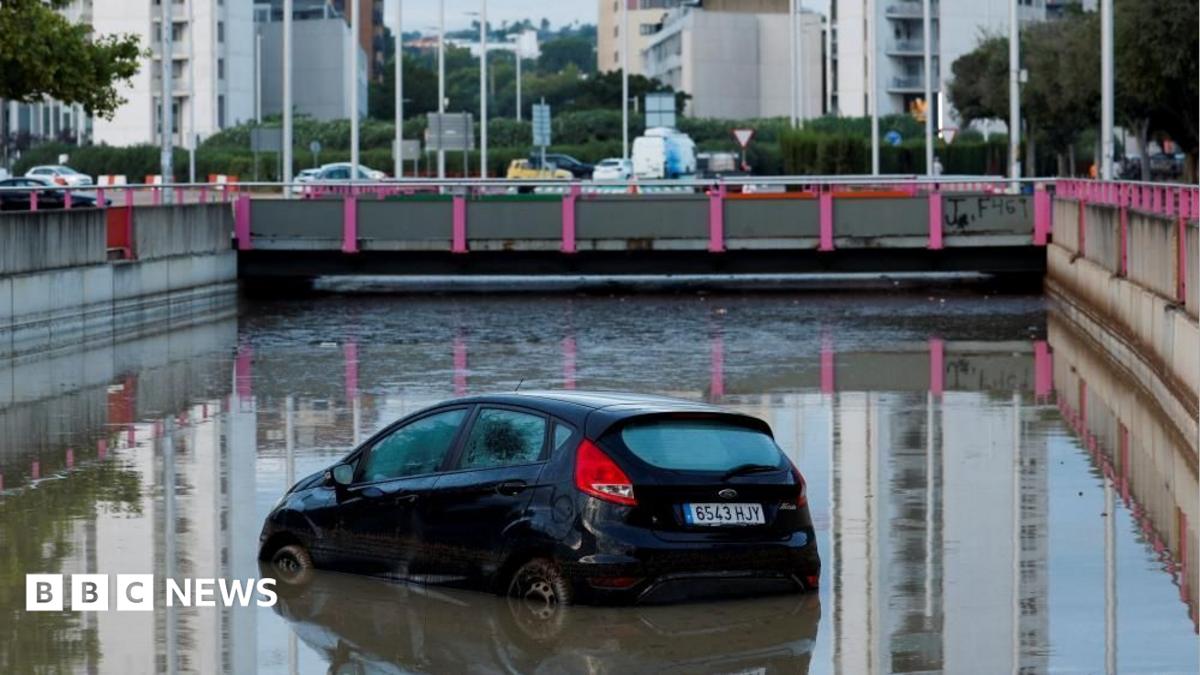
Severe flash flooding triggered by torrential rainfall has battered north-eastern Spain, leaving at least one person dead and bringing major transport networks to a standstill across Catalonia and the Valencia region. The sudden deluge overwhelmed urban drainage systems, inundated residential districts, and forced authorities to initiate urgent emergency rescue operations.
Emergency responders confirmed the fatality on Thursday after discovering the body of a man inside his vehicle in Olivella, a municipality situated approximately 40 kilometres (25 miles) west of Barcelona. The victim had been swept away by rapidly rising water after an overflowing stream overtook the road he was traveling on during the height of the storm.
Catalan emergency personnel and regional firefighters stated via a post on X that rescue teams had successfully located and extracted the deceased driver from the submerged wreckage. Officials noted that this finding corrected initial emergency bulletins from earlier in the day, which had mistakenly identified the missing motorist as a woman.
The deadly incident occurred amidst a wave of intense precipitation that prompted Spain's State Meteorological Agency, AEMET, to issue widespread weather warnings across eastern parts of the Iberian Peninsula. Among the most severe alerts was a top-tier red warning issued for the coastline around Barcelona, signaling an extreme risk to life and property from localized cloudbursts.
In response to the rapidly worsening meteorological conditions, Spanish Prime Minister Pedro Sanchez addressed the public, warning citizens that the country was confronting "very complicated situations" as emergency services mobilized. Regional authorities across eastern Spain echoed these warnings, urging residents to avoid all non-essential road travel and remain indoors until conditions improved.
Throughout the metropolitan area of Barcelona, the exceptional volume of rain caused widespread urban disruption. Commuters faced severe transit delays as several key underground metro stations were forced to close due to water ingress, while urban bus networks had to implement extensive route diversions to navigate around heavily flooded thoroughfares.
Long-distance and commuter rail travel in Catalonia suffered significant disruptions and schedule changes as floodwaters covered tracks and impeded regional lines. Air travel was similarly impacted, with El Prat airport in Barcelona reporting numerous delayed departures, canceled incoming flights, and operational bottlenecks as ground crews struggled to operate amid the storm.
Regional emergency dispatchers in Catalonia reported handling an immense volume of distress calls throughout the peak of the tempest. According to emergency services, operators logged more than 850 emergency calls and systematically catalogued over 500 distinct weather-related incidents, ranging from flooded basements to motorists stranded in rapidly rising water.
The neighboring region of Valencia endured an equally brutal onslaught from the storm system, with meteorological monitors documenting staggering rates of rainfall accumulation over exceptionally brief windows. The regional meteorological association AVAMET reported that several municipalities recorded in excess of 70 millimetres (2.76 inches) of rain in a span of just 30 minutes, remarking on the sheer rarity of such short-term accumulations.
The rapid downpour paralyzed municipal operations throughout the regional capital of Valencia. Local authorities were forced to shut down the entirety of the city's underground metro network, while Valencia's primary airport ceased operations entirely for multiple hours, forcing inbound commercial flights to divert to alternative destinations.
Emergency response crews across Valencia province handled at least 478 separate emergency callouts during the event. The vast majority of these interventions involved substantial property damage, localized structural leaks, disrupted transport corridors, and severe traffic gridlock caused by vehicles becoming stranded in flooded lowlands and underpasses.
The severe weather also disrupted professional sporting events, forcing the postponement of a high-profile Spanish football fixture. A match between Levante and Athletic Bilbao could not proceed after torrential rain left the pitch entirely waterlogged and floodwaters penetrated the stadium infrastructure, inundating the players' tunnel.
Dramatic video footage shared across social media platforms illustrated the scale of the emergency, depicting waterlogged streets where vehicles were partially or fully submerged. In several locations, specialized rescue teams were seen attempting to access cars trapped in deep water beneath flooded underpasses.
The current disaster follows an unrelenting period of extreme temperatures across the Iberian Peninsula, coming just as Spain emerged from its hottest summer on record alongside an exceptionally warm beginning to the month of September. Scientists emphasize that these record-breaking temperatures are directly contributing to the severity of late-summer and early-autumn storm systems.
Climatologists point out that human-driven climate change is significantly intensifying the violent Mediterranean storms that traditionally affect eastern Spain at this time of year. As the Mediterranean Sea absorbs exceptional amounts of thermal energy during sweltering summers, evaporation rates surge, which injects vast quantities of moisture into the atmosphere to fuel increasingly intense rainfall events.
The latest devastation has struck a particularly sensitive nerve across the nation, occurring less than two years after catastrophic flash floods in the Valencia region claimed more than 230 lives. As cleanup efforts begin, the disaster serves as another stark reminder of the escalating vulnerability of Mediterranean coastal communities to sudden, extreme climate-related weather shocks.








(0)