
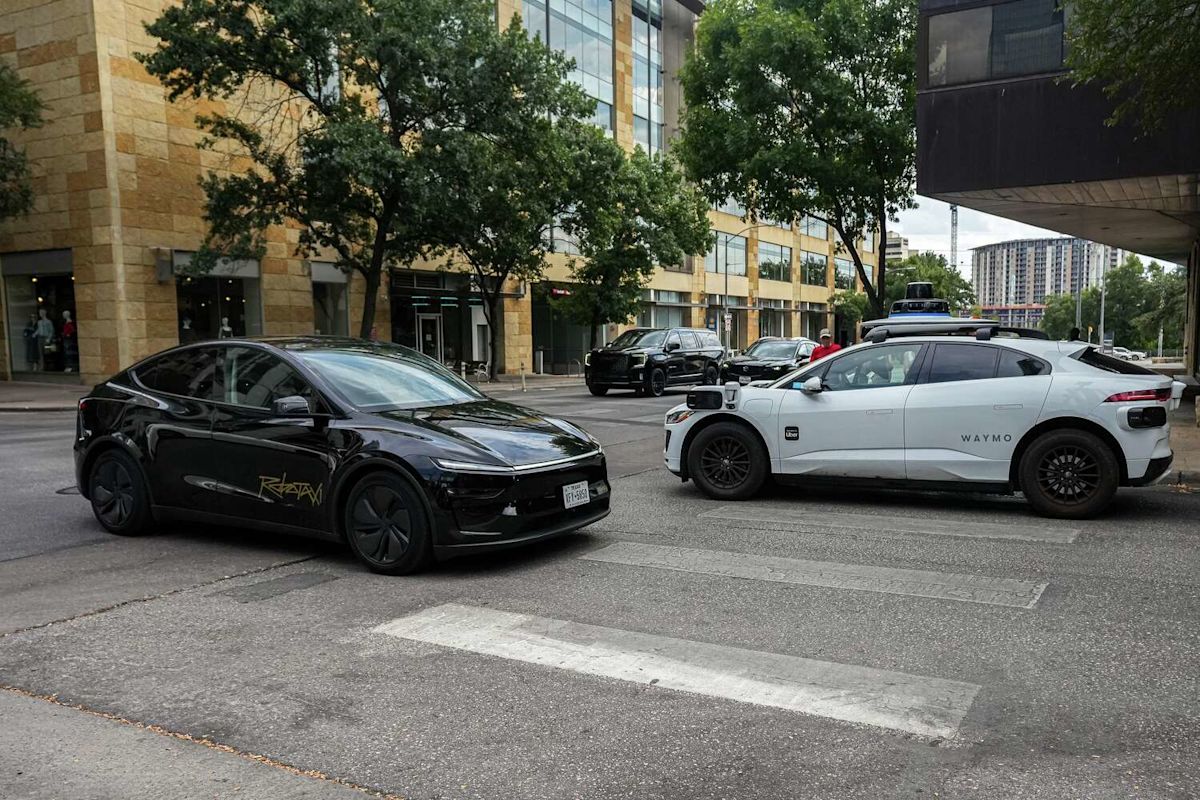
A recent surge in autonomous vehicle operations across Texas has coincided with a notable uptick in traffic incidents, with the city of Austin recording eight separate robotaxi crashes within a single month. The collisions occurred against the backdrop of an aggressive commercial expansion by leading autonomous vehicle operators, who have steadily added hundreds of driverless cars to public roadways throughout the state.
According to federal regulatory filings submitted to the National Highway Traffic Safety Administration, a total of 22 robotaxi collisions were documented statewide during the four-week period that concluded on August 17. The data underscores the growing frequency of interactions between autonomous software systems, human drivers, cyclists, and pedestrians as testing and commercial deployments intensify in major metropolitan areas.
The rise in reported incidents aligns directly with significant fleet scaling efforts by industry leaders. Ahead of introducing its newly developed Cybercab, Tesla Inc. expanded its presence on Texas roads, bringing its statewide total to 439 registered autonomous vehicles. Concurrently, Alphabet Inc.’s autonomous driving subsidiary, Waymo, expanded its footprint to nearly 1,000 self-driving vehicles across the state, representing the largest operational deployment among all active competitors.
Austin served as one of the primary epicenters of recent autonomous activity, logging over a third of the statewide incidents. The eight documented municipal crashes involved diverse driving scenarios and multiple autonomous developers, illustrating the complex urban dynamics that self-driving algorithms encounter while navigating the Texas capital’s dense traffic networks.
Among the specific Austin incidents recorded during the four-week window, Tesla reported a single collision in which one of its driverless vehicles struck a metal bollard and a chain fence. That property damage incident pushed Tesla’s cumulative crash total within Austin to 23 collisions since June 2025, a metric closely monitored as the company pushes toward wider public adoption.
Waymo accounted for the largest share of Austin’s recent incidents, reporting five new collisions to federal regulators. These latest reports elevated Waymo’s overall crash count in the capital city to 135 since June 2025, reflecting the extensive operational miles logged by its sizable local fleet in comparison to smaller regional competitors.
The nature of Waymo’s latest Austin collisions varied across routine city driving conditions. In several instances, human-driven vehicles improperly merged or entered the autonomous vehicle’s active lane, resulting in contact. Another incident occurred when a Waymo car traversed a steeply sloped parking lot exit, causing underside damage to the vehicle, while an additional collision took place when a commercial garbage truck reversed directly into a stationary Waymo unit.
Safety regulators and local law enforcement also focused on an Austin collision involving vulnerable road users, which resulted in an active investigation by the Austin Police Department. In that incident, an electric bicycle rider sustained minor injuries after a collision involving an autonomous vehicle operated by Avride.
According to Avride’s regulatory filing submitted to federal authorities, the e-bike rider lost control and slid directly into the side of an Avride vehicle. The company noted that the cyclist had been traveling in the wrong direction along a two-way street prior to the impact. The incident raised Avride’s Austin crash total to 27 since June 2025 across its local fleet of 344 customized Hyundai Ioniq 5 vehicles.
In contrast to its competitors, Amazon subsidiary Zoox maintained a collision-free period in Austin during the four-week reporting window. With a comparatively modest fleet of 44 autonomous vehicles deployed locally, Zoox’s lifetime municipal crash total remained unchanged at three incidents since June 2025.
Beyond the capital city, autonomous fleet activity generated collision reports across several other major Texas markets. Ten collisions were reported collectively across the Dallas and Arlington areas, while Houston recorded four incidents during the same four-week timeframe. In addition to Waymo and Avride, autonomous mobility companies Nuro and May Mobility—the latter operating in partnership with ride-hailing platform Lyft—also logged collisions outside of Austin.
Conversely, San Antonio recorded zero robotaxi collisions in the latest regulatory dataset, primarily due to an ongoing operational shutdown. Waymo’s commercial ride-hailing operations in San Antonio have remained fully paused since April, following a severe weather event during which one of its driverless passenger vehicles was swept away by local floodwaters.
The most severe incident in the statewide reporting period occurred in Dallas, resulting in a pedestrian fatality that drew immediate regulatory scrutiny. According to filings submitted by Waymo, an autonomous vehicle was decelerating to yield to a pedestrian in the roadway when an approaching, human-operated SUV struck the individual, propelling him into the rear left quarter of the Waymo vehicle.
The pedestrian, identified as 71-year-old Juan Guzman, was transported to a local medical facility, where he subsequently succumbed to his injuries. The driver of the human-operated SUV remained at the crash site to cooperate with authorities, and the Dallas Police Department confirmed that an investigation remains active with no formal charges or arrests announced to date.
The Dallas event represents the only fatal collision involving an autonomous vehicle recorded in Texas within federal regulatory databases since June 2025. Nationally, the only other fatality logged during this timeframe also involved a Waymo vehicle in Tempe, Arizona, where a motorcyclist collided with a decelerating robotaxi, fell onto the road surface, and was subsequently struck by a trailing vehicle.
As Texas continues to serve as an expansive proving ground for commercial autonomous transportation, the steady volume of collision reports highlights the ongoing scrutiny surrounding software validation, mixed-traffic interactions, and municipal safety oversights amid rapid industry growth.




(0)