
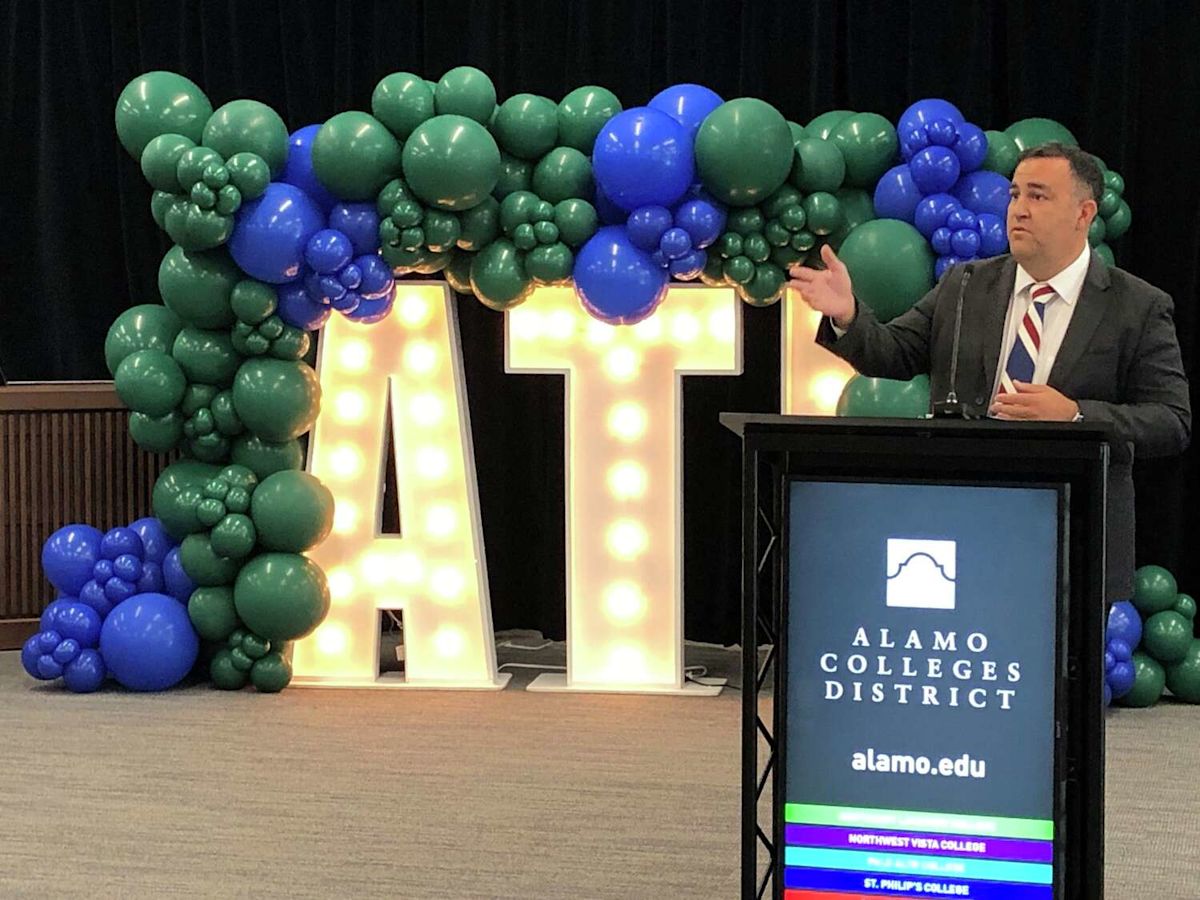
Faced with escalating financial challenges stemming from explosive enrollment growth, a cooling housing market, and reductions in state revenue, the Alamo Colleges District governing board has unanimously approved its first property tax rate hike in over a decade.
The decision, finalized during a board meeting, establishes a 1.75-cent rate increase that elevates the community college system’s local property tax rate to 16.665 cents per $100 of assessed valuation. The updated rate is scheduled to take effect starting September 1 across the district's taxing jurisdiction.
For local residential property owners, the board's action translates to a modest uptick in their yearly property tax obligations. District financial analysts project that the owner of an average Bexar County home, valued at roughly $320,000, will experience an annual tax bill increase of approximately $48 under the new rate structure.
The vote marks the first time since 2013 that the Alamo Colleges District has adjusted its property tax rate. District leadership underscored that the revenue adjustment became necessary as the college system works to balance its fiscal responsibilities with an unprecedented surge in student demand.
According to district data, total enrollment across the system’s five primary campuses is currently approaching a historic threshold of 100,000 students. This milestone represents a dramatic expansion of roughly 40,000 learners—a 56 percent increase in the student population—since 2022.
Board Chair Joe Alderete, Jr. emphasized that the historic enrollment numbers demonstrate widespread community reliance on the community college system. He stated that reaching 100,000 students reflects the strong confidence the surrounding community places in the district and noted that the board's decision ensures the institution can continue offering high-quality instruction while developing the regional workforce.
The newly generated property tax revenue is slated to help balance the district’s comprehensive $602 million annual operating budget. Earlier in the fiscal planning cycle, administrators had identified an initial budgetary shortfall estimated at $28 million.
In response to the projected deficit, college administrators instituted internal measures, including targeted budget reductions, operational efficiencies, and various administrative cost-saving strategies. Despite those interventions, the college system remained burdened by a persistent $21.2 million budget gap that local tax adjustments were designed to resolve.
The district's financial constraints have been significantly intensified by shifting revenue dynamics at the state level. Texas utilizes an outcomes-based funding system that allocates state resources to community colleges based on their success in graduating students, particularly adult learners, economically disadvantaged individuals, and students earning credentials in high-demand career fields.
Under this framework, Alamo Colleges administrators had initially calculated that the district would secure $106 million in state allocations for fiscal year 2027. However, the Texas Higher Education Coordinating Board recalculated the statewide distribution metrics after community colleges across Texas outperformed baseline projections, generating higher-than-anticipated credential completion numbers statewide.
Because the state's performance pool was stretched across higher aggregate achievement figures, the adjusted distribution reduced Alamo Colleges' expected state allocation to less than $90 million for fiscal year 2027. This formula revision created a substantial funding deficit that the district had to absorb.
At the same time, district leaders have contended with local revenue constraints. Sluggish residential real estate sales alongside expanded statutory property tax exemptions have dampened local tax yield, resulting in an estimated loss of $3.5 billion in taxable property value collections.
Compounding these fiscal realities, public higher education institutions across Texas are operating under strict tuition caps. Texas Gov. Greg Abbott directed public universities and community college systems to freeze tuition and mandatory student fees through the 2026-27 academic year, eliminating tuition hikes as a viable pathway to cover rising operational overhead.
District officials indicated that the newly approved tax revenue will be deployed to protect core educational functions. Funds will be directed toward preserving classroom instruction, academic advising, and comprehensive student support services, while maintaining funding for textbook programs and tuition assistance initiatives intended to alleviate financial barriers for attendees.
Chancellor Mike Flores reiterated that the revenue increase is essential for sustaining institutional quality and fulfilling the district's overarching mission of eliminating poverty through higher education and career training. He noted that the funds will allow the institution to uphold service standards, prepare workers for high-demand industries, and support the broader economic development of the region.
Flores added that access to higher education remains a primary pathway into the middle class, underscoring that helping students earn workforce credentials and transition into family-sustaining jobs ultimately strengthens families, local employers, and the regional economy as a whole.







(0)