
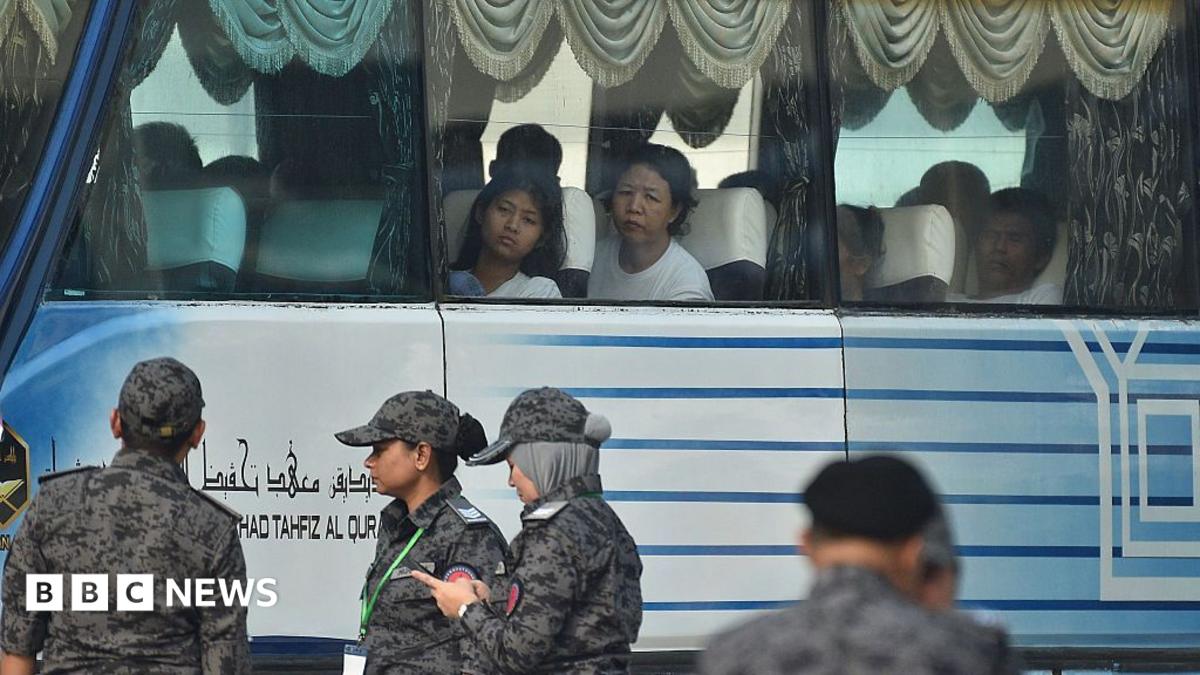
Malaysia has initiated the repatriation of approximately 5,000 asylum seekers from Myanmar, acting under a contentious agreement reached with Myanmar's military leader, Min Aung Hlaing. The first phase of this operation began with three Myanmar navy vessels scheduled to depart Malaysia later today, carrying 1,476 returnees back to a country where they face severe risks.
The decision has drawn sharp criticism from human rights organisations, which warn that those being sent back could encounter violence, persecution, and forced recruitment into the Myanmar armed forces. The situation is particularly perilous given the ongoing civil conflict in Myanmar, where the military has been accused of widespread atrocities against civilian populations.
Malaysian authorities have characterised the repatriation as voluntary, yet they have prevented the United Nations refugee agency from accessing or assessing the returnees, who have been held in detention centres across the country. This lack of independent oversight has raised serious concerns about whether the returns are genuinely consensual or coerced.
According to Malaysian Prime Minister Anwar Ibrahim, the group being repatriated includes Rohingyas, a persecuted Muslim minority who have fled Myanmar in large numbers over the years. The Rohingya are not recognised as citizens in Myanmar, rendering them stateless and particularly vulnerable to abuse. Many have sought sanctuary in Malaysia after being driven from their homes in Rakhine State.
Anwar, whose public approval ratings have declined significantly this year, has stated that he is responding to growing hostility among Malaysians towards the Rohingya population and claims he has no alternative but to negotiate their return with the Myanmar government. This position marks a dramatic departure from his earlier stance as a vocal advocate for human rights and freedom.
The Malaysian leader, who was once a political prisoner himself, had previously called for greater international efforts to assist the Rohingya. Under his administration, Malaysia had refused to recognise Min Aung Hlaing's regime and had been among the most active voices in Southeast Asia advocating for a negotiated resolution to Myanmar's civil war. The current repatriation represents a striking reversal of that approach.
Two primary factors appear to have driven this policy shift. First, the economic pressures facing lower-income Malaysians have intensified since the Covid pandemic, fuelling resentment towards the Rohingya community. Second, Malaysian politics have been in a state of flux since 2018, when a historic election ended the United Malays National Organisation's more than six-decade grip on power, resulting in a series of unstable coalition governments.
For years, Malaysians expressed considerable sympathy for their fellow Muslims in Myanmar. In August 2017, a brutal military campaign forced approximately three-quarters of a million Rohingyas to flee their homes in Rakhine State into neighbouring Bangladesh. In the years that followed, dire conditions in Bangladeshi refugee camps pushed those with sufficient resources to undertake dangerous sea voyages to Malaysia in search of safety and employment.
While the Malaysian navy and coastguard have long attempted to prevent Rohingya boats from reaching Malaysian shores, many managed to enter through alternative routes and were, for an extended period, tolerated. More than 200,000 Rohingyas are now believed to reside in Malaysia, with most surviving on basic incomes from manual labour.
Public sentiment began to shift during the pandemic, which severely impacted Malaysia's economy. Amid heightened fears about the coronavirus, accusations against Rohingya migrants proliferated on social media, accompanied by calls for their deportation. The government at the time responded by hardening its position, declaring that Malaysia could accept no additional refugees and ordering raids on communities suspected of harbouring undocumented immigrants.
A similar pattern has emerged in 2026. In May, an online complaint alleged that Rohingyas had improperly disposed of animal waste following the Muslim Eid al Adha festival, triggering a viral social media campaign that falsely accused Rohingya leaders of demanding land and citizenship rights in Malaysia. An online petition on Change.org calling for the expulsion of Rohingyas from Malaysia gathered more than 400,000 signatures before being removed.
Given Anwar's historical reputation as a defender of liberal values, observers might have expected him to counter this wave of hatred and misinformation. He has publicly stated that Rohingyas should be treated humanely, saying in a recent podcast interview that authorities should arrest them without beating, intimidating, or humiliating them. However, human rights groups have accused Malaysian officials of precisely such conduct in immigration detention facilities.
Nevertheless, Anwar maintains that the Rohingya must be expelled, describing them in the same interview as having become a burden—economically, from a security perspective, and as a source of hostility among the population. Some of his former supporters have accused him of abandoning his principles. Latheefa Koya, former head of the Malaysian Anti-Corruption Commission, has described his decision as disgraceful and amoral, saying it shames the nation internationally.
Anwar faces considerable political pressure. Once characterised as a perpetual prime minister-in-waiting, he finally assumed the top office in 2022, but only by forming an uneasy coalition with his former adversaries in UMNO. Since then, his popularity has plummeted and his party has lost seats in recent local elections. He must call a general election by early 2028.
Tricia Yeoh, Director of the Asian Institute for Policy and Engagement at the University of Nottingham Malaysia, observes that Anwar is in a corner at his weakest point. She notes that he has been forced to make concessions to his UMNO partners, has faced multiple corruption scandals, and contends with a divided party. The repatriation decision, she suggests, reflects a leader prioritising political survival over longstanding commitments to human rights.




(0)