
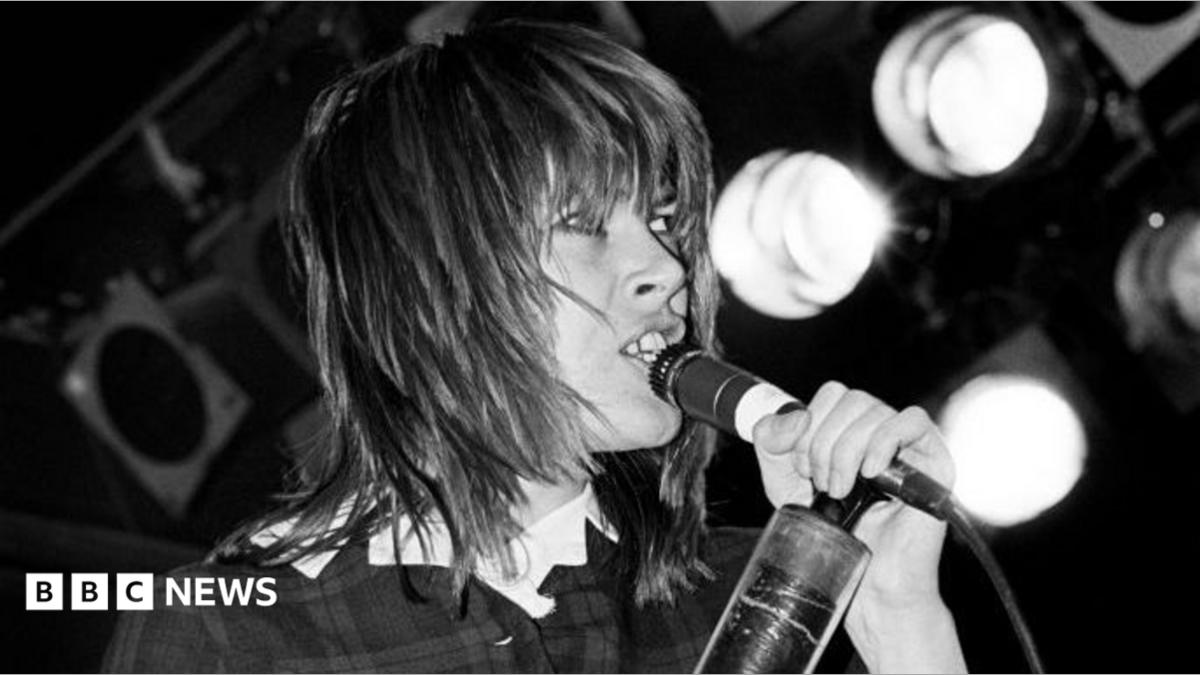
Three songs recorded by Australian rock icon Chrissy Amphlett in 1998 are set for release on Friday, more than a decade after the Divinyls frontwoman's death, after the tapes were rediscovered in a garage belonging to former Split Enz lead singer Tim Finn. The recordings, which had long been assumed gone, will appear on an EP titled Some Times.
For fans of Amphlett — one of the most distinctive voices in Australian pop — the release carries obvious emotional weight. Her husky, uncompromising vocal and commanding stage presence delivered the 1990 number-one hit I Touch Myself, alongside earlier career-defining singles Pleasure and Pain from 1985 and Boys in Town from 1981. Amphlett died in 2013, aged 53, and any new recording of her voice is an event in its own right.
The backstory to the discovery is as intriguing as the music itself. In 1998, at a transitional moment in her life and career, Amphlett had parted ways with Divinyls guitarist Mark McEntee following what has been described as a turbulent relationship. She was also growing closer to drummer Charley Drayton, whom she would later marry. It was during this period, when she was looking for musical directions unlike anything she had done before, that she crossed paths with Finn.
Finn, who fronted New Zealand's Split Enz, was an admirer of Amphlett's work and reached out to her. Speaking to the ABC's Australian Story documentary programme, he recalled that the timing of their meeting felt significant. "It was a good time for us to meet because she was looking for something new, something different in her life musically," he said.
The two songwriters spent several days working together, eventually writing a trio of songs, and then took them into a studio — with Drayton behind the drums. Finn's memory of those sessions is one of admiration for Amphlett's professionalism and concentration. "She was so focused," he said. "She just wanted to get it right... I was in the presence of great talent, great charisma."
Those recordings did not, however, become a finished release. When the session ended, Finn took the tapes home intending to work on them properly, but the project stalled. In his telling, the songs were simply never brought to completion — unfinished business rather than a deliberate release strategy.
That is where the story lay dormant for more than two decades. In 2023, Drayton contacted Finn about the 1998 material, prompting him to search his own storage. What he found was a two-inch tape, preserved in his garage and, remarkably, still in good condition. The songs, which had seemed to have vanished, were suddenly recoverable.
Finn detailed the rediscovery in a social media post on Monday, describing how he had assumed the recordings were gone for good. "I thought they were lost to the universe but remarkably found the two-inch tape in my garage," he wrote. "It was still in perfect condition and we are now able to share these songs with you."
In that same post, Finn reflected on the connection he and Amphlett formed despite never having met before 1998. He described an instant bond built on a shared history as former frontpeople of two significant bands — a common experience of fronting groups through rise, change and eventual departure.
The scale of the loss that almost happened is difficult to overstate. Amphlett's post-Divinyls output has been comparatively limited, and the 1998 sessions stand as evidence that a very different musical chapter was taking shape. Those close to her had kept the tapes in mind: Finn said the songs remained "incredibly important to me, Charley and those close to Chrissy" — a reference to Drayton and the wider circle around Amphlett.
Preservation, in this instance, was largely accidental. Nothing suggests the tape was deliberately archived; it appears to have survived because it was put away and then forgotten. That fragility has become a wider concern for recorded music of the pre-digital era, and the survival of this particular reel — playable and intact decades later — is a fortunate outcome for a recording that was never meant for an audience.
The release also lands at a moment of renewed interest in Amphlett's catalogue, with her recorded work continuing to find new listeners long after her death. Some Times, assembled from material she never expected to see daylight, offers something rare: a snapshot of a songwriter between chapters, recorded with two musicians she trusted, in what Finn describes as a genuinely happy and productive period.
Whether the songs sound finished is a separate question — Finn's comments suggest they were left in a state he was not content with — but that ambiguity is now part of their appeal. They are not a polished comeback, nor a posthumous reimagining, but an unfinished conversation between a singer and a collaborator, recovered from a garage and finally offered to the public.
For listeners, Friday's release is a chance to hear Amphlett in a context outside the Divinyls catalogue. For everyone involved in 1998, it is the completion of something left deliberately incomplete — and, in Finn's phrase, a chance to share songs that had seemed destined to be lost.









(0)