
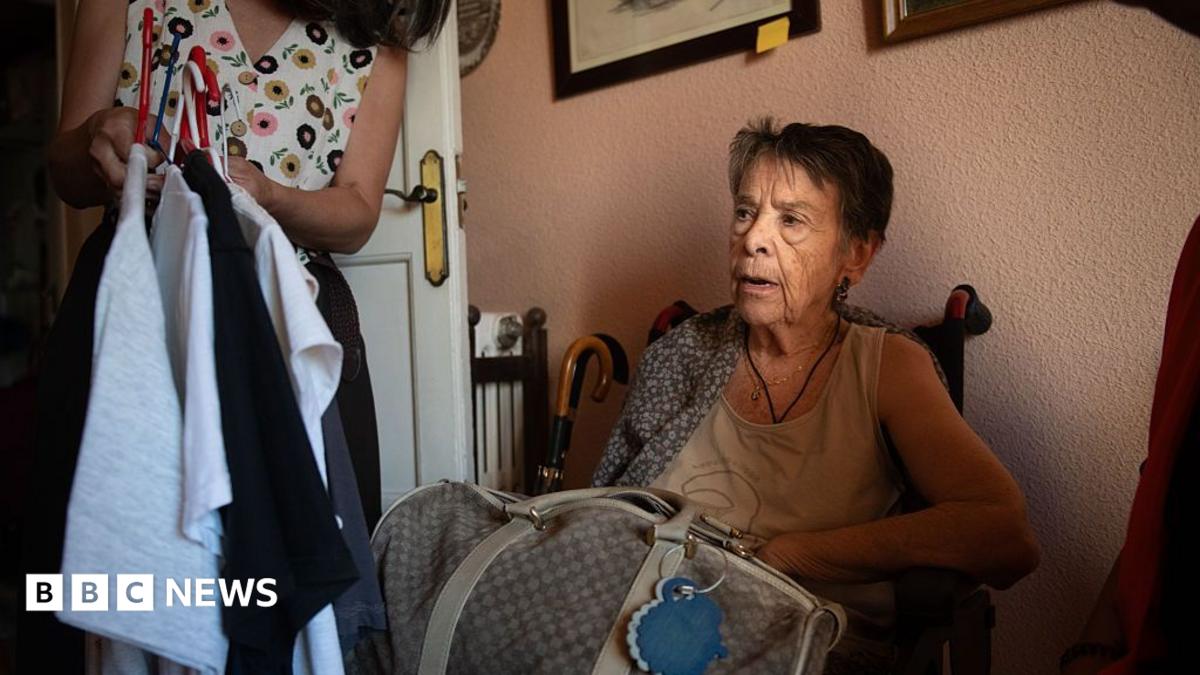
Maricarmen Abascal, the 87-year-old Spanish pensioner whose forced removal from her Madrid apartment became the flashpoint for a nationwide movement against soaring housing costs, has died, according to the Madrid Tenants' Union. The union announced her death on Wednesday, describing her as a figure who transformed the national conversation about housing and rent speculation.
Abascal was carried out of the flat she had occupied for more than seven decades on 23 September, after she could no longer keep up with the rent demanded by the property's owner. The image of an elderly woman being taken from her home on a stretcher circulated widely in Spanish media and quickly became a symbol of the pressures facing tenants in a rapidly tightening housing market.
The circumstances of her tenancy stretch back to the mid-20th century. Her father first signed the lease on the apartment in 1956, and Abascal remained as the tenant after her parents died. For much of that period, the rent was subject to a legal cap that kept it affordable. That arrangement changed after the building was acquired in 2018 by a company called Urbagestión, which raised the monthly charge from €500 to €2,650 — an increase of more than five times the original amount.
The company subsequently offered to reduce the rent to €1,650, but that figure still exceeded Abascal's monthly pension by roughly €300. Three earlier attempts to remove her had been halted by the courts, and the legal battle, combined with growing media coverage, turned her case into a cause célèbre. When the eviction finally proceeded in late September, it set off a wave of public anger that reached the highest levels of Spanish politics.
The company that owns the flat later said it would allow Abascal to return at a lower rate, but by then she had been admitted to hospital and was unable to sign any agreement. The Madrid Tenants' Union said the proposed solution arrived far too late. In a statement, the union argued that her ordeal had been "absolutely avoidable" and described the process as torturous.
Union spokesperson Alicia del Río was blunt in her assessment of the forces at work. She said speculation carries a human cost, accusing what she called "rentierism" of ultimately killing Abascal, while insisting that her memory would endure among those fighting for housing rights. The union said Abascal's case marked a turning point in the country's history, though it added that the price paid to reach that point had been excessively high.
In a video recorded from her hospital bed after the eviction, Abascal said she had failed to save her own home but had fought so that others might learn to defend what is theirs. The union pledged to honour her parting request to keep fighting for what belongs to people. Her message became a rallying cry for protesters who had already begun organising in Madrid and other cities.
Prime Minister Pedro Sánchez offered his condolences, saying his thoughts were with Abascal's family and loved ones, and extending a message of solidarity to everyone who felt the loss personally. His words came as demonstrators gathered at Puerta del Sol, one of Madrid's central squares, which had served as a protest encampment for the previous two weeks. Photographs showed people embracing, lighting candles and holding posters bearing Abascal's image on Wednesday evening.
The political fallout from the case has been substantial. Anger over the eviction pressured the coalition government to push through emergency housing legislation, but the measure was rejected in Congress last week. The defeat prompted further demonstrations, with tens of thousands of people marching in cities across Spain over the weekend. On Wednesday, unions escalated their response by calling a general strike for 11 November, demanding sweeping housing reforms.
On Monday, Sánchez called an early general election for 29 November, a decision that followed his failure to secure parliamentary approval for the housing package. The prime minister, who leads a leftist coalition without a majority in parliament, said he needed a broader progressive mandate capable of overcoming what he described as resistance from elites in order to deliver reforms. Housing, however, is not the only issue weighing on his government.
The political right has argued that state intervention in the housing market would deter landlords from renting out properties and would ultimately push prices even higher, a position that framed the congressional rejection of the emergency legislation. Beyond housing, Sánchez has also faced pressure from corruption scandals linked to his party, as well as public concern over the cost of living and immigration. Opinion polling suggests the conservatives are positioned to become the largest party in the next election, though they would likely need the support of the hard-right Vox party to assemble a governing majority.
For the tenants' movement, Abascal's death has sharpened rather than dampened its resolve. The encampment at Puerta del Sol, the candlelit vigils and the planned general strike all point to a housing crisis that has moved from a policy dispute into the centre of Spanish political life. What began as one pensioner's struggle to stay in the apartment her family had rented since 1956 has become a defining test of how Spain balances property rights, rental markets and the security of its older residents.








(0)