
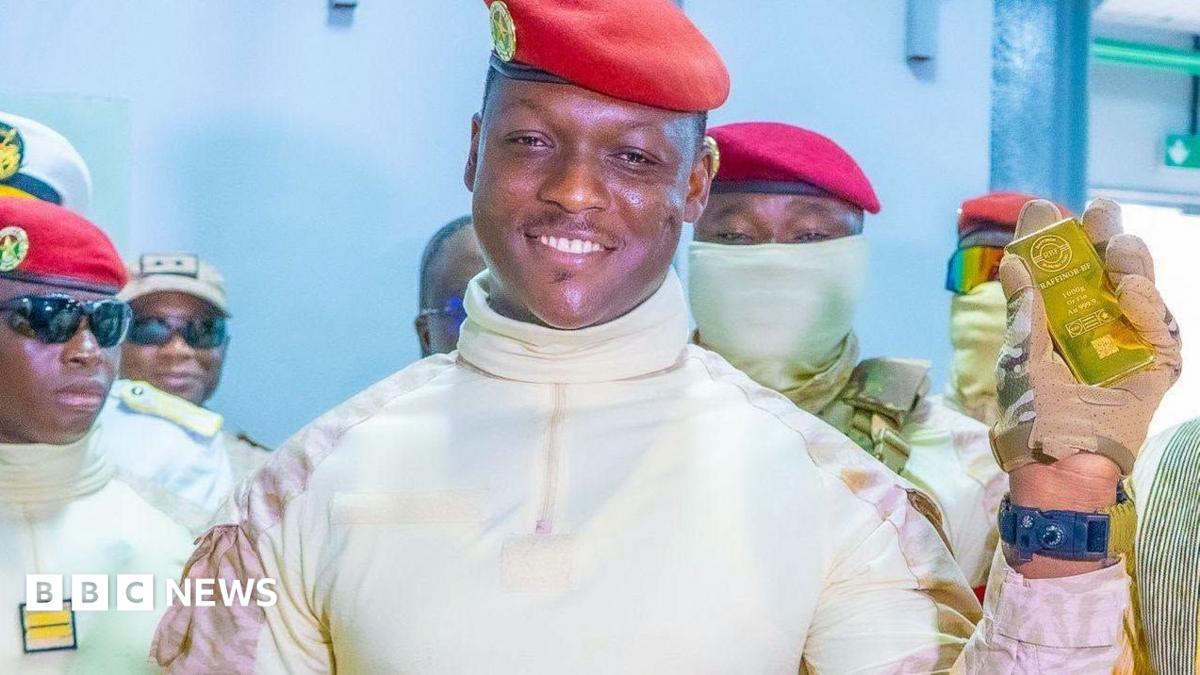
Burkina Faso has inaugurated its first gold refinery, a landmark project that the country's military government hopes will allow it to retain far more of the value generated by its mineral resources. The facility, named Raffinor-BF, was officially opened in the capital, Ouagadougou, on Monday, marking a significant step in the junta's broader strategy to reduce dependence on foreign processing and exports of raw materials.
Speaking at the inauguration, junta leader Captain Ibrahim Traoré framed the refinery as part of a wider effort to overhaul how Burkina Faso manages its natural wealth. He stated that the goal is to refine all of the country's metals domestically, describing an ambition to keep the entire value chain within national borders. The comments underscore a nationalist economic agenda that has become a defining feature of his administration since he seized power in a coup in September 2022.
The new plant, which cost more than 11 billion CFA francs (approximately $19 million or £14 million), was financed by the state, including through the National Precious Metals Company (Sonasp), in partnership with the domestic private sector. According to the presidency, the refinery will initially have the capacity to process 164 tonnes of gold annually—a figure that already exceeds Burkina Faso's current yearly production. Officials say eventual capacity could rise to 515 tonnes, a scale that suggests the government intends to position the country as a regional refining hub, processing gold from neighbouring nations as well.
Mines Minister Yacouba Zabré Gouba struck a triumphant tone at the opening ceremony, declaring that the country was reclaiming control over its own resources. He argued that Burkinabè gold would no longer be used to generate added value for others while the nation's own people remain in need. The sentiment reflects a long-standing frustration among many resource-rich African states that they export raw materials only to import finished products at far higher prices.
Burkina Faso is one of Africa's leading gold producers, yet successive governments have struggled to effectively regulate the sector, particularly its vast artisanal and small-scale mining industry. Informal trading and smuggling have long made it difficult for authorities to account for all the gold extracted from the country. The government has also alleged that some illegally traded gold helps finance the Islamist insurgency that has engulfed large parts of the nation for years.
The security dimension is central to the junta's approach. Burkina Faso has been battling armed groups linked to al-Qaeda and Islamic State, with significant swathes of territory falling outside full government control. By tightening oversight of gold production and trade, officials hope to cut off a potential revenue stream for militant groups while also boosting state coffers. Captain Traoré has previously accused smugglers of moving large quantities of gold out of the country illegally and has pointed to the proceeds as a source of financing for insurgents.
In a related move, the authorities suspended exports of gold produced by artisanal and semi-mechanised mines in 2024, saying the measure was intended to bring better regulation to the sector. Two years ago, the government also established a state-owned mining company, and foreign mining firms are now required to hand the state a 15% stake in their operations and to train local workers. These policies form part of a broader push to increase state involvement in strategic industries.
The timing of the refinery's launch coincides with historically high international gold prices and rising global production. According to the World Gold Council, worldwide mine output reached an estimated record of 3,672 tonnes in 2025. In Burkina Faso, output rose by 17% year-on-year in the second quarter of 2026, helped by increased production at several mines. The government says the new plant should eventually be capable of refining all the gold produced by both its industrial mines and artisanal miners.
The refinery is the latest element of Captain Traoré's drive to reduce economic dependence on foreign companies and former Western partners. Since taking power, the 38-year-old army captain has promoted a nationalist economic agenda centred on domestic production and greater control of strategic industries. Alongside mining, his government has invested in sectors such as cotton, textiles and food processing, presenting these projects as evidence that Burkina Faso is becoming more economically self-reliant.
The move also aligns with a broader trend across West Africa, where several countries are seeking to process more of their gold at home rather than exporting it in raw form. Guinea and Ghana have both restricted exports of unrefined gold, while Mali is building its first refinery with assistance from a Russian firm. Ivory Coast also plans to open a refinery next year. The push reflects a growing determination among African governments to capture more of the value from their mineral resources and to assert greater sovereignty over strategic sectors.
Analysts note that while the ambition is clear, significant challenges remain. Artisanal mining is diffuse and difficult to monitor, and smuggling networks are well established. Security concerns in large parts of the country complicate efforts to bring the informal sector under control. Nonetheless, the inauguration of Raffinor-BF represents a tangible symbol of the junta's intent to reshape Burkina Faso's relationship with its gold, moving from raw exporter to refiner and, potentially, regional hub.
For the government, the refinery is about more than economics. It is a political statement about sovereignty and self-determination. By keeping more of the refining process on home soil, officials argue that Burkina Faso can create jobs, generate tax revenue and reduce the leverage of foreign intermediaries. Whether the plant can operate at full capacity and attract gold from across the region will depend on security, infrastructure and the willingness of neighbouring countries to participate.
The opening ceremony, where Captain Traoré was photographed holding a gold bar in a gloved hand while uniformed officers stood behind him, was carefully staged to project strength and control. The imagery reinforced the junta's message that the state is taking back the keys to its own house, as the mines minister put it. For a country that has endured years of violence and political instability, the refinery offers a rare moment of national pride and a promise of economic transformation.
Yet the road ahead is fraught. Gold prices may be high, but so are the risks of operating in a region where militant groups remain active and where informal networks have deep roots. The government's ability to deliver on its promises will be tested not only by the refinery's technical performance but also by its capacity to extend state authority over the far-flung mining sites that feed the supply chain. For now, Burkina Faso has taken a decisive step towards keeping more of its gold wealth at home.



(0)