
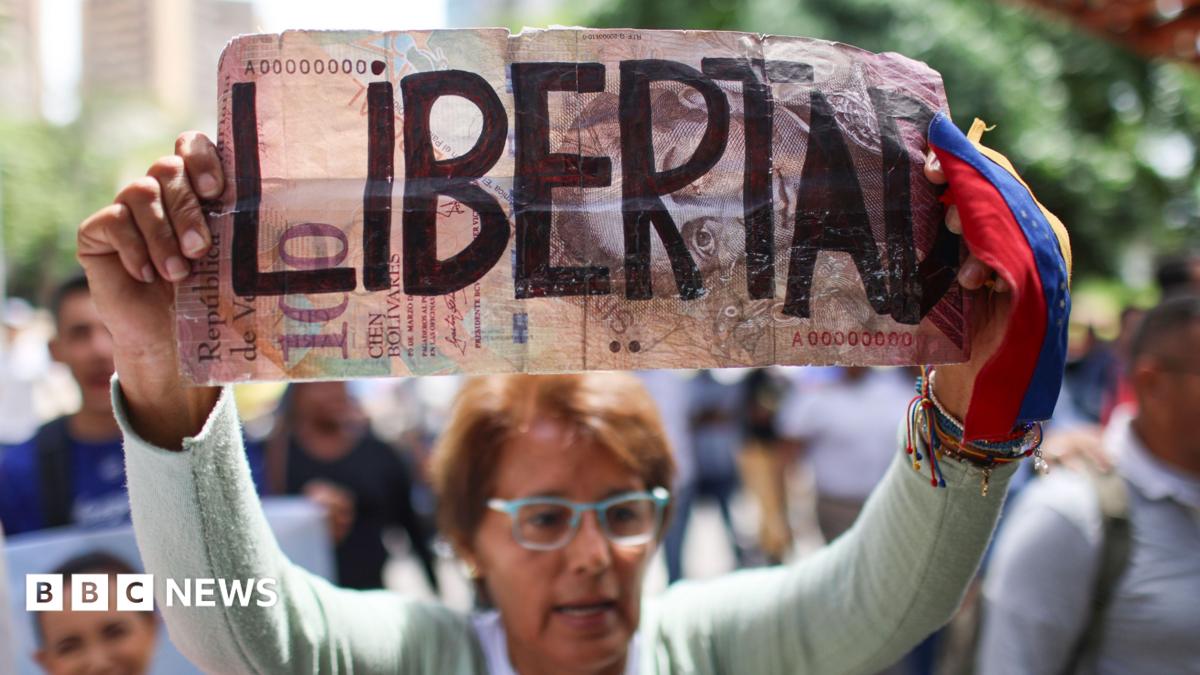
Venezuelan authorities have released dozens of political prisoners in the early hours of Saturday morning, according to human rights organizations monitoring the country's detention facilities. The releases came just days after the nation's interim leader, Delcy Rodríguez, held her first face-to-face meeting with US President Donald Trump on the sidelines of the United Nations General Assembly in New York.
Among those freed was Wilder Vásquez, who had been handed a five-year prison sentence in 2018 over allegations that he was involved in a plot to assassinate former President Nicolás Maduro. The case against Vásquez had long been cited by rights advocates as emblematic of the previous government's use of the justice system to neutralize perceived political threats.
Gonzalo Himiob, vice-president of the human rights group Foro Penal, confirmed that "a significant number" of political prisoners had been released from several detention centres across Venezuela on Saturday morning. The organization, which tracks politically motivated detentions in the country, has been the primary source of information on prisoner releases as the government has remained silent on the matter.
Foro Penal also confirmed the release of Miguel Castillo Cedeño, who the group said had been arbitrarily detained since June 2019. Frank Cabañas was also freed, according to the organization. Rights groups say Cabañas had spent nine years behind bars after being linked to the death of a police officer, despite family members reporting that he had been suffering from health problems throughout the previous year. Foro Penal noted that Cabañas had been the only suspect still detained in that case.
The Venezuelan government has not issued any statement regarding the latest releases, nor has it indicated whether they resulted from Rodríguez's conversation with the US president. Her administration has consistently denied that dissidents are jailed, instead framing prisoner releases as gestures of goodwill and national reconciliation.
The releases represent a continuation of a prisoner release scheme that Rodríguez's interim government had previously described as a key concession to Washington. Following Maduro's removal from power earlier this year, her administration freed hundreds of prisoners as part of a broader reconciliation effort. However, the pace of releases slowed dramatically in April after Rodríguez publicly stated that the scheme was "coming to an end."
That decision drew sharp criticism from opposition figures and human rights organizations. Foro Penal said at the time that the programme was halted with fewer than half of the nation's political prisoners having been released. The criticism underscored the tension between the interim government's stated commitment to political openness and the reality of continued detentions.
Opposition and rights groups have long maintained that Maduro's government used the detention of political prisoners as a tool to stamp out dissent and silence critics over many years. The practice was widely documented by international human rights organizations, which accused Venezuelan authorities of holding activists, journalists, and opposition politicians without due process.
Rodríguez has sought to portray her interim government as more permissive of political dissent while simultaneously courting favour with the United States. The prisoner release scheme was a central element of her administration's concessions to Washington, alongside other measures aimed at improving bilateral relations.
The political context surrounding the releases is complex. Trump administration officials have backed Rodríguez, Maduro's former vice-president, as his successor rather than throwing their support behind opposition leader María Corina Machado, after Maduro was seized and put on trial on drug charges in January. Analysts at the time interpreted the decision as Washington prioritizing short-term stability in Venezuela until elections could be organized.
Venezuela's last elections, held in 2024, in which Maduro was declared the winner, were widely disputed as rigged. Opposition tallies suggested their candidate, who stood after Machado was barred from running, had won by approximately 70% of the vote. The disputed result triggered widespread international condemnation and deepened the political crisis that eventually led to Maduro's removal.
Opposition voices have expressed disapproval over Rodríguez's meeting with Trump, viewing it as a snub of their calls for swift elections. Those calls have previously received endorsement from the United States. The frustration among opposition ranks reflects a broader concern that the interim government is consolidating power rather than paving the way for a democratic transition.
Pedro Mario Burelli, a former executive of Venezuela's state oil company and a prominent opposition commentator, offered a scathing assessment of the meeting between the two leaders. He described them as "the shameless puppet and her unscrupulous and undignified puppet-master," adding that "little has changed in Venezuela under Washington's clumsy and selective oversight."
Interior Minister Diosdado Cabello, a figure closely associated with Maduro's authoritarian rule, characterized the interim president's meeting with Trump as "a great triumph of the diplomacy of peace." His continued presence in a senior government role has raised concerns among opposition supporters about the extent to which the interim administration represents a genuine break from the previous regime.
Rodríguez used her speech at the UN General Assembly on Thursday to reiterate that there "will be elections in Venezuela," without specifying a timeline. The vague commitment has done little to satisfy opposition demands for a concrete electoral calendar, and the renewed prisoner releases are unlikely to quell mounting pressure for a definitive path toward democratic governance.
Foro Penal has documented thousands of politically motivated detentions over the years, making Venezuela one of the countries with the highest number of political prisoners in the Western Hemisphere. The organization's ongoing monitoring of Saturday's releases suggests that while progress has been made, the scope remains limited compared to the total number of people believed to be held for political reasons.
With the prisoner releases confirmed but no official government statement forthcoming, uncertainty persists about the future of the release programme and whether it will be expanded or halted once again. Opposition groups have made clear that prisoner freedom and free elections are inseparable demands, and that the sustainability of any release effort depends on whether Venezuela moves decisively toward a democratic transition. The coming weeks are likely to test whether Saturday's releases represent a meaningful shift in policy or a temporary gesture aimed at easing international pressure.



(0)