
In a country of more than a billion people, a tiny fraction of civil servants have discovered that enforcing the rules they were hired to enforce can turn them into public celebrities. Among the thousands of officials who keep India's administrative machinery moving, a handful become household names every few years — and the public reaction often reveals more about government dysfunction than it does about the individuals being praised.
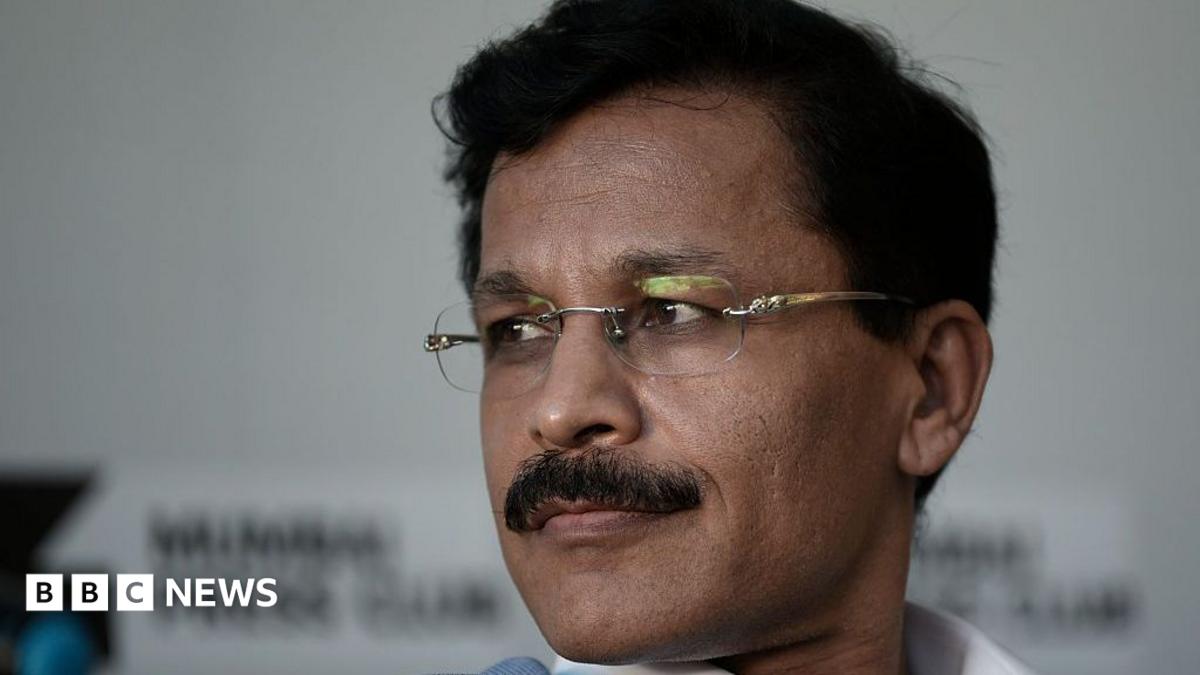
Tukaram Mundhe, 51, is the most recent example. Since taking over as commissioner of Maharashtra's Food and Drug Administration in May, he has spearheaded a succession of enforcement drives. His inspectors have descended on restaurants and other food businesses, documenting cockroach and pest infestations, unhygienic kitchens and stocks of expired food. He has also drawn attention to the striking gaps between what hospitals pay for routine medical supplies and what patients are ultimately billed.
The result has been a kind of accidental fame. Footage and photographs from his inspection raids have circulated widely on social media, and hundreds of commenters have said they wish officers of his calibre and commitment would be dispatched to tackle food safety in their own states. Mundhe has become, in effect, a symbol of an official actually doing the job.
He is not the only one. In Gurugram, on the outskirts of Delhi, district town planner RS Batth has earned public approval for moving against illegal construction and encroachments — problems that residents often complain about endlessly while seeing little enforcement action.
The obvious question is why. Why does an inspector closing down a restaurant, or a planner clearing an unauthorised structure, generate an outpouring of gratitude and requests? The answer lies in the gap between what Indians expect from the state and what they routinely experience. Civil servants deliver services people depend on daily: issuing documents, maintaining law and order, policing food safety, running healthcare. Yet the same bureaucracy is routinely accused of needless delay, solicitation of bribes and an insistence on making ordinary citizens run from office to office.
"When an official appears to cut through the red tape, the response can be surprisingly enthusiastic," the BBC reports. Kamal Kant Jaswal, a retired civil servant, argues that routine administrative competence has become so unusual that it now reads as exceptional. Delays, procedural hurdles and indifferent treatment have become so deeply normalised, he says, that efficient governance is perceived almost as a favour rather than a standard.
Ordinary citizens can attest to that normalisation. Rajesh Singh, 43, who works for a finance company in Delhi, describes long queues and even longer grievance procedures. Tasks that are supposed to be completed within a day, he says, have in his own experience stretched into half a year without any certainty of a satisfactory result. Against that backdrop, an official who moves quickly and refuses to be deflected looks less like a competent administrator than something closer to a folk hero.
The current wave of "honest bureaucrat" stories also has a long Indian pedigree. TN Seshan, the reform-minded chief election commissioner of the 1990s, became a nationally recognised name by enforcing electoral rules fearlessly. Ashok Khemka shot to fame after stepping into a controversial land transaction in 2012. Neeraj Jadaun, a police officer, was lauded for standing up to a mob during deadly religious violence in Delhi in 2020. Kiran Bedi, the first woman to enter the ranks of the Indian Police Service, acquired the nickname "Crane Bedi" in the early 1980s after an illegally parked car belonging to then prime minister Indira Gandhi was towed away. The vehicle was actually removed by a sub-inspector reporting to her, though Bedi later said she backed his decision. She went on to receive the Ramon Magsaysay Award.
Such figures have made the archetype of the no-nonsense, upright bureaucrat both widely understood and genuinely rare. Jaswal is quick to note, however, that thousands of officials in India perform their duties conscientiously without ever attracting attention. Much of that work involves little direct contact with citizens, or is simply less visible than a restaurant raid — the auditor, the revenue officer, the engineer quietly maintaining a public building.
Adulation, of course, can curdle into criticism. An officer celebrated for enforcing the law may equally be attacked for enforcing it rigidly, without regard for local realities. Mundhe has faced pushback from sections of India's food and hospitality industry, which have accused him of arbitrary or selective action. He has rejected those allegations, saying his inspections are driven by evidence and that licences are suspended only in cases of serious violations.
Batth has encountered similar flak. Critics of his anti-encroachment campaigns allege that his enforcement is selective and that it falls disproportionately on vulnerable residents. In several videos that have gone viral, he has insisted that his actions are taken strictly in accordance with town-planning regulations.
That tension is the sharpest issue raised by these stories. Jaswal points out that a street vendor's stall, unauthorised in the eyes of the law, may be the sole source of income for an entire family. In a country where millions migrate to cities in search of work, an unsanctioned place to live can be the only shelter a newcomer can afford. The same demolition or eviction can therefore be seen simultaneously as legitimate enforcement and as an act of cruelty.
Officials are also working under real pressure of their own. Pushpa Sundar, who briefly served as a civil servant before becoming a writer on administrative and civic issues, has explored those constraints at length. The result is a recurring public pattern: a small cohort of determined officers achieves visible results, briefly becomes a hero, and then disappears back into a system whose default setting remains inertia. The popularity of figures like Mundhe and Batth is less a story about exceptional individuals than a measurement of how far below expectations everyday administration has fallen — and how much Indians, having adjusted to that shortfall, are willing to be surprised by anyone who does the job as written.








(0)