
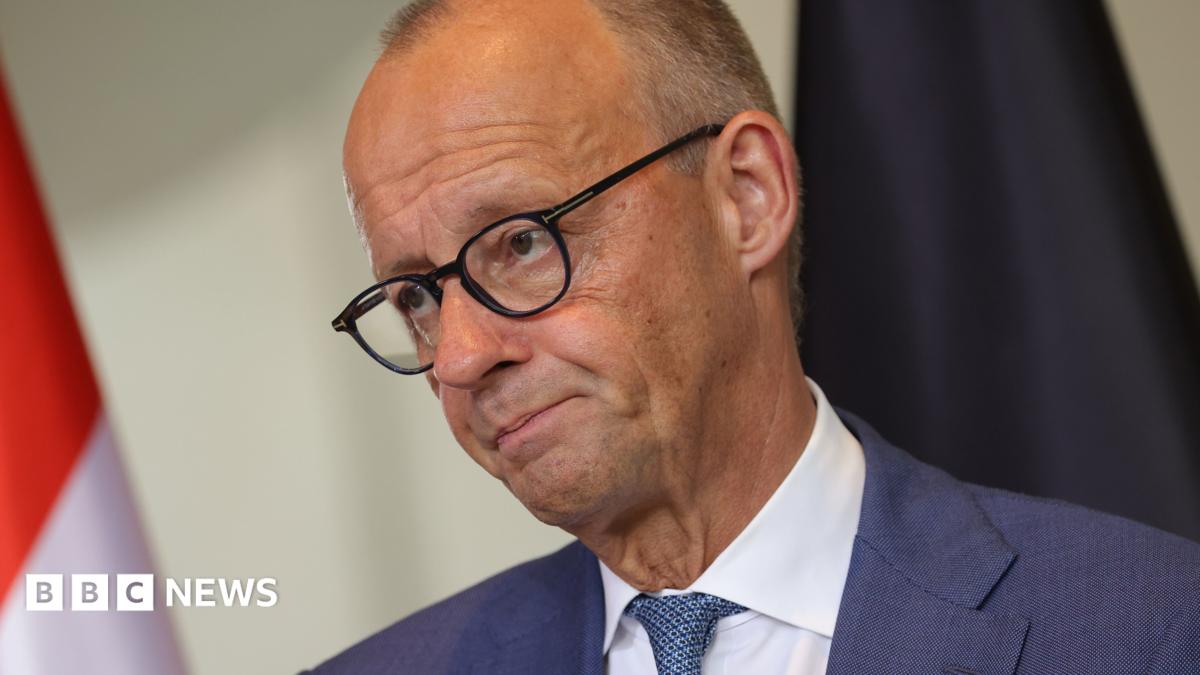
Eight state premiers from Germany’s Christian Democratic Union (CDU) have formally declared their support for Chancellor Friedrich Merz, attempting to silence intensifying debate surrounding his political survival. The regional leaders released a joint statement emphasizing that rebuilding public confidence in the conservative party requires active governance rather than internal personnel disputes, directly addressing the wave of speculation currently unsettling Berlin.
The collective intervention comes at a critical juncture for Merz, who has led the federal government for just 16 months. Facing historically depressed personal approval ratings and a dramatic surge in support for the anti-immigration Alternative for Germany (AfD), the chancellor has increasingly been scrutinized by critics and political commentators who question whether his combative leadership has turned into an electoral liability for his party.
The group of regional leaders backing the federal leader includes the premiers of Schleswig-Holstein, Saxony, Hesse, Rhineland-Palatinate, Saxony-Anhalt, Thuringia, Berlin, and North Rhine-Westphalia. In their declaration, they argued that the nation's political landscape requires enduring stability more than ever, insisting that Germany must maintain an effective and reliable federal government backed by a solid parliamentary majority in the Bundestag.
Public standing for the chancellor has deteriorated significantly in recent months, with a survey published by the Bild newspaper revealing that a mere 14 percent of respondents viewed him as the right person for the chancellorship. His blunt, abrasive public communication style, combined with widespread economic and social anxieties, has accelerated conversations regarding whether the CDU should consider an alternative candidate to lead the federal administration.
The growing unrest inside conservative circles was severely aggravated by the disastrous state election results in Saxony-Anhalt in early September. In that contest, the CDU crashed to a distant second place with just 17.2 percent of the vote, while the far-right AfD achieved a historic breakthrough by capturing 43.8 percent, representing the closest a far-right movement has come to governing a German federal state since the end of the Second World War.
Although the AfD fell three seats short of an absolute legislative majority in Saxony-Anhalt, and mainstream democratic parties have steadfastly refused to enter into a coalition with it, the far-right group could still attempt to establish a minority administration. This unprecedented regional realignment has sent shockwaves through Germany’s established political system and placed Merz under immediate national pressure.
In the aftermath of the Saxony-Anhalt defeat, Merz adopted a confrontational stance, publicly branding the AfD as a destructive political force seeking closer relations with Russia. He went on to describe the party's hardline migration platform as an effort aimed at the ethnic cleansing of skilled workers, prompting the AfD to launch a formal defamation complaint against the chancellor over what it characterized as repulsive and unfounded allegations.
The escalating turmoil has fueled sustained talk of a "Kanzlertausch," or mid-term chancellor swap, across German media and political circles. Alongside the eight CDU state premiers, Markus Söder, the premier of Bavaria and leader of the CDU’s Bavarian sister party, the Christian Social Union (CSU), has also publicly expressed his continued support for Merz in an effort to present a united conservative front.
Nevertheless, the chancellor faces an immediate and decisive test of his authority this Sunday, when voters head to the polls for regional elections in both Berlin and the northeastern state of Mecklenburg-West Pomerania. According to party insiders, senior CDU officials are scheduled to convene on election night to coordinate an official response to the results, with forecasts projecting further potential setbacks for the conservatives.
In the federal capital, the political landscape remains tightly contested, with polling indicating a close fight between the CDU and the left-wing Die Linke for the top spot, while the Greens and the AfD remain within striking distance. Conversely, in Mecklenburg-West Pomerania, the AfD is projected to lead the field ahead of the centre-left Social Democratic Party (SPD), though it appears unlikely to secure an outright majority.
For Merz, the worst-case electoral scenario on Sunday would entail the CDU losing its governing position in Berlin while simultaneously failing to secure enough votes to maintain any parliamentary representation in Mecklenburg-West Pomerania. Such an outcome would inevitably trigger fresh volatility within conservative ranks and intensify the scrutiny over his federal leadership.
Unlike the political culture in the United Kingdom, where prime ministers are frequently ousted and replaced mid-term, German political tradition places a heavy emphasis on stability, making mid-mandate leadership changes rare. While Merz could theoretically face a parliamentary vote of no confidence or be pressured into resigning, political analysts still consider such extreme mechanisms relatively improbable under current conditions.
Even though no high-profile CDU figure has openly declared a challenge against the chancellor, political circles have routinely floated several prominent names as viable alternatives. Potential contenders often mentioned in discussions include Bavarian premier Markus Söder, North Rhine-Westphalia Premier Hendrik Wüst, and federal Interior Minister Alexander Dobrindt, reflecting ongoing contingency planning among conservative strategists.
Merz's political trajectory has long been marked by a mixture of international ambition and domestic resistance. Prior to formally stepping into the chancellorship, he successfully organized cross-party backing for an expansive €500 billion ($547 billion) defense infrastructure package, drawing significant praise abroad for his decisive commitment to strengthening European security frameworks.
Yet, his path to high office was fraught with internal opposition, requiring three separate campaigns before he eventually secured the CDU leadership. After reaching a coalition agreement with the SPD, he even suffered an unprecedented initial defeat in the post-war era during the parliamentary confirmation vote for chancellor before finally securing office. Having fought for decades to attain Germany’s highest executive post, Merz is widely expected to resist any attempts to cut his tenure short.








(0)