
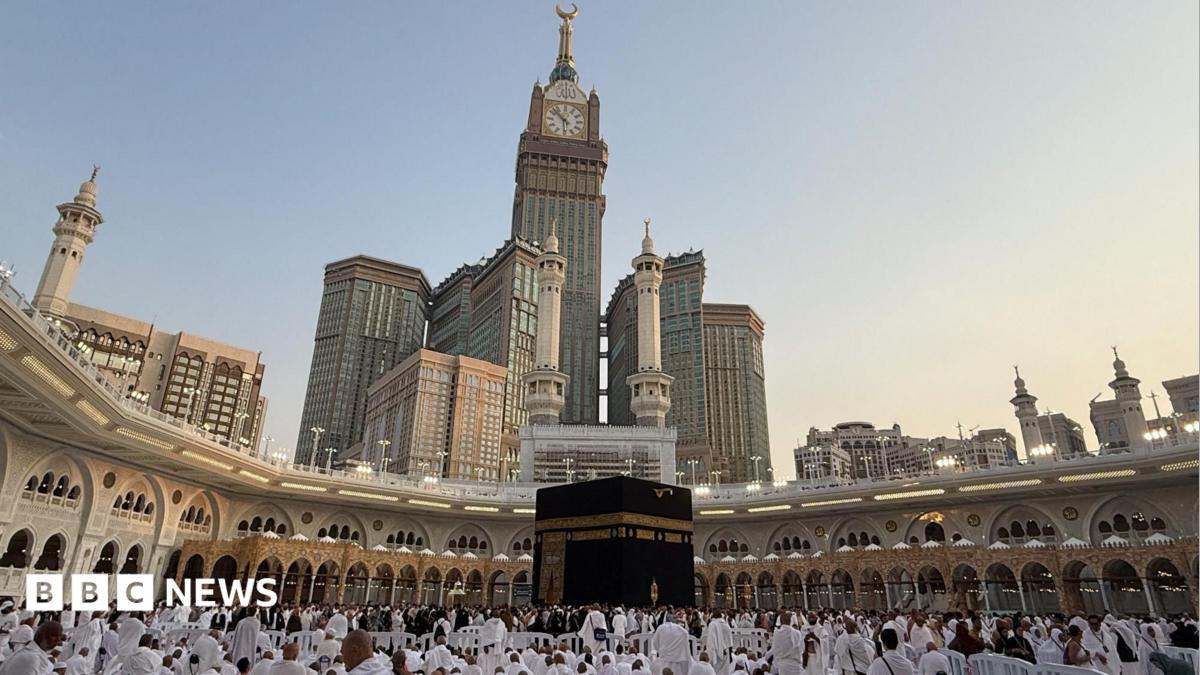
Saudi air defenses successfully intercepted and brought down an armed drone launched by Houthi forces south of the holy city of Mecca on Tuesday evening, according to statements released by the Saudi-led military coalition. The incident marks a dangerous escalation in the protracted conflict, with Saudi authorities condemning the launch as an egregious assault directed toward one of the most revered locations in the Islamic world.
Major General Turki al-Maliki, acting as spokesman for the Saudi-led coalition in Yemen, characterized the incident south of Mecca—the focal point of the annual Hajj pilgrimage and home to Islam’s most sacred shrine—as a disgraceful act. He asserted that coalition defenses responded swiftly to neutralize the aerial threat before it could inflict damage or compromise civilian safety in the region.
The reported targeting of the holy site provoked sharp international backlash, including from the Organisation of Islamic Cooperation. The 57-nation body issued a formal statement denouncing attacks directed toward Mecca and Medina province, where Islam’s second holiest site is situated, labeling such actions an unacceptable and intolerable transgression against the global Muslim community.
In contrast, Houthi military officials strongly rejected allegations that their forces had targeted holy sites, describing the claims made by Riyadh as deliberate fabrications and falsehoods. Military spokesman Yahya Sarea stated that the Yemeni armed movement strictly avoids religious sanctuaries, asserting that operations remain exclusively focused on hostile military installations and strategic oil facilities.
Sarea maintained that the latest wave of drone and missile launches against Saudi territory was executed in direct retaliation for intense coalition aerial bombardment. According to the Houthi command, the Saudi-led alliance had carried out more than 450 airstrikes across Yemen over the preceding week. The group also claimed responsibility for shooting down a Saudi fighter jet operating over Marib province during recent combat engagements.
The attempted strike prompted Saudi civil defense authorities to issue brief emergency security alerts across several western population centers on Tuesday, warning residents in both Mecca and the major Red Sea port city of Jeddah of incoming aerial projectiles. Coalition commanders reaffirmed that their forces would not hesitate to enforce necessary and deterrent countermeasures to suppress hostile militia activity.
Amid the mounting security concerns, the United States Embassy in Saudi Arabia revised its consular guidance, issuing a "reconsider travel" advisory for American citizens. The mission cited heightened risks stemming from Houthi projectile attacks, which have continuously endangered urban centers, civilian airports, military installations, diplomatic compounds, and critical energy infrastructure across the kingdom.
The aerial exchanges coincide with sweeping territorial gains by Houthi fighters along Yemen’s western coastline. In recent operations, the group seized extensive coastal territory from Saudi-backed pro-government forces, capturing the strategically vital port of Mokha alongside Perim Island, which commands the narrow Bab al-Mandab Strait connecting the Red Sea to global maritime trade corridors.
While Houthi leadership reiterated that international commercial traffic remains unharmed, they affirmed their intention to target Saudi vessels navigating the waterway. The maritime route has become particularly vital for Saudi petroleum exports following the effective closure of the Gulf's Strait of Hormuz in the wake of the conflict between the United States, Israel, and Iran.
Compounding Saudi energy vulnerabilities, the kingdom’s crucial East-West Pipeline—designed to transport crude oil across the peninsula to the Red Sea terminal of Yanbu—was forced to halt operations after sustaining severe damage in an attack blamed on Iran-backed militias operating from Iraq. While industry analysts warned that structural repairs could require more than a month, US Energy Secretary Chris Wright offered an optimistic assessment, predicting that crude flows would resume within days.
In response to the deteriorating security environment, Saudi Crown Prince Mohammed bin Salman has directly urged US President Donald Trump to authorize direct American military action against the Houthis, according to sources familiar with the discussions. Thus far, the US administration has declined direct combat engagement, limiting its assistance to intelligence sharing and targeting support, while maintaining continuous diplomatic dialogue regarding regional stability.
The United Nations Security Council convened an emergency session on Tuesday to evaluate the escalating crisis along the Red Sea corridor. Representatives from both the internationally recognized Yemeni government and Saudi Arabia implored the council to take decisive measures against the Houthis, accusing the group of weaponizing the Bab al-Mandab bottleneck for economic coercion. Council members jointly emphasized the urgent necessity of protecting freedom of navigation to avoid global supply disruptions.
On the ground in Yemen, the renewed fighting has aggravated an already catastrophic humanitarian situation. The International Organization for Migration reported that more than 90,000 individuals have been newly displaced by recent combat. IOM Director General Amy Pope cautioned that many vulnerable families are now fleeing for the second or third time with virtually no possessions remaining.
The human toll has climbed rapidly in recent weeks, with the World Health Organization confirming that at least 500 people have been killed since the beginning of August, including 297 fatalities recorded over a single recent seven-day span. The widespread casualties highlight the severe cost borne by the civilian population caught between frontline clashes and widespread aerial bombardment.
Yemen's civil conflict initially erupted in 2014 when Houthi forces seized the capital, Sanaa, prompting a full-scale intervention by the Saudi-led coalition the following year. Over the course of the protracted war, more than 150,000 people have been killed, creating one of the world's most severe humanitarian crises, with more than 22 million residents requiring humanitarian assistance according to United Nations assessments.
The latest wave of cross-border and maritime warfare marks the definitive unraveling of a four-year informal ceasefire that began deteriorating in July. Hostilities flared after the Houthis declared a maritime embargo against Saudi Arabia, initiating drone and missile strikes against Saudi airports, tankers, and energy facilities in response to coalition air operations and an ongoing blockade of Yemeni ports and airports.








(0)