
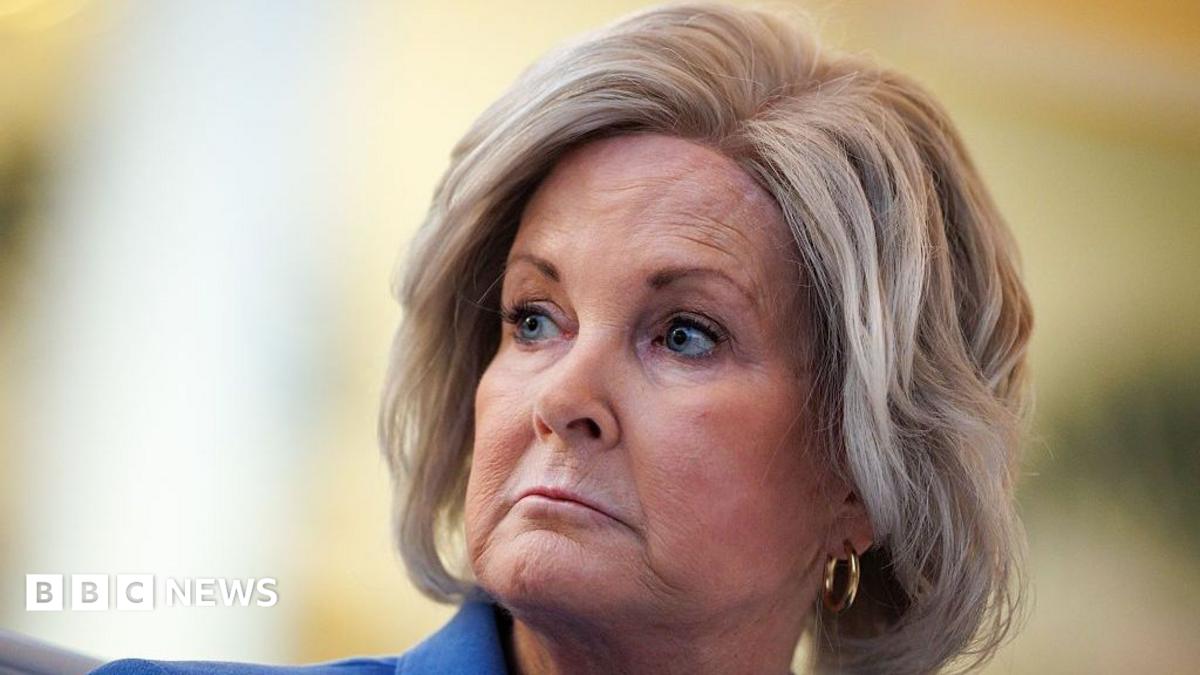
White House Chief of Staff Susie Wiles has formally announced that she is free of cancer, reaching a major personal milestone precisely six months after she first went public with her medical diagnosis. The high-ranking administration official shared the positive development following recent medical testing, signaling an encouraging turn in her health journey while serving in one of the most demanding positions in the federal government.
In a personal statement published on the social media platform X, the 69-year-old presidential aide explained that her latest pathology tests came back entirely clear. The confirmation followed a visit to the Mayo Clinic earlier in the week, where clinicians evaluated her condition following half a year of active treatment and monitoring.
Within her public message, Wiles took the opportunity to express deep gratitude to President Donald Trump, explicitly thanking him for offering his unwavering support throughout her medical ordeal. She emphasized that her focus remains firmly on her official responsibilities, stating her intention to continue working diligently to advance the administration’s America First agenda.
The announcement brings a sense of resolution to a health battle that began earlier this year, during which Wiles managed to maintain her duties at the highest level of government. Throughout the six months of medical care that followed her initial diagnosis, she continued to carry out her White House duties remotely, utilizing virtual arrangements to remain actively engaged in presidential operations.
Wiles had first disclosed her condition to the public in March, using the moment to draw attention to the widespread nature of the disease. In her initial statement, she pointed out that one in eight women will be diagnosed with breast cancer over the course of their lives, underscoring the universal impact of the illness across society.
At the time of that initial disclosure, Wiles paid tribute to the everyday resilience of women facing similar health battles across the nation. She observed that these women consistently continue to raise their families, go to their jobs, and serve their local communities with strength and determination, noting that she had now joined their ranks as she began her own path to recovery.
Her Wednesday social media update did not offer extensive clinical specifics regarding the precise nature or course of the medical treatments she received over the last six months. Instead, the post focused primarily on the relief of having received clear pathology results from the Mayo Clinic and her continued dedication to her executive branch role.
Wiles occupies a historic place in American political leadership, standing as the very first woman ever to hold the title of White House chief of staff. The position is broadly recognized across Washington and the political landscape as the single most important and operationally consequential role within the executive office of the president.
In her day-to-day capacity as chief of staff, Wiles fulfills a multifaceted mandate that includes managing access to the Oval Office as the president's primary gatekeeper. She is tasked with coordinating major policy initiatives across federal agencies, providing strategic political counsel, and ensuring that President Trump's overarching agenda remains focused and on track.
Widely regarded as one of the most powerful and influential figures inside the current administration, Wiles is known to share an exceptionally close working dynamic with the president. Her standing in the White House reflects years of trusted political collaboration, where she has proven to be a central architect of his political operations.
Prior to her historic appointment to lead the White House staff, Wiles played an indispensable and prominent role in directing President Trump’s 2024 presidential campaign. Her leadership during that electoral cycle helped cement her reputation as an effective political operative, ultimately paving the way for her selection as chief of staff upon his return to office.
Despite her established reputation for operational discipline, her tenure in the West Wing has not been entirely free from public scrutiny and political turbulence. In December, she became the center of substantial attention after national media published reflections she had shared regarding the inner workings of the administration.
The controversy arose when Vanity Fair published a series of interviews with Wiles that featured blunt, unvarnished, and occasionally unflattering assessments of her experiences within the Trump White House. The profile provided a rare and unfiltered window into the interpersonal dynamics shaping the upper echelons of the executive branch.
Among the notable remarks in that profile, Wiles described the president—who is famously a teetotaler—as possessing an "alcoholic's personality." However, she tempered that characterization by strongly praising his determination, adding that there is "nothing he can't do. Nothing, zero, nothing," when he sets his mind to a task.
The published interviews also included candid thoughts regarding other prominent figures allied with the administration. Wiles characterized Vice-President JD Vance as a "conspiracy theorist" and separately offered a blunt assessment of billionaire supporter Elon Musk, referring to the high-profile tech entrepreneur as an "odd, odd duck."
The political fallout from the magazine profile was quickly addressed by the administration, with the president swiftly coming forward to publicly defend his chief of staff. For her part, Wiles pushed back against the published article, arguing that the reporting had omitted significant context in an effort to construct a deliberately chaotic and negative narrative. As of Wednesday evening, neither President Trump nor the official White House press office had released a formal public statement regarding her cancer-free announcement.







(0)