
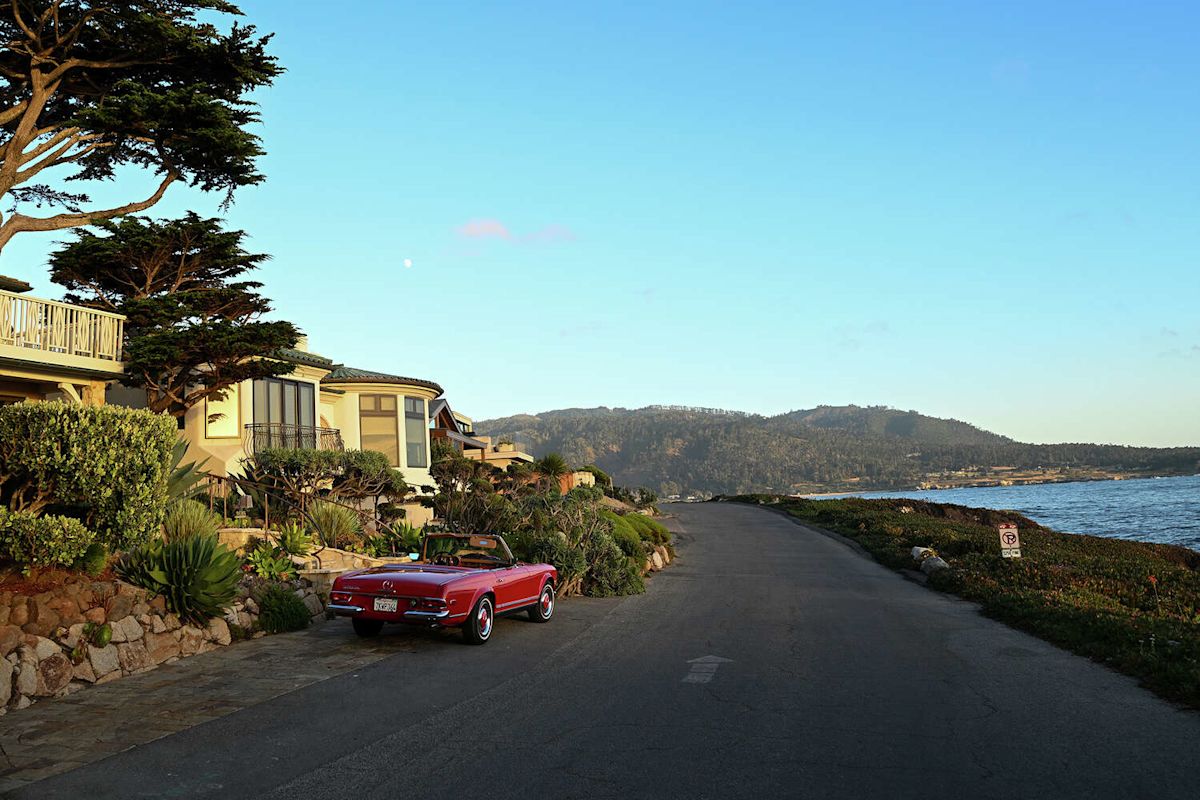
For more than a century, the idyllic beachfront community of Carmel-by-the-Sea, California, stood apart from every other incorporated municipality in the United States by deliberately refusing to assign numerical street addresses to its homes and commercial buildings. That long-held tradition has now officially reached its conclusion as physical address numbers are being mounted on storefronts, cottages, and public structures across the storied enclave.
The tangible transition was highlighted by a milestone at the center of the town's local governance. Carmel City Hall formally received its own numerical marker, designating the property at 662 Monte Verde St. and signaling a historic administrative shift that brings the coastal village into alignment with standard modern municipal practices.
Historically, the community’s identity has been shaped as much by what civic leaders refused to permit as by what they constructed. Generations of town officials fiercely protected Carmel’s walkable, storybook aesthetic by routinely rejecting conventional urban modifications and imposing strict local regulations.
Among these preservation efforts, town guidelines have long restricted building heights to safeguard the overhead tree canopy and prioritized the preservation of historic architecture over new development. The city even maintained eccentric historical ordinances on its books, such as an enduring restriction against wearing high-heeled shoes without a permit, all in an effort to maintain its distinctive character.
This aversion to conventional numbering dates back to the town's municipal incorporation in 1916. At the time, Carmel was predominantly populated by an intimate colony of writers, poets, and visual artists who concluded that standard numerical street markers were entirely unnecessary for their close-knit seaside settlement.
As the population grew modestly through the middle of the 20th century, residents continued to reject numbers in favor of an informal and creative naming tradition. Homeowners christened their properties with whimsical and literary monikers, including names such as "Sandy Pause" and "A Turn of Fraise," which reflected the village’s artistic roots.
The practice was ultimately codified into the city’s municipal code. Under the established local law, houses and commercial properties were officially identified through descriptive parcel locations relative to the closest cross-street intersections, with determinations overseen by the municipal community planning and building department.
While the directional system served the community for decades, modern realities gradually created severe functional challenges. The rapid expansion of 21st-century commerce introduced a continuous stream of delivery couriers to Carmel's narrow, winding corridors, where drivers routinely found themselves lost and circling neighborhoods while attempting to deliver packages.
Beyond logistical inconveniences with mail and delivery logistics, the lack of standardized addresses began to pose significant risks to public health and safety. Emergency personnel, including paramedics, firefighters, and police officers, frequently encountered difficulties quickly locating distress calls, even when responders possessed extensive familiarity with the local street grid.
The mounting friction over the missing addresses became a primary focus for Mayor Dale Byrne during his bid for office. At a campaign gathering held in a neighbor's backyard two years prior, residents repeatedly confronted Byrne about the navigational problems caused by the absent address system, demanding to know how municipal leadership planned to resolve the issue.
Following his election, the debate intensified as the City Council organized public feedback sessions to gauge community sentiment. Byrne took an active role in examining local emergency records and consulting directly with administrators and frontline personnel at both the municipal police and fire departments.
The findings from those public safety assessments revealed alarming vulnerabilities in emergency response times. Byrne discovered that first responders were frequently delayed during critical, life-threatening moments because dispatchers and vehicle crews could not pinpoint precise locations from vague cross-street descriptions.
In one notable incident tracked during the review, the fire department was dispatched to assist a resident suffering from an acute heart attack on a complex street. Unable to identify the exact residence upon arrival, emergency personnel were forced to proceed door to door to locate the patient, while dispatched police officers searched simultaneously.
A police officer in a squad car eventually discovered the patient first, and the fire crew arrived roughly 10 minutes later to administer life-saving medical care. Such harrowing delays underscored the potential danger of allowing artistic preference to override practical emergency access.
Responding to these persistent safety hazards and a growing consensus among local citizens, the Carmel City Council voted to overturn the 110-year-old policy, establishing Carmel as the final incorporated city in the United States to implement a formal address system.
Today, as numbers are affixed to exterior walls throughout the municipality, Carmel is adapting to the demands of modern safety while striving to retain the architectural charm and natural beauty that have defined the coastal enclave for generations.







(0)