
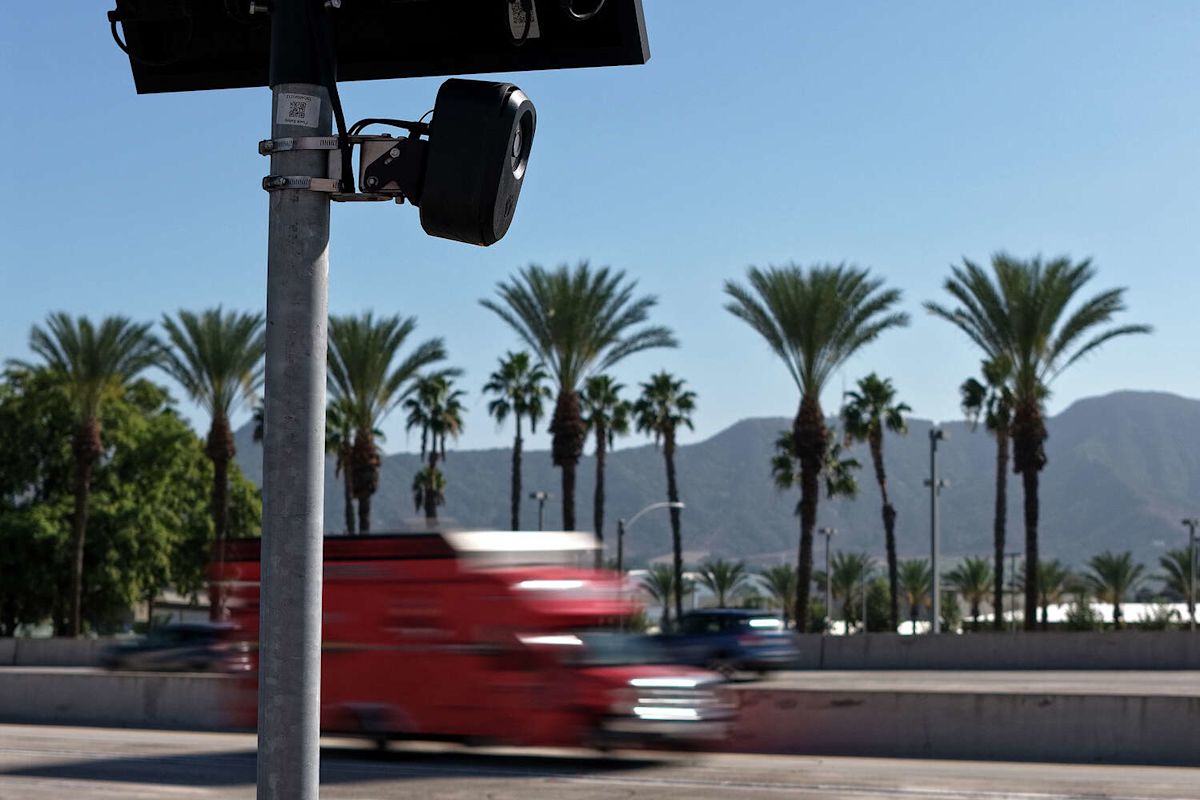
A growing shift in automated police surveillance is unfolding across Northern California as local governments reconsider their relationships with prominent camera manufacturers. In the San Francisco Bay Area, municipalities including Antioch and Hayward have moved to terminate their ties with Flock Safety, a leading automated license plate reader vendor. However, rather than dismantling their street-level monitoring infrastructure, these cities are opting to transition their networks to competing security firms, ensuring that vehicular surveillance remains actively deployed across public roadways.
The decision to cut ties with Flock follows an intense period of civic unrest, during which community members, privacy advocates, and civil liberties organizations voiced severe concerns regarding widespread surveillance. Public scrutiny intensified following revelations that law enforcement databases had been subjected to alleged abuses, including documented instances where police officers improperly utilized automated camera records to conduct personal surveillance on their former partners.
Across the region, local governments have responded to the mounting backlash through markedly different policy approaches. While a handful of cities, such as Santa Cruz and Mountain View, yielded to public demands by completely eliminating their automated license plate reader programs, others have opted for quiet vendor substitutions. Rather than ending automated tracking, these municipalities have chosen to solicit proposals from competing hardware providers.
Among the alternative manufacturers vying for municipal market share are Motorola Solutions, Genetec, Rekor, and Axon. Axon in particular has positioned itself as the primary corporate alternative to Flock, securing major contracts as local councils look for new partners. Despite this commercial transition, civil rights advocates maintain that switching providers does little to resolve the core civil liberties issues that initially triggered public outrage.
Legal and privacy experts argue that the operational reality of automated license plate readers remains identical regardless of the corporate brand stamped on the hardware. According to Lisa Femia, a staff attorney at the Electronic Frontier Foundation, both Axon and Flock design products intended to fulfill the exact same overarching objective: the bulk recording and systematic monitoring of vehicular travel throughout public spaces.
Femia emphasized that these camera networks indiscriminately capture photographs of every passing automobile, irrespective of whether the motorist is suspected of any wrongdoing or unlawful behavior. The systems systematically log the precise time, physical location, license plate number, color, make, and model of each car, while also indexing unique visual identifiers such as bumper stickers. In evaluating the decision of cities to switch providers, Femia noted that replacing Flock with Axon is essentially the functional equivalent of swapping Coke for Pepsi.
The municipal debate over this surveillance transition was prominently displayed during an Antioch City Council meeting held on August 25. Council members gathered to debate the future of the city's vehicle monitoring capabilities, weighing intense public apprehension against persistent appeals from police officials who argued that maintaining automated camera infrastructure was vital for public safety operations.
During the public proceedings, Antioch Police Lt. Michael Mellone spoke in defense of license plate readers, arguing that the technology serves as an indispensable tool for investigators. Mellone explained to council members that motor vehicles are deeply connected to a substantial portion of the criminal incidents handled by the department, particularly high-priority investigations involving violent shootings and armed robberies.
Mellone stressed the operational advantages provided by camera networks when witness accounts are incomplete. In many criminal cases, investigators are left with only fragmented clues, such as a partial license plate number, a vague vehicle description, or an unverified direction of travel. In these instances, plate reader systems allow detectives to transform minimal details into concrete, actionable investigative leads that help identify potential suspects.
To underscore the system's investigative utility, Mellone presented departmental statistics reflecting the local performance of Antioch’s Flock network over the preceding year. According to police data, the automated camera system assisted officers in tracking down at least 42 stolen vehicles throughout the city, operations that subsequently led to 23 criminal arrests.
Despite these law enforcement endorsements, community opposition remained prominent during the council deliberations. Councilmember Tamisha Torres-Walker explicitly recognized the public's widespread concerns regarding safety, systemic privacy degradation, unchecked mass surveillance, and threats to fundamental civil rights. She openly stated her objective to remove Flock from Antioch's streets.
Nonetheless, when the measure was put to a formal vote, Torres-Walker and the remaining council members present unanimously approved a $660,000, four-year contract to implement Axon’s automated license plate reading system. Requests for comment sent to Torres-Walker following the vote yielded no response.
A similar policy trajectory unfolded in the nearby city of Hayward, where officials also elected to replace their surveillance architecture with Axon hardware. Hayward formalised its commitment by adopting an expansive five-year contract valued at $2.9 million. Neither Axon corporate representatives nor the communications officer for the City of Hayward responded to inquiries regarding their newly formed commercial agreements.
The widespread adoption of automated license plate readers has also drawn the attention of academic researchers examining the actual efficacy of law enforcement surveillance technologies. Ian Adams, a policing researcher at the University of South Carolina who co-authored a study evaluating automated plate readers, observed that the debate around the technology has become deeply polarized between absolute critics and uncritical proponents.
Adams indicated that both opposing factions are likely to find fault with empirical research findings. The study demonstrated that while the technology does assist law enforcement agencies in recovering stolen automobiles—largely because the systems are specifically engineered to identify and log vehicle travel—the data provides considerably less evidence showing that plate readers exert a meaningful impact on resolving or curbing other categories of crime.
As Bay Area cities replace one surveillance provider with another, the friction between technological policing and constitutional privacy protections remains unresolved. While municipal leaders seek to balance community unease with the investigative demands of local police departments, the ongoing deployment of Axon cameras ensures that automated mass surveillance will continue across Northern California roadways.







(0)