
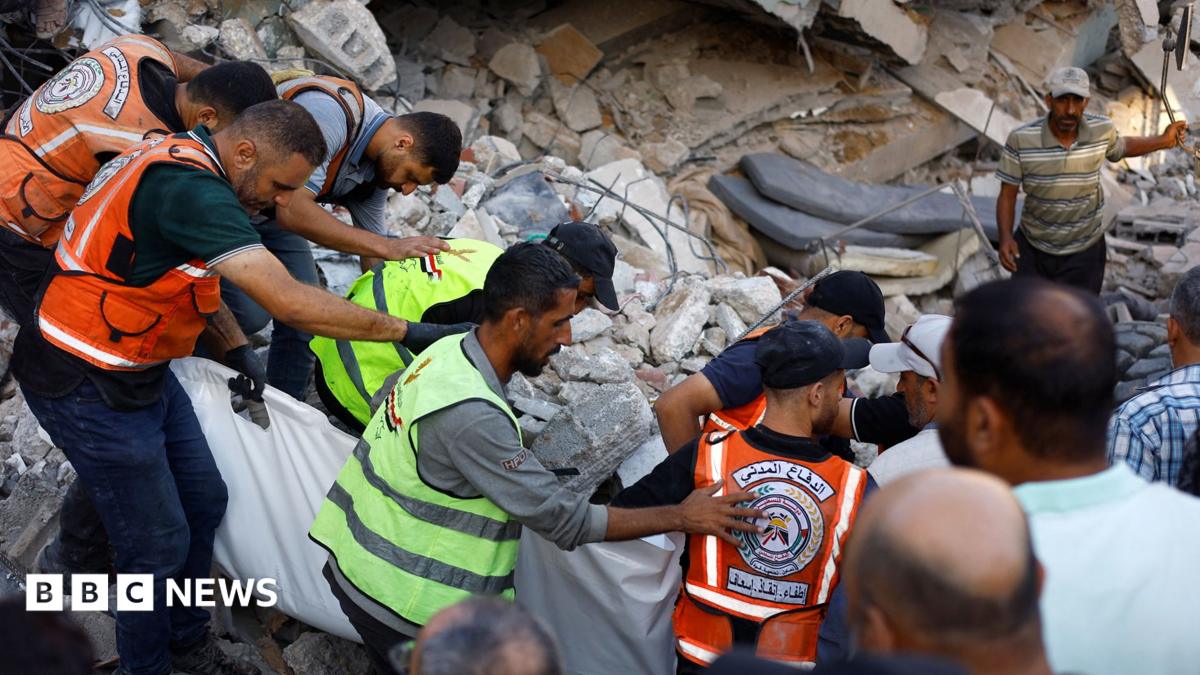
A catastrophic structural collapse in Gaza City has claimed the lives of at least 21 people, including eight children, after an unstable residential building damaged in earlier hostilities gave way overnight, according to emergency responders and medical officials.
The six-storey structure, located in the Tal al-Hawa neighbourhood of Gaza City, had been left precariously tilted following an Israeli airstrike conducted more than a year ago. Approximately ten displaced families had taken up residence inside the compromised edifice, having exhausted all other options for shelter amid the enclave's severe housing deficit.
Rescue workers affiliated with the Gaza Civil Defence initially had to sift through heavy concrete slabs and tangled rebar with their bare hands due to an acute shortage of specialized mechanical equipment. Search teams from the United Nations and Egyptian delegations subsequently joined the effort before emergency personnel officially concluded operations on Wednesday afternoon, confirming that 45 injured survivors had been transported to nearby hospitals.
Bereaved relatives recounted the desperate circumstances that compelled displaced residents to occupy the dangerous site. Sherif, who lost his sister in the tragedy, explained that the family had been unable to secure a tent or any viable alternative shelter. He noted that despite knowing the building posed a severe threat to their lives, extreme deprivation and a total absence of resources left them with no other recourse.
Witnesses in the immediate vicinity described a sudden and violent collapse that occurred during the early hours of Wednesday morning. Umm Mohammed Bakrun, who resides in a makeshift tent adjacent to the site, stated that the incident felt like an intense earthquake, sending cascades of stone across the area and creating an immense plume of dust accompanied by frantic screams from the rubble.
Another local resident, Mansour Abu Mohammed, observed that the building gave way within a matter of seconds. He noted that while fragments of stone had regularly fallen from the leaning exterior in preceding weeks, the lack of accessible accommodation forced destitute families to remain inside despite the glaring structural hazards.
Independent satellite analysis supports local accounts, showing that the surrounding sector had been subjected to bombardments during the early phases of the war, with substantial physical damage to the collapsed building clearly visible in imagery dating back to 2024.
Visiting the disaster scene on Wednesday morning, Alessandro Mrakic, head of the United Nations Development Programme (UNDP) office in Gaza, described the incident as an acute tragedy compounded by a severe deficit of excavation machinery. He issued a grave warning that approximately 400 other war-damaged structures throughout the Gaza Strip are currently at imminent risk of failure, particularly as hazardous winter weather approaches.
Mrakic emphasized that humanitarian teams operating on the ground lack vital logistical resources, including basic mechanical spare parts and engine oil required to keep the limited heavy machinery remaining in Gaza operational.
The United Nations humanitarian relief coordinator, Ramiz Alakbarov, expressed deep sorrow over the loss of life, asserting that civilians should never be forced to gamble with their survival simply to find temporary refuge. Alakbarov pressed Israeli authorities to permit the immediate importation of heavy rescue machinery alongside non-food humanitarian items, such as weather-resistant tents and tarpaulins, to safeguard displaced communities before winter rainfall intensifies.
Israeli officials maintain that stringent import controls on heavy plant and technical equipment remain necessary to prevent items with potential dual civilian and military uses from being acquired by Palestinian armed groups.
The fatal collapse highlights the sweeping physical devastation across the enclave, where the United Nations estimates that roughly 80 percent of all buildings have been either destroyed or heavily damaged since the onset of the conflict. More than 1.9 million people—amounting to approximately 90 percent of Gaza's entire population—remain displaced from their homes, with an estimated 1.2 million individuals living in makeshift encampments and tents.
United Nations agencies have continued to highlight the dire humanitarian situation across Gaza, noting that conditions remain extremely precarious despite a ceasefire framework established the previous October. Recurrent airstrikes and military activity continue to impact populated districts, causing further civilian casualties, infrastructural ruin, and repeated displacement.
On Tuesday, Israeli airstrikes resulted in the deaths of at least five Palestinians, among them two children. The Israeli military stated that the operations targeted a Hamas commander in the south and an operative in northern Gaza, with child casualties reported in both incidents.
In a separate development, the British charitable organization Medical Aid for Palestinians reported that a patient was killed by an Israeli drone at a health facility it supports in the northern town of Jabalia. A spokesperson for the Israeli military stated that the armed forces had no record of the reported incident.
The broader conflict was initiated by the Hamas-led attacks on southern Israel on October 7, 2023, during which approximately 1,200 people were killed and 251 hostages were seized. Since the start of the ensuing military campaign, more than 73,790 people have been killed in Gaza, according to data from the local health ministry that United Nations agencies regard as reliable.






(0)