
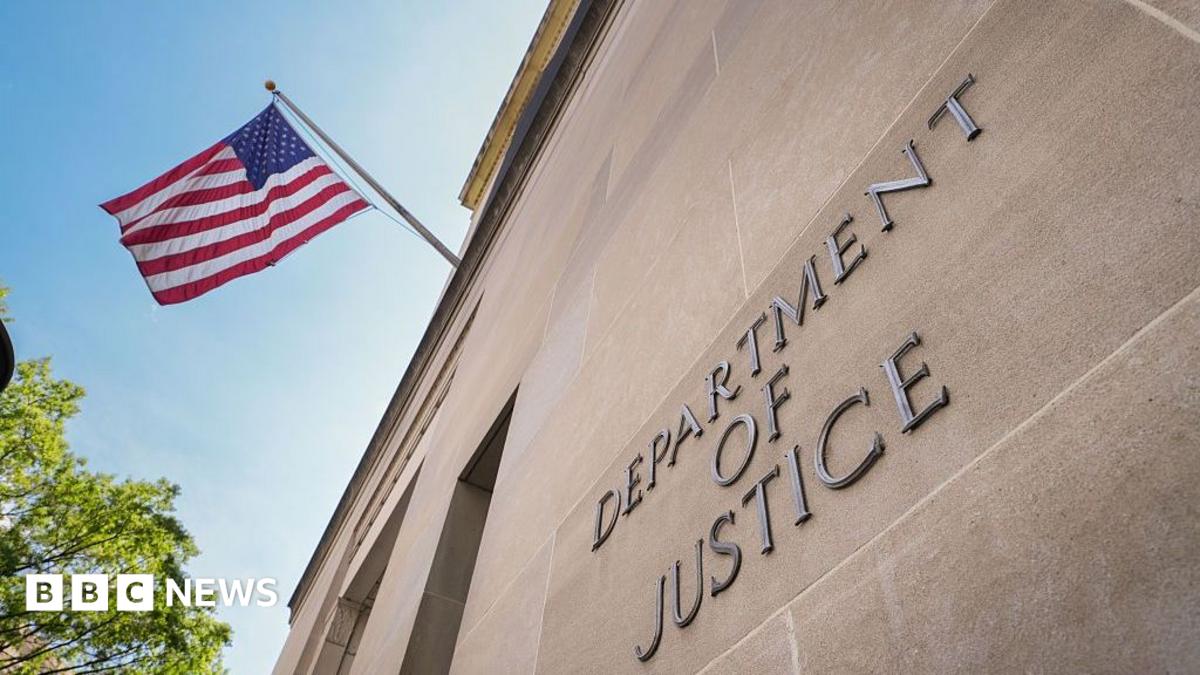
Federal prosecutors in the United States have filed criminal charges against five individuals linked to Russian Intelligence Services, accusing them of orchestrating international schemes to assassinate public figures and activists who support Ukraine. The indictment, announced by the Department of Justice, outlines a coordinated effort to hire operatives on American soil and across Europe to neutralize perceived opponents of the Russian government.
According to justice officials, the accused network sought out and paid individuals to conduct surveillance and carry out contract killings against targets deemed aligned with Ukraine's wartime defense. The indictment alleges that the operation extended across international borders, seeking to suppress dissent and target individuals vocal in their opposition to Moscow's geopolitical actions.
Addressing the gravity of the allegations, United States Attorney General Todd Blanche stated that law enforcement agencies bear a fundamental duty to prevent foreign adversaries from unleashing terror and violence inside the country. He emphasized that the federal government remains resolute in its commitment to disrupting hostile intelligence actions before they lead to bloodshed.
All five men named in the indictment currently remain at large, and authorities have not confirmed whether they are residing within the United States or abroad. When asked about the allegations, Kremlin spokesperson Dmitry Peskov told reporters that Moscow would refrain from issuing any commentary until the United States provides verifiable facts and tangible, credible evidence to support the claims.
Federal prosecutors have charged all five defendants with participating in a conspiracy to finance terrorism, a statutory offense that carries a maximum potential sentence of 20 years in federal prison. In addition, three of the five suspects face separate charges of conspiracy to commit murder-for-hire, which carries an additional prison term of up to 10 years upon conviction.
The Department of Justice identified three of the men as high-ranking figures within the Russian Intelligence Services network. Among them are a Russian father and son, 63-year-old Yuri Khrameev and 27-year-old Kirill Khrameev. The elder Khrameev is identified as a former colonel within Russian intelligence, while his son is an active-duty officer in Russia's Federal Security Service, widely known as the FSB.
The third senior operative identified in the court filings is Oemis Romagoza Durruthy, a 35-year-old Cuban national. United States officials described Durruthy as an influential figure within the Cuban diaspora residing in Russia, alleging that he played a key role in coordinating logistical operations and attacks on behalf of the Russian intelligence apparatus.
The remaining two defendants in the indictment are 35-year-old Yaidel Delgado Suarez and 22-year-old Angel Eduardo Castro. Federal investigators allege that the pair actively worked to recruit individuals inside the United States to stalk, monitor, and ultimately assassinate a prominent Russian dissident living on American soil.
Court documents outline a specific plot that unfolded over the summer, during which the intelligence network successfully engaged an operative within the United States to track the dissident. Suarez reportedly provided the recruit with explicit surveillance instructions and directed them to two properties associated with the victim, offering payments ranging between $1,000 and $1,500 for the intelligence gathering.
Prosecutors detailed that Suarez and Castro subsequently offered an additional $40,000 bounty if the recruited individual would carry out the physical elimination of the target. However, the recruit refused to execute the killing, prompting Suarez to reach out to multiple other prospective recruits across the United States, promising substantial cash rewards to carry out violent attacks against targets inside the country.
The indictment further exposes a separate 2025 assassination conspiracy focused on European targets. Kirill Khrameev allegedly recruited an American citizen to travel to Lithuania to conduct surveillance and murder a person accused of spreading falsehoods regarding Russia, with the operative stating that the overarching mission was to strike back against countries providing support to Ukraine.
In support of the Lithuanian plot, Yuri Khrameev allegedly offered the operative a payment of $25,000 to execute the target. The former intelligence colonel justified the bounty by claiming the individual in Lithuania was actively distorting historical facts and spreading derogatory narratives regarding the Russian state.
Assessing the broader reach of the operations, FBI official James Barnacle stated that the defendants entered into an extensive conspiracy designed to intimidate, threaten, and murder individuals on American soil and across the globe. He noted that the indictments represent a crucial step in exposing covert actions designed to subvert international legal boundaries.
The charges follow a series of similar covert operations disrupted by Western law enforcement in recent months. Polish Prime Minister Donald Tusk recently disclosed that authorities in Warsaw had apprehended an operative allegedly working on behalf of the Kremlin who was plotting the assassination of an American-Ukrainian citizen, warning that the Russian government continues to actively target figures it considers inconvenient.
European authorities faced a comparable scenario in 2024 when United States intelligence alerted German security officials to an alleged Russian conspiracy to assassinate Armin Papperger, the chief executive of Rheinmetall, Germany's largest defense manufacturer. The Kremlin dismissed those earlier allegations at the time, with spokesperson Peskov characterizing the reporting as unsubstantiated fabrications.
The unveiling of the federal charges arrives during a delicate diplomatic window between Washington and Moscow following the return of President Donald Trump to the White House in 2025. Although relations have seen high-level intelligence discussions—including a recent trip by CIA Director John Ratcliffe to Moscow for talks that President Trump described as semi-routine—the new indictment highlights persistent national security friction over cross-border intelligence plots.






(0)