
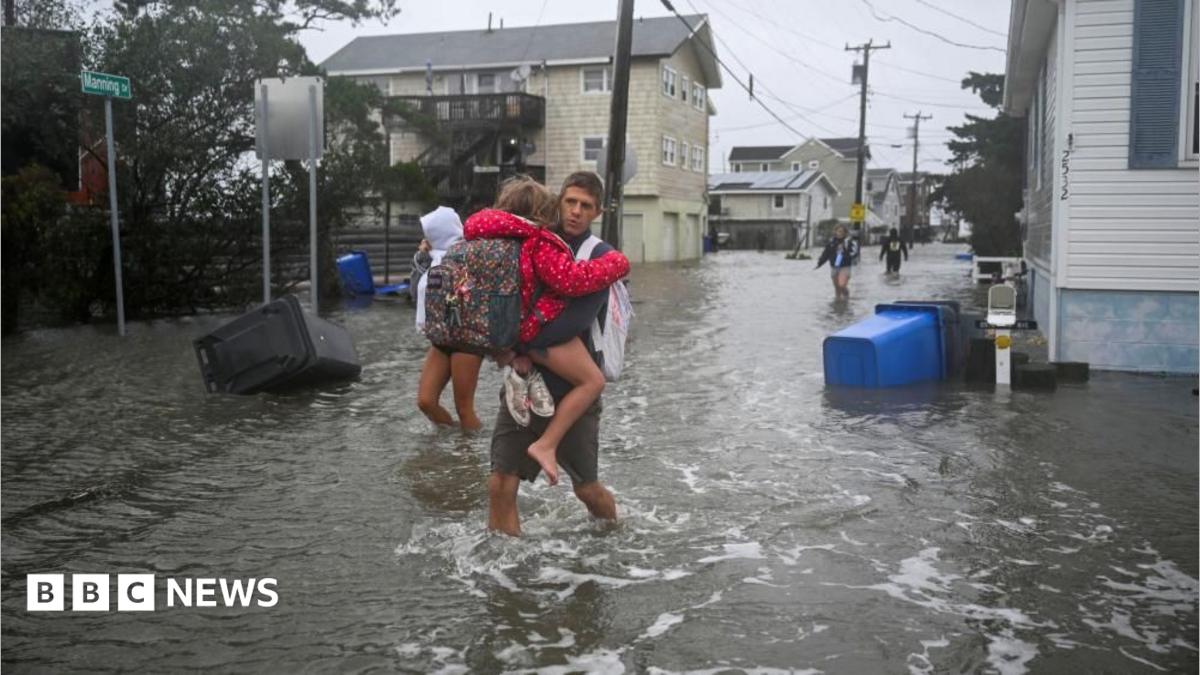
A powerful autumn nor'easter is sweeping across the north-eastern United States this weekend, placing tens of millions of people in its path and already delivering coastal flooding, widespread power cuts, severe travel disruption and the cancellation of major stadium events. The storm, which meteorologists expect to peak on Saturday, has prompted declarations of emergency in both New York and New Jersey, with more rain, wind and surf forecast from Virginia all the way to Maine.
The US National Weather Service (NWS) warned that the system will bring dangerous coastal flooding and hazardous beach conditions, alongside strong winds and heavy rainfall, affecting major population centres including New York City and Boston. That forecast covers a corridor that includes some of the densest and most heavily developed coastline in the United States, as well as low-lying barrier communities that have historically been among the first to be overwhelmed when storm surge coincides with a powerful onshore wind.
New Jersey Governor Mikie Sherrill urged residents to take the storm seriously, remain alert and follow local guidance issued by authorities. Her state was already coping with a coastal deluge, with floodwater inundating streets and homes in communities including Surf City and Manasquan, where residents were seen travelling through submerged streets in kayaks. Surf City, on the state's barrier island, sits precisely at the type of exposed, low-elevation shoreline that forecasters warned would be among the first to flood.
One factor complicating the picture is the timing of Saturday's full moon. Higher tides associated with a full moon coincide with the storm's expected peak, and forecasters said this will amplify coastal inundation just as winds and rainfall are at their most intense. The NWS issued a stark instruction: residents in low-lying areas near the shore should prepare immediately for significant inundation, including roads going underwater and significant impacts to homes and businesses.
In New York, officials warned of wind gusts reaching 55mph (86km/h) across the weekend, a forecast they said would bring down trees and knock out power. Mayor Zohran Mamdani, in a video message to residents, said people should avoid travel if they can and should never drive or walk through floodwater — advice echoing a broader public-safety message that officials say is the single most common source of storm-related injuries and deaths in the region.
The electricity disruption had already reached substantial levels by Saturday evening. Nearly 150,000 households had lost power, according to the poweroutage.us tracking service, a number that officials and utility companies warned was likely to rise as the storm reaches its strongest phase overnight. Utilities in the region have historically been slow to restore service when access to damaged lines is itself restricted by flooding and high winds.
Air travel has been similarly disrupted. The Federal Aviation Administration advised passengers to check with their airlines for the latest status of their flights, as more than 1,100 flights were delayed and some 400 were grounded, according to FlightAware. Boston Logan International Airport displayed a board of cancelled departures, with major hubs including New York also facing knock-on delays of varying lengths.
The cultural and sporting impact has been unusually extensive for a single weekend. Ed Sheeran's long-awaited Boston concert at Gillette Stadium was cancelled, with the venue citing safety concerns — a decision that followed separate reporting that his next US dates were already at risk because of the storm warning. It was one of the most high-profile cancellations, but not the only one.
The Boston Red Sox moved the Sunday afternoon game of their weekend series against the Chicago Cubs to the following Friday, while a professional football match between Red Bull New York and St Louis City SC was called off entirely. In New York City, organisers confirmed the Global Citizen Festival in Central Park, headlined by Lauryn Hill, Wyclef Jean and John Legend, would not go ahead.
Taken together, the cancellations represent a significant test of local emergency planning, particularly in places where a single stadium or festival venue can affect tens of thousands of travellers who had planned journeys into the storm's path. For residents of the affected coastline, the immediate priority remains shelter, and officials have urged people to monitor local authority advice closely rather than rely solely on national forecasts, which can shift as the storm's track and intensity become clearer.
The storm was still intensifying on Saturday, with the NWS expecting the worst conditions overnight and into Sunday. Forecasters and emergency managers cautioned that the combination of surge, heavy rain, strong winds and a high astronomical tide could produce flooding well inland of the shoreline, and that conditions could remain hazardous even after the rain eases.
The story was reported by Kwasi Gyamfi Asiedu and published on 26 September 2026 at 17:55 BST, and was updated shortly afterwards as the situation developed. BBC News also has separate coverage of Ed Sheeran's cancelled US concerts.






(0)