
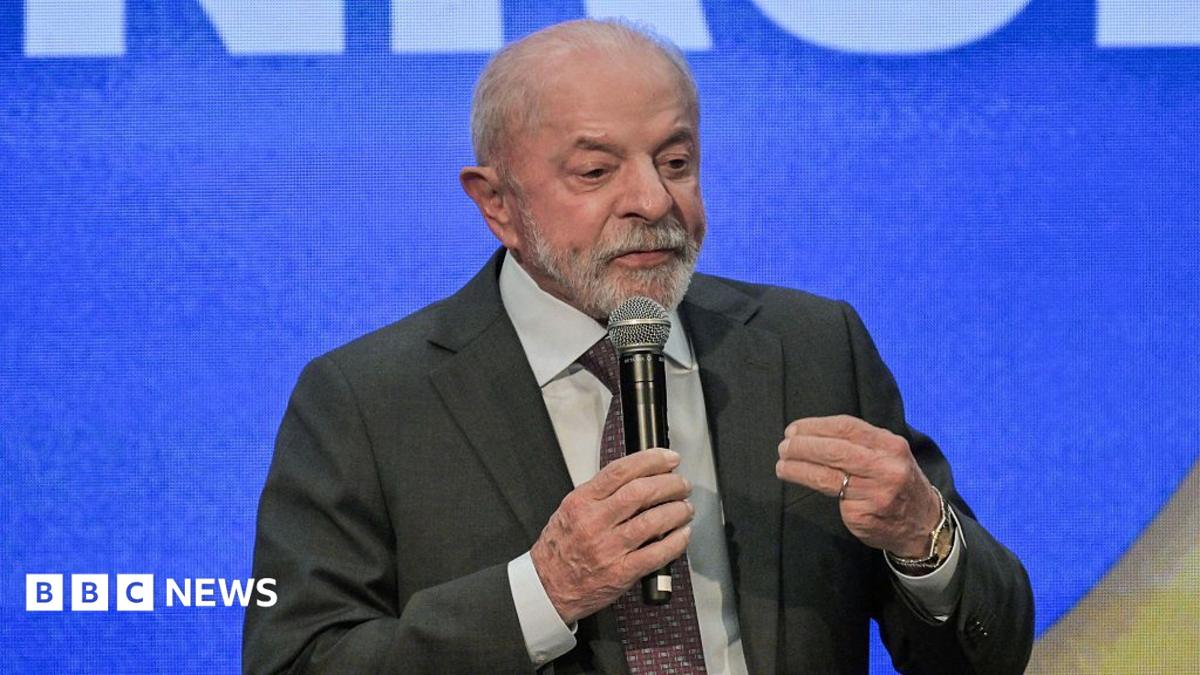
Brazilian President Luiz Inácio Lula da Silva has signed a provisional order banning all sports betting and online casinos, a dramatic intervention in a fast-growing industry that his administration blames for a surge in household hardship — and one that lands with less than two weeks to go before the country votes on whether he returns for a fourth term.
The left-wing president, 80, signed the measure on Friday, using the executive power available to him to impose an immediate halt on online gambling. Under the order, new deposits into betting accounts are barred and punters and bookmakers have until 5 October to withdraw any existing balances. Crucially, the decree is not yet law in the full sense: it requires approval by Congress within 120 days to remain in force, and Lula will need to persuade legislators — including allies — to back it.
Speaking at the announcement in São Paulo, Lula framed the gambling sector in the language of a disease. He described online betting as a "cancer" and said that "either we remove the tumour, or it kills us". The president said he had been told by families who had sold everything they owned to satisfy gambling addictions, and argued that the country could not permit betting companies to profit at the expense of Brazilian incomes and lives. Lula also signed a separate bill establishing criminal offences connected to fixed-odds betting, the format behind the large majority of online sports wagering.
The timing is unavoidably political. Lula is seeking reelection against Flávio Bolsonaro, son of the jailed former president Jair Bolsonaro, in a first round that takes place just over a week from now. Recent polling has the two candidates almost level. Flávio Bolsonaro used a campaign rally in Rio de Janeiro on Friday to dismiss the crackdown as "populist, hypocritical and politically motivated", and accused his rival of playing politics with the measure. Lula, for his part, has not hidden the ideological framing: online betting was permitted under the administration of Michel Temer, but Lula says it expanded "without regulation under Bolsonaro's management".
Part of the justification is regulatory failure. In a statement on X, the president said there were effectively "no restrictions" on the industry, particularly anything designed to stop children and teenagers getting access to online betting sites. The same week, addressing the UN General Assembly, Lula accused gambling companies of "transforming addiction into profit" — a theme likely to resonate with the roughly six in ten Brazilian adults who, according to a survey by Atlas and Bloomberg published this week, back a ban on internet betting.
The commercial stakes are enormous. Online betting has been legal in Brazil since 2018 and has grown explosively since, even though casinos and slot machines remain illegal. Broadcasters report that betting firms handed the country's leading football clubs 1.1bn reais ($212m; £160m) in 2025, while the industry as a whole took in 62.5bn reais over the same period. That money now flows through shirt sponsorship and advertising contracts, and the football establishment has reacted with alarm.
Grêmio, one of the so-called "big twelve" clubs, warned before the announcement that betting companies had become "one of the main sources of revenue for sports". The club said a change in the law "will not only be an open door for illegal betting, but a fatal blow to Brazilian football, leading many clubs to insolvency". Other teams have made similar warnings, and sponsor withdrawal is the most immediate risk: if operators pull their backing, several clubs that have come to rely on betting money to balance their books face an existential problem.
The industry's main trade body is similarly unpersuaded. The Brazilian Institute for Responsible Gaming, which represents around 75% of the domestic betting sector, said a blanket ban on fixed-odds betting would jeopardise the whole industry and put somewhere between 58bn and 73bn reais of revenue at risk. In a statement, it argued the ban also "doesn't eliminate existing demand" — merely pushing gamblers towards the black market, where, it said, they would lose access to the "protection mechanisms provided in the regulated environment", such as age verification, deposit limits and self-exclusion.
The IBJR's position is that the answer to an under-regulated boom is stronger oversight, not prohibition. That distinction matters for what happens next: a market of 62.5bn reais is not likely to disappear because of a decree, and enforcement against offshore operators would be the real test of whether the order reduces harm or simply redraws the map of the industry.
For Lula, the political calculus is easier than the legislative one. A ban on betting plays well with a concerned middle class and hands him a populist contrast with the Bolsonaro camp's defence of the sector. If Congress accepts the decree, the government will have shown it can move quickly on a voter-facing issue. If it does not, Lula will have revealed the limits of his control over his own party months from an election he is expected to contest.
For now, the order stands. Brazilian bettors have roughly a week and a half to empty their accounts, football clubs are counting the sponsorship contracts that may not be renewed, and both campaigns will spend the final days before the first round arguing over whether a law signed on a Friday was a moral necessity or a political manoeuvre.




(0)