
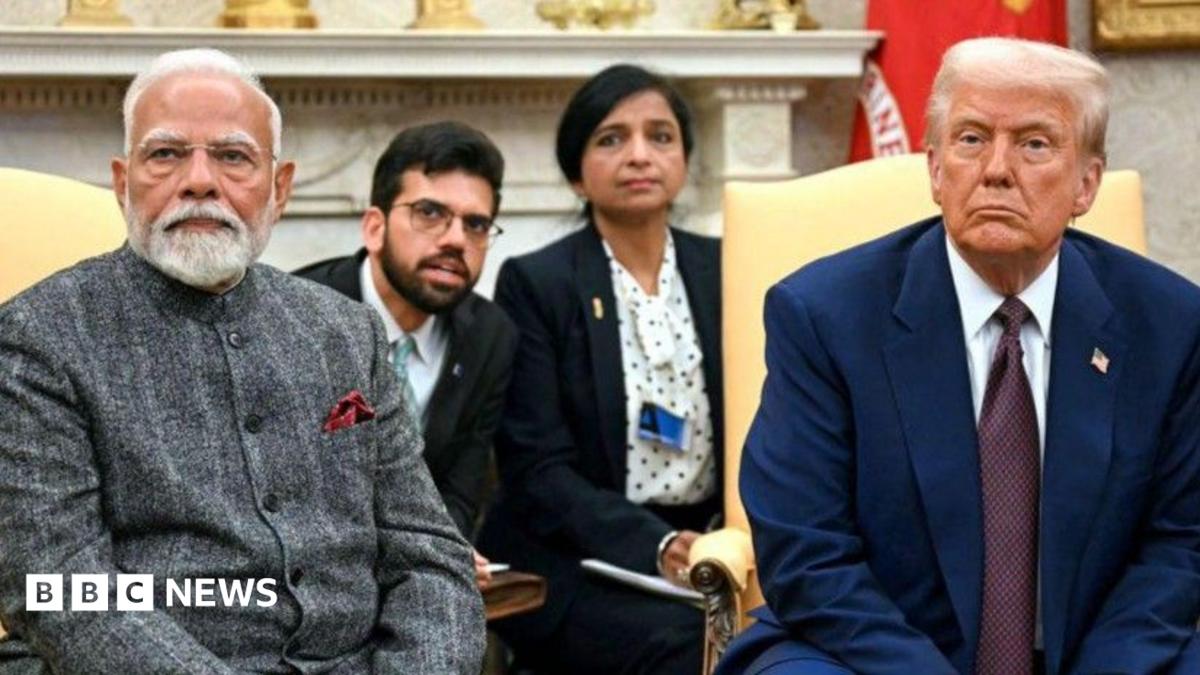
Legislation granting United States President Donald Trump broad authority to enforce sanctions on Russia and levy tariffs of up to 100% on nations purchasing Russian oil and gas has cleared the US House of Representatives. The measure, which now heads to the president's desk for signature, poses significant economic and diplomatic risks for major global consumers of Russian energy.
The passage of the bill directly targets countries that have continued large-scale energy transactions with Moscow following the invasion of Ukraine. For the past four years, India has utilized the restructuring of global crude flows to its economic benefit, taking advantage of discounted Russian supplies that were shut out of Western markets.
India and China are the two countries most vulnerable to the pending legislation due to their massive intake of Russian fossil fuels. Data from the Centre for Research on Energy and Clean Air reveals that between December 2022 and August 2026, China accounted for 50% of Russia’s crude exports, while India imported 37%. Turkey and the European Union followed, each accounting for 5% of those shipments.
Figures from the Delhi-based Global Trade Research Initiative demonstrate the scale of India's reliance on Russian energy. During fiscal year 2026, Russia accounted for 30.3% of India's total crude imports, amounting to $40.8 billion of the country's $134.7 billion overall crude expenditure.
The concentration of Russian energy imports reached a peak in July, when Russian shipments made up more than half of India's total crude purchases. By comparison, traditional Middle Eastern and Western suppliers trailed far behind during that month, with the United Arab Emirates supplying 10.8% and Saudi Arabia providing 9.6%.
Other July suppliers accounted for smaller shares, including Venezuela at 6.3%, Brazil at 5.5%, Oman at 5.3%, and the United States at just 2.9%. The volume of crude imported from Russia during that period surpassed the combined total of all six of these alternative suppliers.
The legislative push from Washington comes at a time when the financial benefits of Russian oil are already diminishing for Indian refiners. Early war-era price discounts have largely narrowed, competition for Russian barrels has intensified, and buyers face escalating complications related to shipping, insurance, and regulatory sanctions.
Following the vote in the House, US lawmakers issued direct warnings to international buyers. Democratic Senator Richard Blumenthal publicly advised both India and China to seek alternative energy providers rather than continuing their purchases of Russian crude and natural gas.
Under the framework of the legislation, affected nations are typically afforded a 180-day window to either scale down their Russian energy imports or negotiate terms with Washington. However, the bill permits the US president to shorten this transition period at his discretion.
In response to the developments in Washington, the Indian government stated that it is actively monitoring the situation while remaining committed to safeguarding domestic energy security for its 1.4 billion citizens. New Delhi noted that it has raised the matter in high-level discussions with US counterparts, outlining the broader ramifications for bilateral relations and international energy markets.
Former Indian trade official Ajay Srivastava, who leads the Global Trade Research Initiative, criticized the bill as a heavy-handed tactic designed to force India into accepting unfavorable terms in bilateral trade negotiations. He emphasized that India’s energy procurement is intended to secure affordable power and has played an important role in stabilizing global market prices rather than funding conflict.
Shifting away from Russian crude would present severe logistical and financial hurdles for India. Analysis from S&P Global suggests that securing replacement supplies would lead to heightened crude prices, increased freight rates, elevated insurance premiums, and the logistical strain of navigating longer maritime transit routes.
Market experts also question the capacity of alternative producers to absorb the demand. Sumit Ritolia, an analyst at maritime intelligence firm Kpler, noted that the central challenge is whether sufficient alternative crude supplies exist to replace Russian volumes without triggering widespread tightening across the international market.
The direct economic danger to India stems from how the tariffs would be applied. Rather than functioning as an import duty on crude entering India, the proposed measures threaten duties of up to 100% on Indian merchandise exported to the United States, which could pressure export sectors, weaken the rupee, strain refining margins, and widen the national trade deficit.
Michael Kugelman, a senior fellow at the Atlantic Council, observed that the legislation arrives at a fragile juncture, coinciding with delicate final-stage trade negotiations between Washington and New Delhi. He pointed out that while India has pursued trade agreements with the European Union and strengthened commerce with China to insulate its economy, massive US tariffs on key exports would remain a severe economic setback.







(0)