
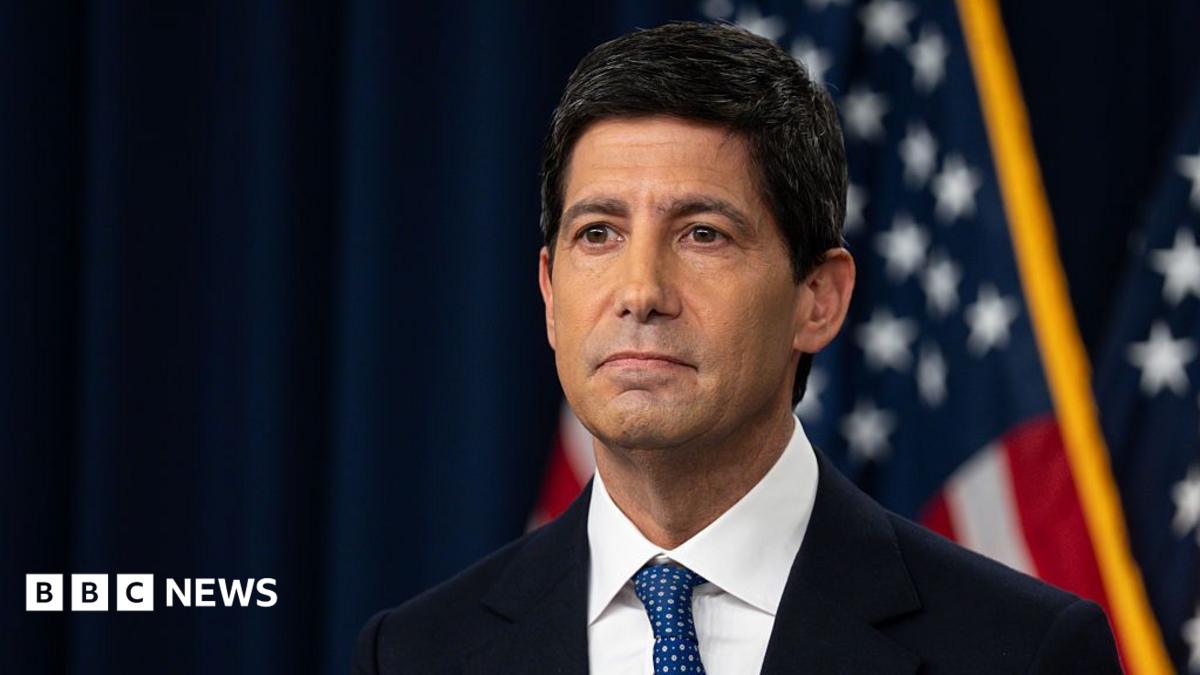
The United States Federal Reserve has increased its benchmark interest rate for the first time in more than three years, lifting borrowing costs in a determined effort to restrain stubborn inflationary pressures across the domestic economy.
In a unanimous decision by the central bank's policy committee, the target range for the federal funds rate was raised by a quarter of a percentage point, moving to 3.75% to 4% from its prior level of 3.5% to 3.75%. The policy shift represents the central bank’s first rate adjustment in either direction since borrowing costs were lowered in December 2025, and marks the first outright rate hike implemented since July 2023.
Federal Reserve Chair Kevin Warsh defended the monetary tightening following the announcement, describing the policy adjustment as a sober and responsible step necessary to restore price stability. Emphasizing the persistent nature of rising living costs, Warsh noted that inflation has continued to run above the central bank’s target for more than five years, even as leadership maintains an underlying sense of economic optimism.
The rate increase was enacted in direct defiance of President Donald Trump, who had repeatedly demanded that the central bank reduce borrowing costs instead. Trump argued publicly that benchmark rates should sit at 1% or even lower, asserting that the United States possesses the strongest credit standing in the world.
Immediately following the central bank's decision, Trump escalated his public objections on social media, demanding that the Federal Reserve reduce interest rates quickly. The friction mirrors the president’s previous confrontations with former central bank leadership, including sharp critiques directed at Warsh's predecessor, Jerome Powell, who stepped down at the conclusion of his term before Trump selected Warsh to lead the institution.
Addressing the friction between the administration and the central bank, Warsh deflected questions regarding direct communications with the White House, remarking simply that the institution preserves its statutory independence by remaining focused strictly on its assigned mandate. Earlier in the day, White House Press Secretary Kush Desai stated that while the administration maintains its commitment to Federal Reserve independence, that principle does not preclude the president from expressing his views.
Central bank officials highlighted that the current resilience of the broader American economy and the continued strength of the labor market provided the necessary leeway to prioritize the fight against inflation. Warsh pointed out that returning prices to stable levels remains critical for the general public, observing that lower-income households stand to benefit the most from bringing inflation under control.
The decision arrives against a challenging consumer backdrop where household budgets are being heavily strained by escalating fuel costs. Gasoline has surged past an average of $4 per gallon, while diesel prices have reached historic all-time highs, driven largely by global oil market disruptions stemming from the military conflict involving the United States, Israel, and Iran.
During a post-meeting press conference, Warsh acknowledged the natural constraints of monetary policy tools, explaining that the central bank lacks the ability to influence specific individual commodity costs, such as grocery store foodstuffs or crude oil. However, he emphasized that broader interest rate adjustments remain crucial to prevent sector-specific price shocks from expanding into generalized, economy-wide inflation.
The central bank's decision triggered an immediate response across the private banking sector. Major American commercial lenders, including JP Morgan, KeyCorp, and BNY, swiftly adjusted their prime lending rates upward from 6.75% to 7%, a move that directly elevates interest charges on personal financing and credit card balances.
While elevated interest rates deliver greater yields for personal savings accounts, they inevitably increase the broader financial burden on consumers seeking consumer credit or securing personal loans. Higher borrowing thresholds serve to cool economic activity by discouraging discretionary household spending and dampening business investment.
In the residential property market, mortgage rates are poised to face upward pressure following the Fed's move. Data from Freddie Mac indicates that the average rate on a standard 30-year fixed-rate home loan stands at 6.76%, with 15-year fixed loans averaging 6.09%, remaining below the cyclical peaks recorded in 2023. While the vast majority of existing homeowners with long-term fixed deals will not see immediate changes to their monthly obligations, the environment poses higher hurdles for prospective homebuyers and those seeking refinancing.
Looking ahead, the Fed signaled that further monetary tightening remains on the table. Although Warsh refrained from detailing a personal interest rate forecast, a majority of policymakers indicated that they anticipate another quarter-point hike before the conclusion of this year, which would lift the benchmark rate to a range between 4% and 4.25%.
Projections further reveal that a slim majority of policymakers anticipate rates could peak between 4.25% and 4.5% next year. According to the central bank's economic forecasts, price pressures are expected to moderate gradually over the coming years, enabling the Federal Reserve to begin cutting rates in 2028 and 2029 as inflation eventually aligns with its 2% objective by 2029.
The Fed's actions reflect a widespread international trend as global monetary authorities grapple with energy-fueled inflation. The European Central Bank implemented its own rate increase last week, while the Bank of England is scheduled to deliver its policy ruling on Thursday, all against the backdrop of heightened economic scrutiny from American voters ahead of November's midterm elections.





(0)