
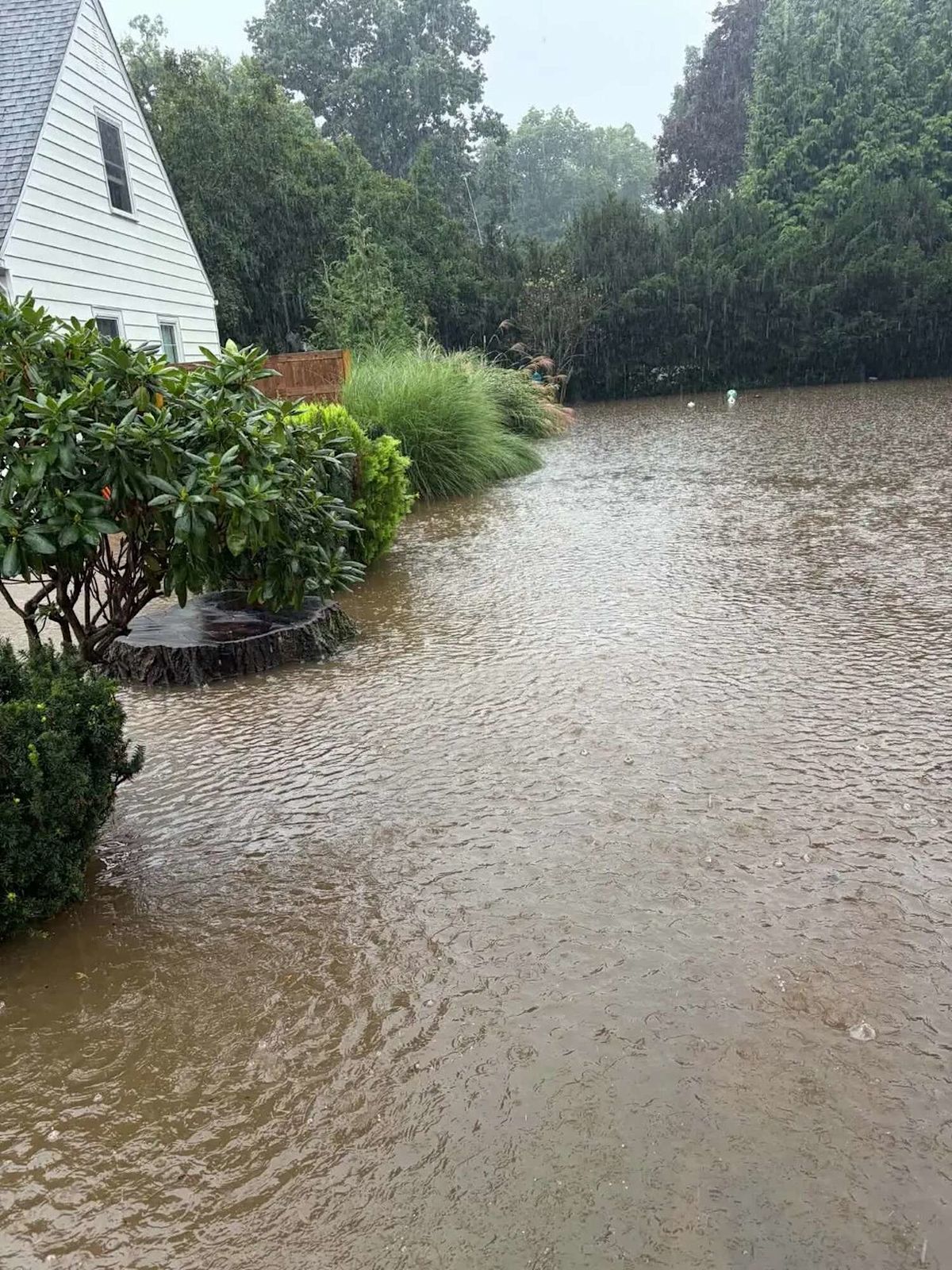
After being inundated with roughly seven feet of water during a destructive weekend rainstorm, a Fairfield homeowner is directing sharp criticism at town administrators for extended delays in completing vital flood mitigation improvements along the Rooster River.
The recent severe weather dumped more than six inches of rain over a remarkably brief window, triggering sudden flash flooding that caught numerous neighborhood residents off guard and severed electrical power across various parts of Connecticut. Municipal officials noted that the intensity of the downpour caused severe basement flooding even in residences that historically remained dry during major storms.
For resident George Paci, the weekend disaster marked the second time in just a few months that floodwaters breached his home, and the fourth such crisis his household has endured over the past eight years. Days after the deluge, Paci and his wife remained without power as they confronted the exhausting task of pumping out their basement and clearing away heavy debris.
Paci described watching the nearby river crest and spill over its banks with terrifying speed. Within a short time, approximately two feet of standing water had submerged his yard, and filthy runoff began pouring into his detached garage before rapidly inundating the lower level of his home.
According to Paci, the basement filled to a depth of seven feet within roughly 20 minutes, with floodwaters rising all the way to the structural floor joists supporting the first story. A primary sump pump alongside two supplementary drainage units proved entirely useless, as they could only discharge water into an already oversaturated outdoor landscape.
The repetitive inundations have taken a heavy financial and emotional toll on the household. Over the course of eight years, Paci has had to purchase three furnaces, four clothes dryers, three washing machines, and three electrical panels, in addition to facing the potential total loss of valuable power tools currently corroding from water exposure.
With additional wet weather on the horizon, Paci expressed a profound sense of helplessness. His damaged possessions currently sit piled across his soaked lawn, and he noted that putting the property on the real estate market is unfeasible because potential buyers would quickly shy away from a house subjected to recurring, catastrophic flooding.
Town leadership acknowledged the enduring challenges surrounding the waterway. Public Works Director Frank Petise stated that addressing water issues within the Rooster River watershed became a prominent municipal priority between eight and ten years ago, though extensive bureaucratic hurdles slowed initial progress.
Petise explained that executing large-scale civil engineering projects along the watercourse required securing complex environmental authorizations, which involved lengthy review periods by both the Connecticut Department of Energy and Environmental Protection and the U.S. Army Corps of Engineers.
Following preliminary engineering assessments initiated after significant flooding events in 2018, municipal leaders assembled an $8.2 million funding portfolio dedicated to watershed remediation. This financial package includes $4.5 million in local municipal bonds, $2.5 million from state grants, a $280,000 state environmental grant, and $750,000 in federal pandemic relief funds allocated by the city of Bridgeport, which owns the adjacent Fairchild Wheeler Golf Course.
Concrete construction work is finally slated to commence. Two major detention basin initiatives—located at Tunxis Hill Park and the Fairchild Wheeler Golf Course—were recently placed out to bid, with physical excavation scheduled to begin before the end of the month. A third basin remains in the design phase as town officials negotiate necessary property easements with nearby homeowners.
In addition to retention basins, municipal plans include dredging critical sections of the Rooster River channel. Town engineers estimate that the completed suite of infrastructure upgrades could collectively decrease localized flood levels by 30 percent or more once fully operational.
Nevertheless, neighborhood residents who have spent years pleading for relief remain wary. Paci noted that long-suffering neighbors have largely lost faith in municipal timelines and doubt that the planned engineering measures will offer sufficient protection against increasingly volatile weather patterns.
Addressing the severity of the weekend event, Petise observed that the downpour reached the statistical threshold of a 100-year storm, representing a weather system with just a 1 percent probability of occurring in any given year. He emphasized that town infrastructure is increasingly being tested by an undeniable uptick in storm frequency and extreme precipitation.
Emergency communication procedures also drew scrutiny following the deluge. While some neighbors reported receiving no localized mobile notifications, First Selectperson Christine Vitale clarified that town leadership chose to rely on the National Weather Service's automatic wireless emergency alert network while utilizing local social media channels to disseminate municipal updates.







(0)