
An extraordinary piece of indigenous Mesoamerican heritage is returning to Mexican soil for public viewing after spending 186 years abroad. The historic manuscript, celebrated for its unique visual storytelling, offers a direct window into the rise, life, and dramatic collapse of the Aztec empire.
Known as the Codex Azcatitlán, the centuries-old illustrated document chronicles the extensive history of the Aztec civilisation and its ultimate fall following the invasion of Spanish conquistadors. Through intricate pictograms, the manuscript preserves an irreplaceable indigenous perspective on one of history's most transformative epochs.
Starting this Thursday, the public will have the opportunity to view the manuscript in person at the National Museum of Anthropology in Mexico City. The exhibition marks the first time the original document has been put on display in its home country in nearly two centuries.
Before this homecoming loan, the codex spent generations in Europe. It has been preserved in the collections of France's Bibliothèque Nationale since 1898, having already been kept outside of Mexican territory for several decades prior to entering the national library's permanent holdings.
The temporary return of the Codex Azcatitlán comes as part of a significant cultural exchange between Paris and Mexico City. The loan was arranged specifically to commemorate the bicentenary of diplomatic ties, celebrating 200 years of official Franco-Mexican bilateral relations.
The diplomatic arrangement was solidified through high-level discussions between Mexican President Claudia Sheinbaum and French President Emmanuel Macron. The agreement regarding the cultural exchange was reached during Macron’s official diplomatic visit to Mexico last year.
Under the terms of the bilateral accord, Mexico is reciprocating by sending another priceless indigenous treasure to France. In exchange for the temporary loan of the Codex Azcatitlán, French audiences will be given the opportunity to see the Codex Boturini on display in their country.
The Codex Boturini holds immense cultural and historical importance in its own right. Composed of vivid pictograms, it illustrates the epic journey and migration of the Aztec people, also known as the Mexica, as they travelled from their ancestral homeland toward the shores of Lake Texcoco, where they eventually established the great city of Tenochtitlán.
Historians and scholars consider the Codex Azcatitlán to be among the most insightful and valuable surviving historical accounts of the Aztec world. Researchers believe it was drawn during the 16th Century, created just a few years after the Spanish conquistadors first arrived in what is modern-day Mexico.
The folios of the Codex Azcatitlán contain remarkably detailed scenes depicting pivotal historical events. Among its most prominent illustrations is the arrival of Spanish conquistador Hernán Cortés, who is shown accompanied by European soldiers dressed in metal armour and bearing weapons, shields, and a standard featuring an angel.
This scene also captures the complex social dynamics of the period, depicting indigenous men carrying heavy supplies and loads behind the armed conquistadors, reflecting the immediate realities of the conquest as European forces advanced through the region.
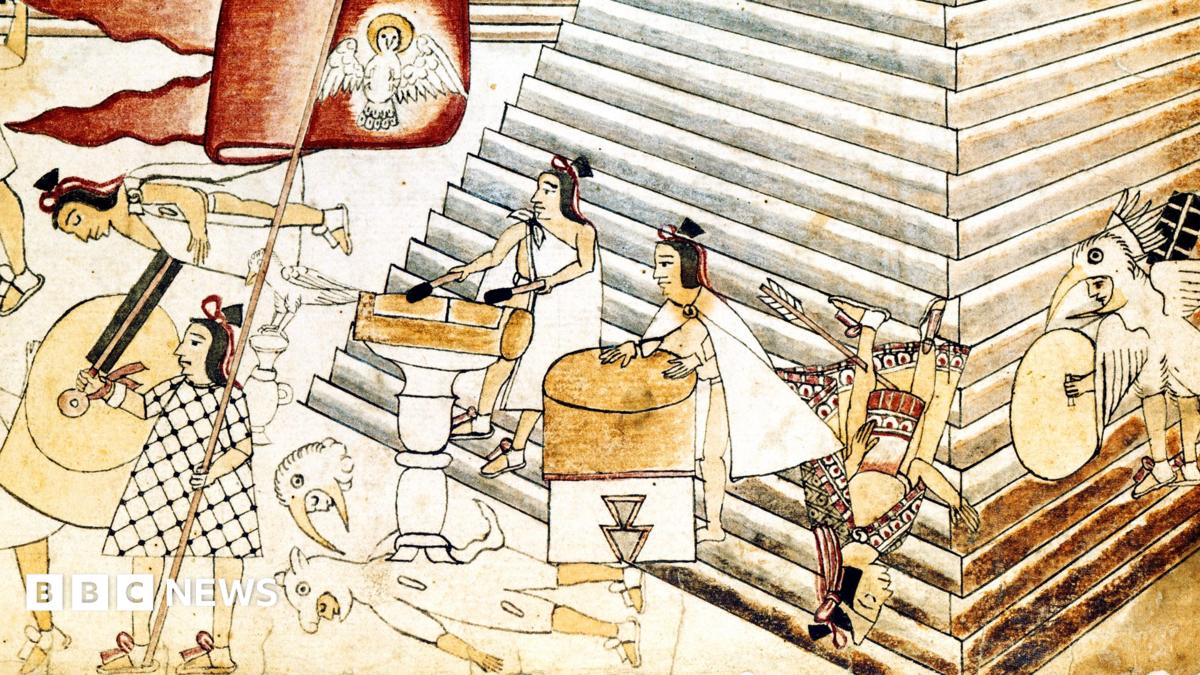
Another dramatic section of the manuscript illustrates the fierce conflict at the heart of the Aztec capital, showing warriors desperately fighting to defend the great pyramid of Tenochtitlán against the Spanish invaders. The drawings capture intense battle details, including two men playing drums to rally the defenders during the clash.
The battle artwork also features vivid individual combatants, including an Aztec warrior disguised in a ceremonial bird outfit while clutching a protective shield, alongside another warrior tumbling down the stone steps of the pyramid after suffering an arrow wound to the leg.
The arrival of the codex aligns with a wider, enduring campaign by the Mexican government to lobby for the recovery and exhibition of cultural artefacts that were removed from the country in previous centuries. Mexican authorities have consistently prioritised the restoration of the nation's historical heritage from foreign collections.
This cultural restitution push has yielded notable results in recent times. According to data provided by Mexico's Ministry of Foreign Relations, more than 2,000 historical objects and artefacts were successfully repatriated to the country over the course of the past year alone.
As the Codex Azcatitlán goes on view at the National Museum of Anthropology, it stands as both a milestone of international cultural diplomacy and a vital opportunity for Mexicans to reconnect directly with the vivid pictorial record of their ancestors' history and resistance.









(0)