
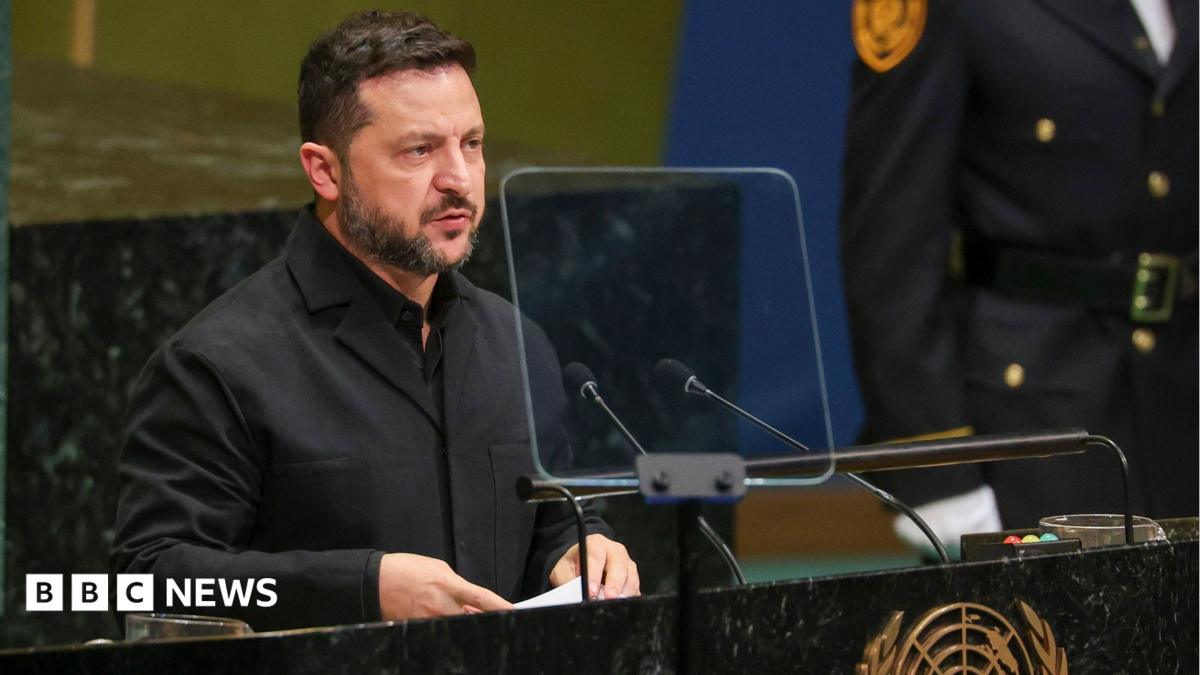
South Korea has formally summoned Ukraine's acting ambassador in Seoul, lodging a sharp diplomatic protest over President Volodymyr Zelensky's public disclosure that two captured North Korean soldiers had been handed over to South Korean custody. Vice Foreign Minister Park Yoon-joo met with Andrii Vieshkin to convey the government's "strong regret," according to Seoul's foreign ministry, which said the transfer had been intended to remain confidential under an arrangement between the two governments.
The two North Korean troops were taken prisoner by Ukrainian forces in Russia's Kursk Oblast in early 2025, after being deployed alongside thousands of their compatriots to support Moscow's war effort. In the months that followed, the soldiers told South Korean media outlets that they wished to be resettled in the South, setting in motion a delicate negotiation process between Seoul and Kyiv that lasted more than a year.
That process culminated last Wednesday, when Zelensky used his address to the United Nations General Assembly to announce that the two men had been transferred to South Korea. He described the pair as having been "not easy to capture alive," a remark that drew international attention to a case that Seoul had hoped to keep out of the public eye.
South Korean officials confirmed the substance of the announcement but reacted furiously to the manner in which it was made. President Lee Jae Myung, speaking through his office, described the disclosure as "greatly disappointing" and characterised the transfer as a "highly sensitive issue" with direct consequences for national security. His office said Seoul had been given advance notice that Zelensky would refer to the soldiers in his UN speech, but had been assured he would not reveal that the handover had already taken place.
One central reason for the requested secrecy, according to the presidential office, was the safety of the prisoners' relatives still living in North Korea. Pyongyang routinely punishes the families of defectors and captured soldiers, and any public confirmation of the men's whereabouts could place their loved ones at serious risk. Seoul also said Kyiv itself had an interest in discretion, because a public announcement would eliminate any remaining possibility of using the two soldiers as bargaining chips in a future prisoner exchange with Russia.
The dispute deepened when Zelensky's office pushed back, asserting that the two countries had never signed a non-disclosure agreement covering the transfer. Seoul rejected that account outright, demanding that Ukraine apologise for what it called the announcement of a falsehood, and warning that the episode had caused serious damage to the trust underpinning bilateral relations.
The political fallout has been felt acutely inside South Korea. Opposition parties accused Lee of concealing the transfer in order to avoid provoking Pyongyang, arguing that his administration prioritised its engagement policy over transparency with the public. Lee, whose party favours a conciliatory posture toward the North, has spent much of his time in office attempting to revive inter-Korean dialogue, so far with little to show for it.
The episode also underscores the awkward position South Korea occupies in the wider confrontation between Russia and the West. Seoul has expressed sympathy and provided substantial non-lethal assistance to Ukraine since Russia's full-scale invasion, including helmets, body armour and medical supplies, and in July announced a $100 million aid package. But it has consistently refused to abandon its longstanding policy of not supplying lethal weapons to any country engaged in an active war, wary of the economic and security costs of antagonising Moscow.
That restraint has come under growing strain since North Korean troops began fighting for Russia in 2024. Kyiv has repeatedly urged Seoul to supply advanced anti-aircraft missiles to help shield Ukraine's energy infrastructure from Russian drone and missile strikes, and Ukrainian officials have framed the argument in terms of South Korea's own long-term security. Mykhailo Podolyak, a senior adviser to Zelensky, said that when North Korea actively participates in a war in Europe, South Korea cannot remain a distant observer, adding that the transfer of defence technologies from Seoul to Kyiv is not merely about helping Ukraine but about containing what he described as an aggressive totalitarian axis.
Russia has warned that it would have "no choice but to retaliate" if South Korea were to provide arms to Ukraine, without specifying what measures it might take. The threat carries particular weight in Seoul because South Korea has for decades cultivated cordial ties with states that are at odds with its principal ally, the United States. Since the collapse of the Soviet Union, it has worked to deepen trade and diplomatic relations with Russia, which shares a border with North Korea, and regards both Moscow and Beijing as important partners in any effort to influence Pyongyang's behaviour.
Ukraine's foreign ministry declined to comment when approached by the BBC. The row leaves Seoul balancing several competing imperatives at once: protecting the two North Korean prisoners and their families, preserving a working relationship with Kyiv, avoiding a rupture with Moscow, and managing domestic criticism that it mishandled a case with deep symbolic significance. How it navigates that terrain is likely to shape both its standing among Western allies and its already fragile channels of communication with the North.



(0)