
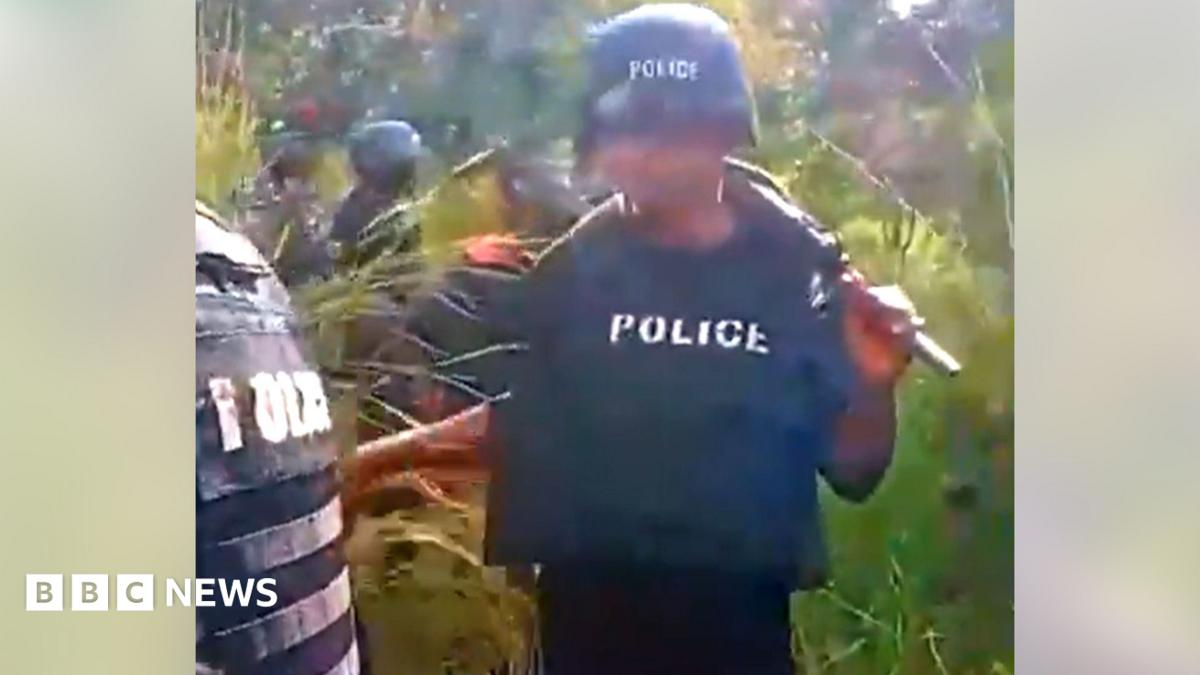
Nigerian police have recovered the remains of at least 28 people from two forests in the country's southeast, in a grim discovery that authorities believe is linked to kidnapping operations run by criminal gangs. The skulls and bones were found on Saturday during a security operation in the Umuaku and Nneato forests, located in Abia State's Umunneochi area, according to the Abia State Police Command.
The operation followed intelligence reports pointing to criminal activity in the forests, police spokeswoman Maureen Chinaka said in a statement. When tactical officers arrived at the camps, the suspects fled the scene. The camps were subsequently dismantled, and officers recovered 28 human skulls and bones, which they suspect belong to kidnap victims.
Police have not yet confirmed the identities of the deceased, and forensic investigations are ongoing to establish who they were and the circumstances surrounding their deaths. Authorities have also not determined whether the remains are connected to unresolved kidnapping cases reported in the region.
Abia State Police Commissioner Wilfred Afolabi described the raids as part of an ongoing campaign to dismantle criminal hideouts across the state. He said surveillance had been intensified in the area as officers work to track down those who escaped.
The police have appealed to residents to come forward with information about suspicious activity and security concerns, as the investigation into the victims' identities continues.
The discovery is expected to renew concerns about kidnapping gangs that operate in remote forests across parts of southeastern Nigeria. These criminal groups have frequently targeted motorists, travellers and local residents, seizing them for ransom. The dense forest terrain in states such as Abia has long provided cover for such operations, making it difficult for security forces to monitor and respond to incidents.
This is not the first time authorities have found remains believed to be tied to kidnapping activity in the Umunneochi area. Previous security raids in the region have uncovered decomposing bodies, suggesting that the forests have been used as dumping grounds or holding sites for victims over an extended period.
The weekend's discovery comes amid a broader pattern of mass abductions across Nigeria. In separate incidents in the country's north, more than 80 people — most of them women — were seized in two states. On Sunday, nearly 50 farmers were abducted by gunmen in Niger State. In neighbouring Zamfara State, approximately 40 women were kidnapped the same day, according to two security reports seen by the news agency AFP and a local source.
Kidnapping for ransom has become a significant source of income for criminal groups in northern Nigeria, including bandits and militant Islamists. The practice has spread across different regions of the country, though the dynamics and perpetrators vary. In the southeast, criminal gangs typically operate from forest hideouts and target travellers along highways, while in the north, armed groups conduct large-scale raids on villages and farming communities.
The scale of the problem has drawn attention to the challenges facing Nigerian security forces, who must contend with vast ungoverned spaces, limited resources and intelligence gaps. The abduction of dozens of people in a single incident, as occurred over the weekend in the north, highlights the difficulty of protecting civilian populations across Africa's most populous nation.
For the families of those whose remains were found in Abia State, the discovery may bring a measure of closure, but it also raises painful questions about how long the victims had been missing and whether authorities could have acted sooner. Forensic analysis will be critical in determining the identities of the deceased and potentially linking the remains to specific kidnapping cases.
The police commissioner's pledge to continue dismantling criminal hideouts reflects an ongoing effort to address the security crisis. However, the fact that suspects were able to flee before officers arrived suggests that criminal networks maintain early warning systems or have informants in local communities. Tracking down those responsible will require sustained surveillance and cooperation from residents.
Security analysts have long argued that addressing Nigeria's kidnapping crisis requires a combination of military pressure, intelligence gathering, and efforts to address the underlying economic and social drivers that make kidnapping a lucrative enterprise. Ransom payments, often made by desperate families, fuel the cycle by providing criminals with funds to acquire weapons and expand their operations.
The latest discoveries in Abia State underscore the human cost of this criminal industry. The recovered remains represent not just statistics but individuals whose lives were cut short and whose families have endured uncertainty and grief. As investigations continue, the police have urged the public to report any information that could assist in identifying the victims and bringing perpetrators to justice.
The weekend's mass abductions in Niger and Zamfara states serve as a reminder that the kidnapping crisis extends far beyond any single region. More than 80 people, predominantly women, were taken in two separate incidents, adding to the growing number of Nigerians affected by this form of violence. Authorities have yet to report any rescues or arrests in connection with those abductions.
The discovery in Abia State is likely to intensify calls for a more comprehensive strategy to combat kidnapping across Nigeria. While police operations have succeeded in disrupting some criminal camps, the frequency of abductions suggests that gangs remain resilient and adaptable. Without addressing the root causes and improving security coordination, analysts warn that similar discoveries may follow.
For now, the priority for Abia State police is to identify the 28 victims and determine whether their remains are linked to pending cases. The outcome of that investigation may provide some answers to families who have waited for news of missing relatives, even as the broader national crisis continues to demand urgent attention.









(0)