
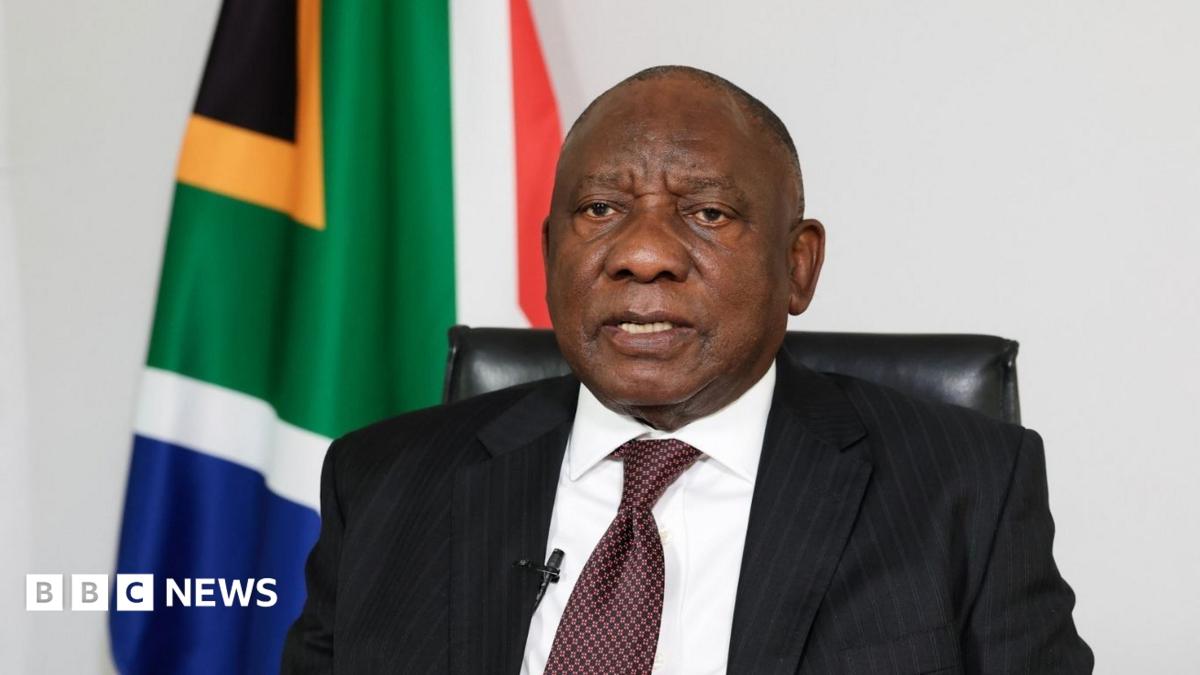
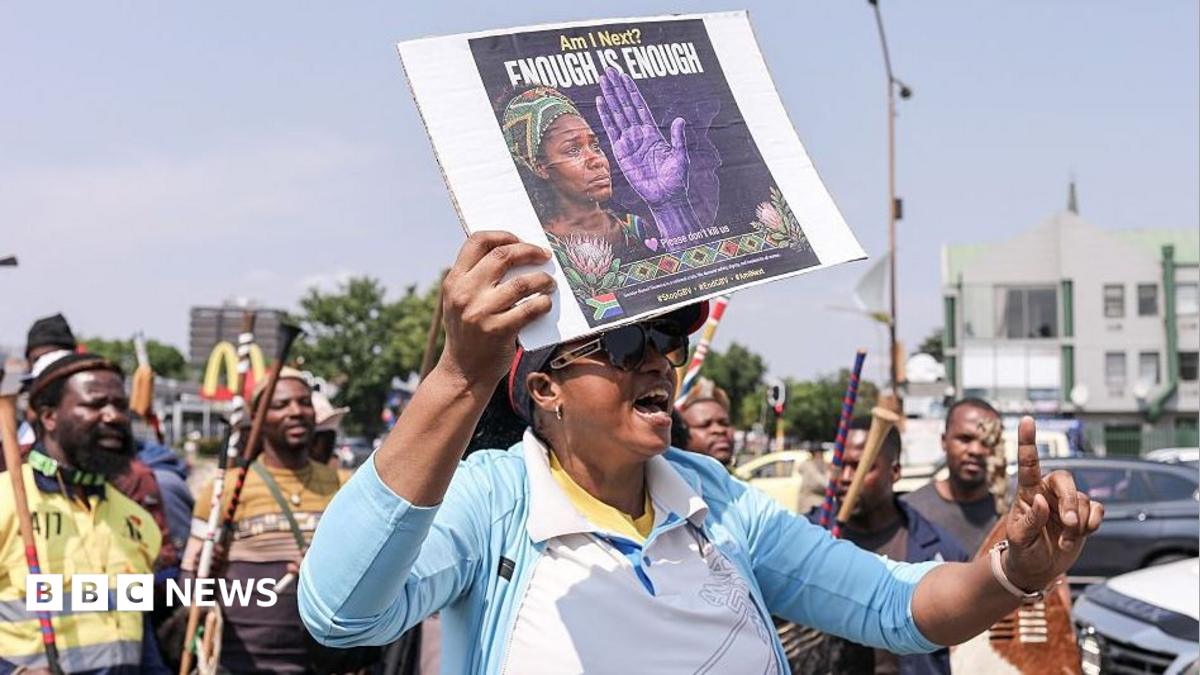
South African President Cyril Ramaphosa used a televised address to the nation on Tuesday to announce a sweeping clean-up of high-risk areas across the country, following the discovery of the bodies of 12 women in an area east of Johannesburg over a two-month period. The scale of the killings has triggered a public outcry and renewed focus on what government figures describe as one of the world's highest rates of gender-based violence.
The deaths prompted widespread fear that the proximity of the bodies might indicate the work of a single, serial offender. Ramaphosa acknowledged that anxiety but cautioned against it, saying police have so far found no evidence establishing that the killings were committed by one perpetrator. That distinction matters for the shape of the investigation: rather than a hunt for one suspect, the cases are being treated as linked in time and place, with investigators still working to establish how, and by whom, the women died.
In his address, Ramaphosa announced what he termed a multidisciplinary, national-level emergency response to the murders. Four arrests have been made in connection with the killings, according to the announcement, though the article does not specify the charges or the stage of proceedings in each case.
The president was direct in his assessment of the state's record. Gender-based violence, he said, cannot be treated as a normal part of life in South Africa, and he conceded that the country has not done enough to protect women and girls. That admission is significant given repeated official pledges in recent years that have failed to slow the violence.
At the centre of the new package is a directive that every municipality must begin a women's safety audit without delay. The stated aim is to identify high-risk areas and then remedy them. The audits are expected to examine broken streetlights, overgrown public spaces, abandoned buildings, unsafe transport routes and facilities, and poorly secured parks — conditions that place women at risk, according to the announcement. Framing the response around infrastructure and public space signals an acknowledgement that prevention extends beyond arrests and prosecutions.
Ramaphosa also unveiled an "enforcement package" aimed at reducing alcohol-related violence, while stopping short of blaming drink. "Alcohol does not cause gender-based violence and it can never excuse it," he said, adding that responsibility always lies with the perpetrator. He nevertheless described harmful alcohol use as a significant aggravating factor in interpersonal violence that must be addressed as part of the country's wider prevention effort.
Beyond policing and legislation, Ramaphosa argued that a deeper cultural shift is required. Violence against women and girls, he said, does not begin when a fist is raised or when a woman is raped or murdered. It begins earlier, in attitudes that treat women as inferior and in the belief that a man has a right to control a woman.
He expanded on that theme, warning that violence starts when jealousy is mistaken for love, when control is mistaken for protection, and when coercion is mistaken for affection. "It begins when a man refuses to accept the word no," he said. These comments underline the government's insistence that gender-based violence is not a problem confined to particular communities or social classes, but one rooted in widely held attitudes about relationships, consent and gender.
The president ended that strand of his address with a challenge to men and boys to take the lead in ending gender-based violence. He said the burden of male violence has been placed on women, and that this must change. "The solution to violence against women cannot be to make women less free," he said — a pointed rejection of any approach that responds to femicide by restricting women's movement, employment or freedom rather than holding perpetrators accountable.
The wider context is stark. South Africa has one of the highest homicide rates in the world, with 5,427 people murdered between April and June this year alone. Official police statistics do not break down victims by gender, a gap that critics say obscures the true scale of violence against women.
Independent figures fill part of that gap. The South African Human Rights Commission said recently that 569 women were killed and 1,052 others survived attempted murder between April and June this year — a picture of large numbers of both deaths and near-misses in a single three-month window.
Earlier coverage of the same case has documented the grim discoveries and the fear they generated, as well as the identification of individual victims through missing-person appeals, including Elizabeth Moselakgomo. Further bodies were found near Johannesburg last week, extending the death toll that has now prompted the national response.
Whether the audits and enforcement package deliver will depend on implementation by local authorities, and on whether momentum survives the news cycle. For now, the announcement amounts to an admission that the murders were foreseeable — that the conditions government had promised to fix remained in place long enough, and in enough numbers of places, for 12 women to be killed in the same region in two months.




(0)