
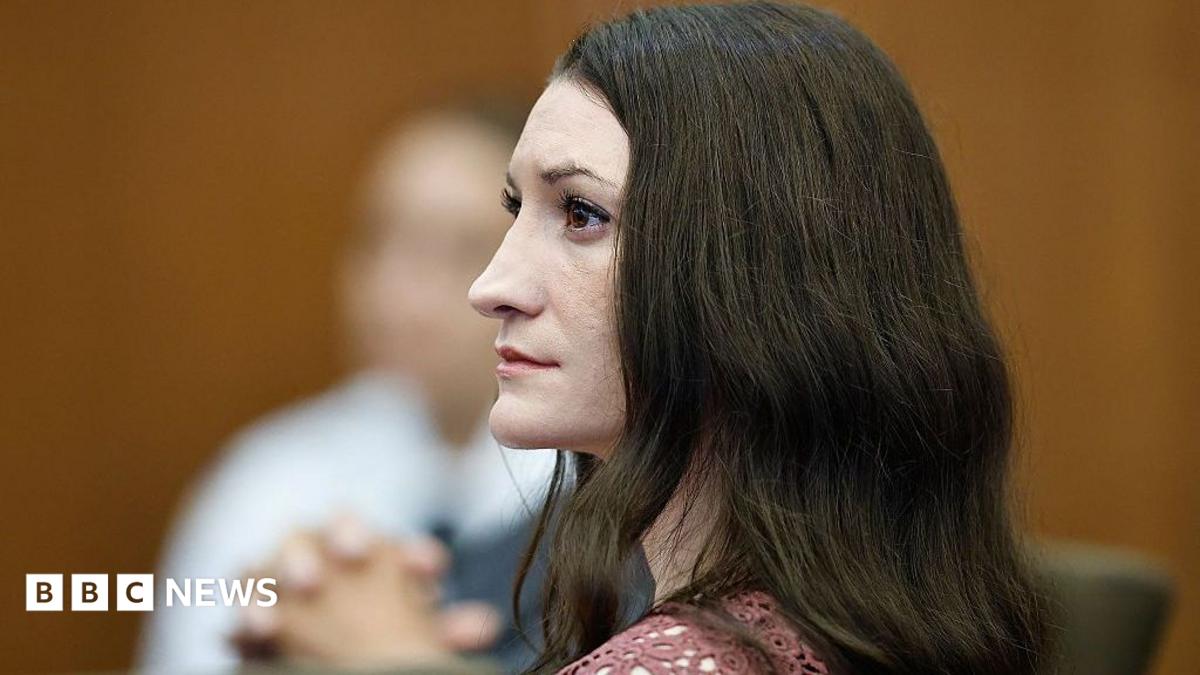
Lindsay Clancy, the Massachusetts mother accused of killing her three young children, made her first court appearance since her murder trial collapsed earlier this month. The 36-year-old defendant appeared before Judge William Sullivan on Tuesday, where her legal team renewed efforts to have the case against her thrown out.
The hearing marked the first time Clancy has been seen in public since a jury failed to reach a unanimous verdict, prompting the judge to declare a mistrial on 4 September. The deadlock reportedly stemmed from a single holdout juror who could not agree with the remaining panel members after a week of deliberations.
Clancy does not dispute that she killed her children in 2023. However, her defence maintains that she was in the grips of severe postpartum psychosis at the time of the deaths. Prosecutors, by contrast, argue that the killings were deliberate and that Clancy understood the nature of her actions.
During Tuesday's proceedings, defence attorney Kevin Reddington asked the court to enter a not guilty finding under Rule 25, a Massachusetts legal mechanism that allows a judge to acquit a defendant if the prosecution failed to present its case effectively. In addition, Reddington introduced a new line of argument, contending that the evidence was insufficient to prove Clancy actually carried out the killings.
"This entire case is based on speculation," Reddington told the court, according to the source material. The argument represents a notable shift from the defence strategy employed during the trial, which centred primarily on Clancy's mental state and urged jurors to find her not criminally responsible due to her psychiatric condition.
Prosecutor Shanan Buckingham rejected the defence's position outright, describing Reddington's argument as "laughable." She asserted that the state had presented substantial evidence demonstrating that Clancy was mentally healthy at the time of the murders. "The Commonwealth met its burden," Buckingham said, arguing that Clancy was fully aware of what she was doing when she killed Cora, five, Dawson, three, and Callan, who was eight months old, inside the family's Massachusetts home.
Judge Sullivan also addressed the practical timeline of the case during the hearing. He urged both legal teams to be prepared to discuss possible retrial dates at a hearing scheduled for 2 November. The judge expressed frustration when neither side would commit to agreeing on a potential retrial schedule ahead of that date, stating that he wanted to "get this thing moving."
Reddington indicated that if the case proceeds to a retrial, he would not be ready to go to trial until at least June. The request to dismiss the case is among several motions that will be taken up at the November hearing.
Outside the courthouse, District Attorney Timothy Cruz told reporters that prosecutors have not yet reached a decision on whether to pursue murder charges against Clancy a second time. "We're doing our due diligence, we're going to continue doing that," Cruz said. "We're going to do what we can for the children. That's what this case is about."
Clancy has been held in a psychiatric facility since the killings, a detail that underscores the central role mental health has played throughout the legal proceedings. Her case has drawn widespread attention across the United States, raising difficult questions about postpartum psychosis, maternal mental health, and how the criminal justice system handles defendants whose psychological conditions may impair their judgment.
The mistrial earlier this month followed a week of intense jury deliberations that ultimately ended in a deadlock. The inability of the jury to reach a verdict means the prosecution must now decide whether to retry the case, negotiate a plea agreement, or allow the charges to be resolved through other legal avenues. The upcoming November hearing will be pivotal in determining the next phase of a case that has captivated the nation.
Legal observers note that Rule 25 motions are rarely granted in high-profile murder cases, as judges typically afford prosecutors considerable latitude in presenting their evidence. For the defence to succeed on that motion, Reddington would need to convince Judge Sullivan that no reasonable jury could convict Clancy based on the evidence presented at trial.
The introduction of an alternative defence argument — that there was insufficient evidence Clancy committed the killings — may also complicate the defence's broader narrative. Throughout the trial, the defence consistently acknowledged that Clancy caused the children's deaths while arguing she was not criminally responsible due to postpartum psychosis. Shifting to a claim that the evidence does not establish she killed them could be seen as inconsistent, potentially undermining the credibility of the mental health defence if the case is retried.
Postpartum psychosis is a rare but severe psychiatric condition that can occur after childbirth, characterised by hallucinations, delusions, and a profound break from reality. Mental health experts say the condition differs significantly from postpartum depression, which is far more common and generally less severe. The Clancy case has intensified public discussion about the need for better screening and support for new mothers experiencing severe psychiatric symptoms.
The children's deaths in 2023 shocked the local community and generated national headlines. Cora, Dawson, and Callan were remembered in tributes that highlighted the tragedy of their loss. The case has also sparked debate about how the legal system should weigh severe mental illness against criminal responsibility, particularly when the defendant is a mother accused of harming her own children.
Clancy's next court date on 2 November is expected to address the pending motions, including the request for dismissal, as well as potential scheduling for a retrial if prosecutors decide to move forward. Until then, the question of whether Clancy will face a second murder trial — and what legal strategy her defence will ultimately pursue — remains unresolved.








(0)