
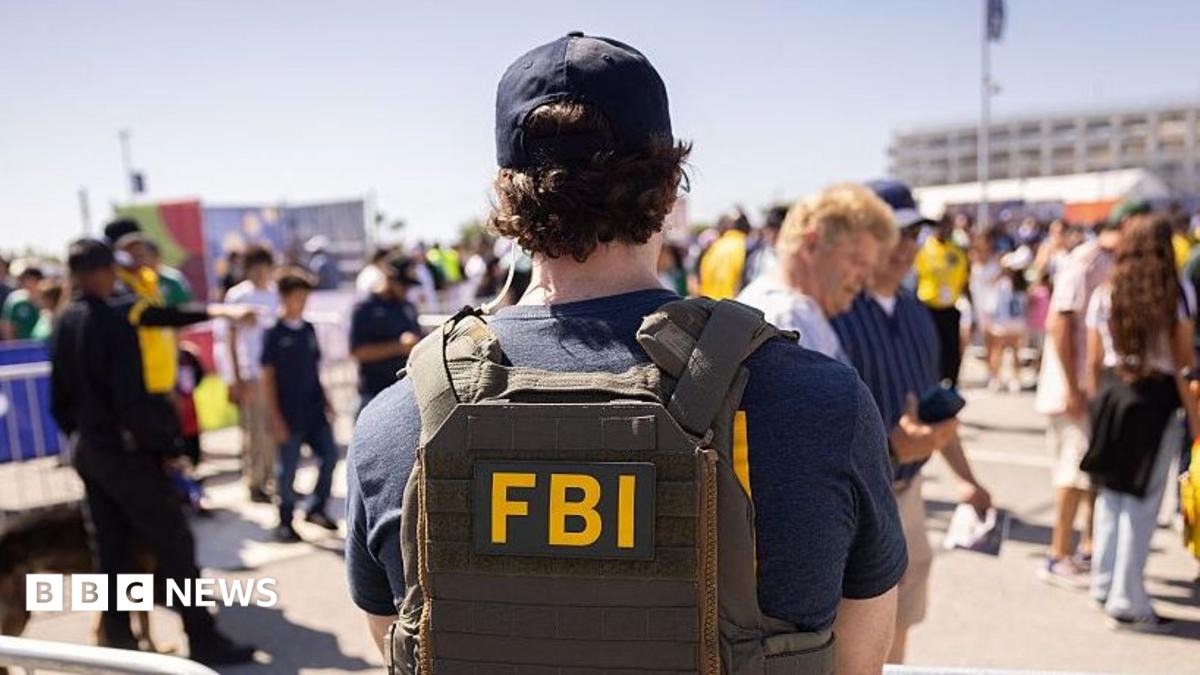
Dutch law enforcement officials have detained a 24-year-old man from Amsterdam on suspicion of belonging to ShinyHunters, the international cyber-crime collective that recently claimed responsibility for stealing sensitive personal information belonging to roughly 38,000 FBI employees. The arrest, which authorities say took place on 15 September, predates the group's high-profile claim of breaching FBI systems, suggesting that the investigation into the hacking network had been underway well before the bureau's data surfaced online.
According to a statement released by Dutch police, the suspect's electronic devices were seized during the arrest. A subsequent examination of his laptop reportedly uncovered a substantial cache of information, including what investigators described as details concerning two murders that were allegedly to be carried out abroad and that the man is suspected of having ordered. In addition to his suspected role in the ShinyHunters operation, he faces allegations of attempted incitement to commit two murders.
The suspect has remained in custody since his detention. Dutch officials have indicated that the investigation is ongoing and have not excluded the possibility of additional arrests as the inquiry progresses. The case represents a significant development in the international effort to dismantle a hacking group that has claimed an unusually broad range of victims across multiple countries.
Stan Duijf, who leads Dutch investigations into cybercrime, framed the arrest as a meaningful step forward. He noted that ShinyHunters has been responsible for a large number of national and international victims, and described the detention as a positive outcome of the ongoing investigation into the group's activities. His remarks underscore the cross-border nature of the case and the coordination required among law enforcement agencies in different jurisdictions.
The arrest drew a public response from FBI Director Kash Patel, who took to the social media platform X to express gratitude toward Dutch partners. Patel said that FBI teams were actively working alongside international counterparts to pursue and execute additional leads generated by the arrest. His statement signals that American investigators view the detention as a potential source of intelligence that could help identify other members of the network and disrupt its operations.
Brett Leatherman, assistant director of the FBI's Cyber Division, issued a strikingly direct message to members of the group following the arrest, urging them to surrender while they still had the opportunity to make that choice. He warned that other organizations had previously believed anonymity or the loyalty of associates would shield them from accountability, only to find that arrests tend to shift the calculus of who is willing to cooperate with authorities. Leatherman added that the longer individuals remain involved in such activity, the more investigators learn about them, and he emphasized that law enforcement possesses the means to locate those responsible.
ShinyHunters first claimed to have breached FBI servers on 21 September, and according to the source material, began reaching out to journalists the very next day, sharing samples and screenshots of the allegedly stolen data. The BBC reported having viewed a small portion of the material, which appeared to be genuine. The group asserted that the compromised information included the names, roles, badge numbers, home addresses, and phone numbers of FBI personnel, a combination of details that security experts consider particularly dangerous because it could facilitate targeting of agents and their families.
The collective is believed to have exploited a vulnerability in an Oracle cloud storage system used by the FBI, according to its own claims. Through that single point of access, the group says it was able to penetrate multiple internal systems, including FBIJOBS, a recruitment platform; FBI BEAST, which conducts background checks on employees and applicants; FBI MedLink, which stores agents' medical records; and FBI BICS, which holds investigation-related information. If the claims are accurate, the scope of the intrusion would represent one of the more extensive breaches of FBI-associated systems in recent years.
Rather than pursuing financial gain, ShinyHunters stated in a message posted on the dark web that its motivation was retaliatory. The group demanded that the FBI retract a public advisory issued in May that characterized the gang in unflattering terms. According to the hackers, they were offended by the advisory's description of them as threat actors who use real or exaggerated claims of access to sensitive information to extract payments from victims. The FBI's public service announcement, which remained accessible on its website, further described the group as targeting major companies in the technology, finance, and retail sectors and stealing millions of customer records at once.
ShinyHunters is characterized as an international collective of hackers that is believed to have originated in France. Over time, it has been linked to a series of high-profile breaches, including an attack on Rockstar Games in April and a highly disruptive intrusion into the education platform Canvas in May. Those incidents, combined with the FBI allegations, have cemented the group's reputation as one of the more aggressive and wide-reaching cyber-criminal operations currently active.
The arrest comes amid heightened scrutiny of cyber threats facing U.S. federal agencies. Earlier reporting noted that FBI agents reacted with fear and anger after the breach was described as dangerous, and separate coverage revealed that special agents' blood and urine test results were among the stolen materials. In March, reporting also indicated that Iran-backed hackers had breached personal email accounts belonging to FBI Director Kash Patel, illustrating the variety of adversaries targeting the bureau.
For Dutch authorities, the case highlights their growing role in international cybercrime enforcement. The Netherlands has increasingly positioned itself as an active participant in cross-border investigations, and the arrest of a suspect in Amsterdam connected to a group accused of striking the FBI demonstrates how digital criminal enterprises can be tracked across national boundaries. The seizure of devices and the recovery of information related to alleged murder plots adds an unexpected and serious dimension to what began as a hacking investigation.
The implications of the case extend beyond the immediate arrest. If the suspect's laptop yields actionable evidence about the structure, membership, and methods of ShinyHunters, it could provide investigators in multiple countries with a roadmap for further arrests and disruption. The FBI's public statements suggest that American authorities are treating the detention as a pivot point rather than an endpoint. Whether the arrest translates into meaningful damage to the group's capabilities, or merely prompts it to adapt and regroup, will become clearer as the investigation unfolds and additional suspects potentially come into focus.









(0)