
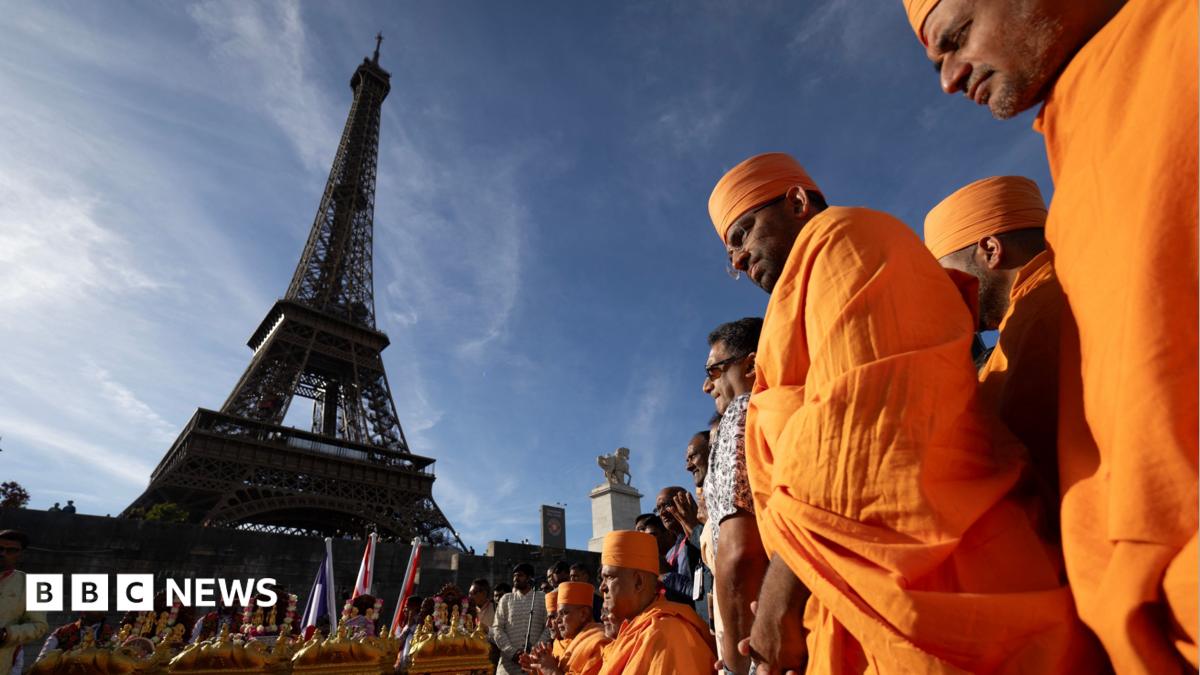
The head of the company responsible for operating the Eiffel Tower is set to leave his position at the end of the year, following a significant backlash triggered by the removal of female employees during a visit by a Hindu religious delegation. Patrick Branco Ruivo, who has served as director general of the iconic Paris landmark since 2018, will depart from his role, according to an official statement released by SETE, the company that manages the monument.
The controversy erupted after it was revealed that female staff members were replaced by their male counterparts during a visit by a delegation of approximately 100 people associated with the Bochasanwasi Akshar Purushottam Swaminarayan Sanstha, commonly known as BAPS. The group visited the Eiffel Tower earlier this month as part of a broader trip to Paris to inaugurate a new temple.
In its statement announcing the leadership change, SETE disclosed that an internal investigation had identified "operational flaws and shortcomings" in the organisation of the visit. These issues, the company acknowledged, resulted in the "unacceptable" removal of female staff from their posts during the delegation's time at the monument. The company has not provided further details on the specific nature of the operational failures or whether any other individuals would face disciplinary action.
The BAPS movement, whose beliefs trace back to the 18th Century, maintains a strict separation between men and women. This practice extends to various aspects of community life, including temple activities and even the entrances used by worshippers. The group has previously stated that this segregation was introduced for the benefit of women, though critics argue that such 18th-Century customs have no place in contemporary society and that excluding women in the name of religious practice amounts to discrimination.
At the time of the incident, SETE issued a statement indicating that the Hindu delegation had requested the visit be organised in a manner that would limit "interactions with women." The company also stated that "these conditions should not have been accepted," suggesting a recognition that the request should have been declined. The admission came amid mounting pressure from staff, unions, and politicians.
The fallout from the visit was immediate and intense. A representative from a staff union reported that "women were asked to leave their places of work" and described the affected employees as feeling "humiliated" by the experience. Furthermore, staff at the monument reported that female employees were "instructed not to go through or cross certain areas while the delegation was present," effectively segregating the workplace for the duration of the visit.
The incident provoked such outrage among the Eiffel Tower's workforce that employees went on strike, leading to the closure of the monument to the public. The strike served as a visible demonstration of the staff's indignation and drew further attention to the controversy. The closure of one of the world's most visited landmarks underscored the seriousness with which employees viewed the treatment of their female colleagues.
The incident also sparked condemnation from prominent political figures in France. Yaël Braun-Pivet, the president of France's National Assembly, expressed her strong disapproval, stating, "I refuse to allow women to be compelled to step aside in order to meet the demands of foreign visitors." Her comments reflected a broader concern about the implications of accommodating religious practices that conflict with French principles of gender equality and secularism.
Emmanuel Gregoire, the Socialist mayor of Paris, also weighed in on the controversy, labelling it an "absurd, unjust and unacceptable decision." He subsequently ordered two separate investigations into the circumstances surrounding the visit. The political response highlighted the sensitive nature of the issue in France, where the principles of laïcité—the strict separation of church and state—and gender equality are deeply held values.
In the wake of the incident, SETE chair Ariel Weil announced on Tuesday that he had requested the implementation of measures and training programmes aimed at promoting gender equality within the organisation. "The coming months will allow us to prepare for the leadership transition under the best possible conditions," Weil stated, signalling a desire to move forward while addressing the underlying issues that led to the controversy.
BAPS issued an apology earlier this month "for any pain or inconvenience caused" by the visit. The group added, "we believe in the universal values of mutual respect and service." On its website, BAPS describes itself as a "spiritual, volunteer-driven fellowship dedicated to improving society" through Hindu values. The organisation has established temples in major cities around the world, including London, Los Angeles, and Sydney.
The BAPS movement draws its beliefs from the teachings of Lord Swaminarayan, a late 18th-Century celibate ascetic who is regarded by his followers as an incarnation of Vishnu, the Hindu god associated with preservation. The group's practice of segregating men and women, while presented as beneficial to women, remains a point of contention in societies that prioritise gender equality and non-discrimination.
The departure of Patrick Branco Ruivo marks a significant moment for SETE, which has faced criticism not only for the handling of the visit but also for the broader implications regarding workplace equality. The company will now need to navigate a leadership transition while implementing the promised reforms to ensure that similar incidents do not occur in the future. The coming months will be crucial in determining how SETE addresses the concerns raised by staff, unions, and the public.
The incident has also ignited a wider debate in France about the balance between respecting religious customs and upholding the country's secular and egalitarian principles. The Eiffel Tower, as a global symbol of France, finds itself at the centre of this discussion, with the controversy serving as a reminder of the tensions that can arise when religious practices intersect with public institutions and workplace norms.






(0)