
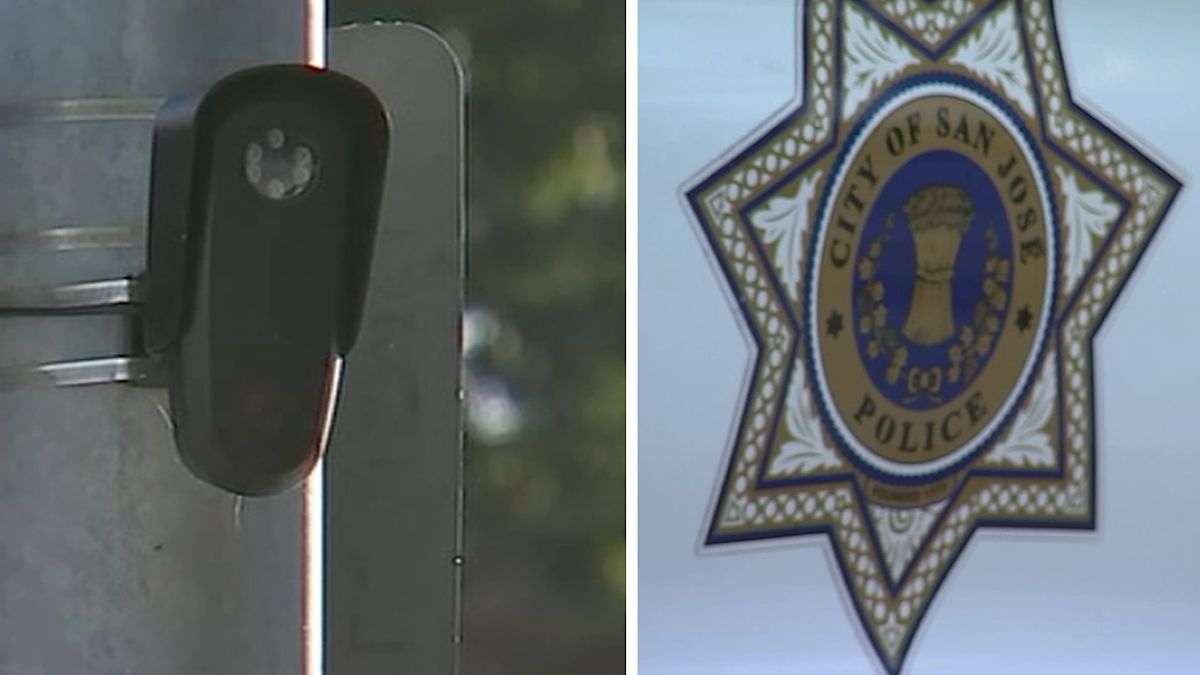
A San Jose police officer has been terminated from the department following an internal investigation that determined he improperly accessed the city’s automated license plate reader system and shared sensitive location records with a relative accused in a domestic violence case.
According to department officials, the officer utilized his personal mobile device to log into the municipal Flock Safety camera network. Using the specialized surveillance platform, he extracted the location details of a specific vehicle and provided the sensitive tracking data to his cousin, who was named as a suspect in an active domestic violence investigation.
After obtaining the surveillance details, the officer's cousin subsequently used the vehicle’s location data to track down his accuser, according to reporting by the Bay Area News Group. The incident has raised acute concerns regarding the vulnerability of municipal surveillance tools and the potential for internal abuse by sworn personnel.
San Jose Police Chief Paul Joseph addressed the firing in a formal statement, emphasizing that the department maintains zero tolerance for conduct that compromises the integrity of law enforcement. Joseph stressed that when an officer violates the public trust in such an egregious manner, they cannot remain in a position of civic authority or continue to wear the San Jose police badge. The police chief noted that while license plate recognition technology is relatively new, the ethical standards governing police officers remain unchanged.
In addition to the officer's dismissal, Chief Joseph announced that the case has been formally referred to the State of California Commission on Peace Officer Standards and Training (P.O.S.T.) for a comprehensive decertification investigation. Under state regulations, an adverse finding in a decertification probe would permanently strip the former officer of his peace officer credentials, preventing him from securing employment in any California law enforcement agency in the future.
Despite the severe administrative discipline and the unauthorized disclosure of sensitive data, neither the former officer nor his cousin has been criminally charged in connection with the incident.
The absence of criminal prosecution points to a significant gap in current statutes, according to legal analyst and former prosecutor Steven Clark. Clark explained that because the officer held authorized institutional access to the Flock database as part of his law enforcement duties, his misuse of the system does not neatly meet the statutory definitions of existing computer intrusion crimes.
Clark noted that existing criminal statutes designed to safeguard confidential law enforcement databases often fail to clearly cover instances where an authorized user misuses administrative access for improper personal purposes. Because the officer technically had permission to enter the database, his actions did not clearly constitute a statutory crime under present legal frameworks.
According to Clark, this incident illustrates how the officer’s conduct managed to slip through the cracks of the current criminal justice system. He predicted that state lawmakers will likely use this case as a catalyst to draft and enact legislation that specifically establishes criminal penalties for authorized personnel who improperly access or disseminate automated surveillance data.
In the wake of the breach, the San Jose Police Department announced several immediate policy modifications to protect data security. Sworn personnel are now explicitly barred from accessing the Flock camera network on personal mobile devices or unapproved hardware. Department leadership has also issued department-wide reminders warning officers of the severe disciplinary consequences that accompany any unlawful or non-official usage of surveillance files.
To prevent similar breaches, the department confirmed that it is currently evaluating and testing intelligent auditing tools. These automated software safeguards are designed to continuously monitor database queries, identify anomalous searches, and quickly flag instances where officers access the surveillance network without an established and lawful law enforcement objective.
The unauthorized data release comes at a time when the widespread adoption of automated license plate readers faces intensifying public debate. The city of San Jose currently maintains an operational footprint of nearly 500 Flock cameras positioned throughout various neighborhoods to capture vehicular movements and assist in criminal investigations.
The broader deployment of Flock technology across the region has faced sustained opposition from civil liberties organizations. In 2025, the Electronic Frontier Foundation and the American Civil Liberties Union jointly filed a lawsuit against the city and the police department, contending that the mass collection and retention of location data through automated cameras violates the constitutional privacy rights of the public.
Although a judge recently issued a tentative ruling in favor of San Jose's legal standing, the underlying litigation remains open and unresolved pending further judicial proceedings. Clark suggested that privacy rights advocates will point to this specific breach as prime evidence—or "Exhibit A"—illustrating why local governments must exercise extreme caution, stringent oversight, and strict limitations when operating automated camera networks.
The breach has further polarized local residents regarding the necessity and safety of automated surveillance in their communities. Resident Lina De Marco voiced apprehension over how securely gathered information is handled, stating that such surveillance practices make her feel less secure and give the impression that authorities are engaged in mass public monitoring. Conversely, resident Binh Nguyen expressed continued support for the program, noting that continuous round-the-clock camera surveillance acts as a vital tool to deter criminal behavior across the city.








(0)