
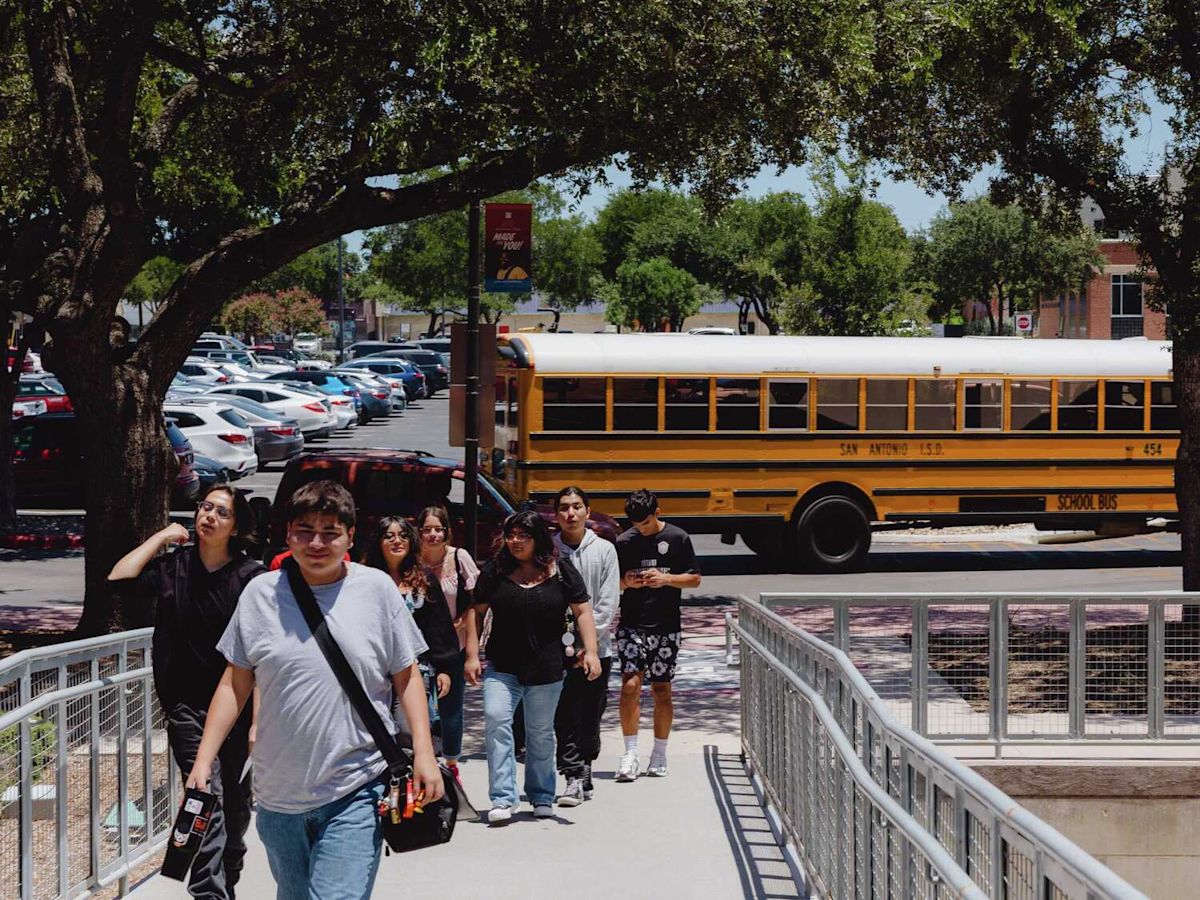
Public school districts throughout the San Antonio metropolitan area are continuing to grapple with persistent school bus driver shortages, complicating daily student transit even as one neighboring system manages to rebound to pre-pandemic staffing levels. The ongoing labor deficit has forced administrators to adjust bus routes, freeze wages, and ask operational staff to step behind the wheel.
While transportation departments nationwide have faced hiring hurdles for several years, the strain remains particularly visible across three of San Antonio’s four largest educational systems: Northside Independent School District, San Antonio Independent School District, and Judson Independent School District. Each of these districts is actively trying to recruit and retain enough qualified personnel to navigate daily morning and afternoon routes.
In San Antonio ISD, district officials are managing roughly 125 active bus routes while attempting to fill 16 bus driver vacancies. A similar hiring gap exists in Judson ISD, where officials report that an additional 10 drivers are required to bring the transportation department to complete staffing, which accounts for substitute drivers who can back up regular staff when illness or personal leave arises.
The day-to-day pressure on Judson ISD was addressed during an Aug. 27 special board meeting, where Director of Transportation Earl Stewart reported that the district operated 84 total bus routes while operating five drivers short of basic needs. A typical assignment in the district entails three separate trips each morning and afternoon, transporting children to their zoned elementary, middle, and high schools.
During the meeting, Judson ISD Trustee Stephanie Jones voiced community concerns regarding whether the district had sufficient staff to transport students safely and promptly. Stewart acknowledged that staffing pressures become particularly acute on days when scheduled drivers are absent, though he emphasized that administrators have actively stepped in to drive routes and that regular drivers have picked up extra runs to keep schedules moving.
Meanwhile, Northside ISD is dealing with substantial staffing vacancies across several transit roles. According to NISD Director of Transportation Tesilia Soliz, the district currently needs 35 standard bus drivers and 40 bus assistants to reach a full roster. Additionally, the district is searching for 15 minibus drivers, a specific role that provides specialized transit support without requiring applicants to hold a commercial driver’s license.
The shortage of commercial drivers is compounded by financial constraints linked to how the state of Texas funds pupil transportation. The state provides districts with approximately $1 for each mile driven, but this allocation only applies to transporting students who live more than two miles away from their assigned campuses.
Because state funding formulas cover only a fraction of total operating costs, local school districts must independently fund fuel expenses, fleet maintenance, and driver compensation packages out of their own local budgets. As districts across the state contend with severe budget shortfalls, funding competitive wage increases for transportation workers has become increasingly difficult.
Northside ISD, which has been contending with a $38 million budget deficit, felt compelled to implement a salary freeze across its transportation department rather than granting the 2% to 3% annual pay bumps that staff typically receive. Soliz noted that eliminating these wage increases has severely hindered the district's ability to attract new candidates while retaining experienced drivers.
To ensure all students still receive transportation under these constrained circumstances, Northside ISD was forced to consolidate multiple bus routes. In several instances, the department merged two separate routes carrying approximately 30 students each into a single trip, loading 50-to-70-passenger buses to their absolute limit.
These consolidations have doubled the physical length of certain routes and substantially increased the time students spend commuting to and from campus. Soliz acknowledged that prolonged commutes are far from ideal for families, emphasizing that the transportation department is doing everything possible to maximize efficiency with its available resources.
Looking ahead, Northside ISD officials hope that relief could come from a proposed tax increase scheduled for a public vote on Nov. 3. If local voters approve the ballot measure, district leaders hope to allocate a portion of the resulting revenue toward restoring salary increases for transportation workers to help stabilize staffing.
A central hurdle across the region remains the broad compensation disparity between driving a school bus and working in commercial freight. Although all four of the largest San Antonio-area school districts offer paid training to help new hires obtain their required commercial driver’s licenses, newly certified individuals often find higher pay in the private logistics sector.
Data from the Bureau of Labor Statistics highlights this ongoing pay gap: heavy and tractor-trailer truck drivers earn an average annual wage of $58,640, whereas school bus drivers earn an average of $49,390 nationwide. This competitive deficit makes it difficult for school systems to retain drivers once they obtain their commercial credentials.
In contrast to its neighboring districts, North East Independent School District has emerged as a regional bright spot. Bill Harrison, the executive director of transportation at NEISD, stated that the district’s bus fleet is currently in its best staffing condition since before the COVID-19 pandemic triggered widespread transit shortages in 2020.
With a transportation network operating more than 200 individual routes, NEISD is currently seeking only 12 additional drivers to reach full capacity. As the school year advances, the differing situations across San Antonio illustrate how local districts are utilizing distinct operational strategies to navigate the broader labor and budget challenges affecting public school transportation.








(0)