
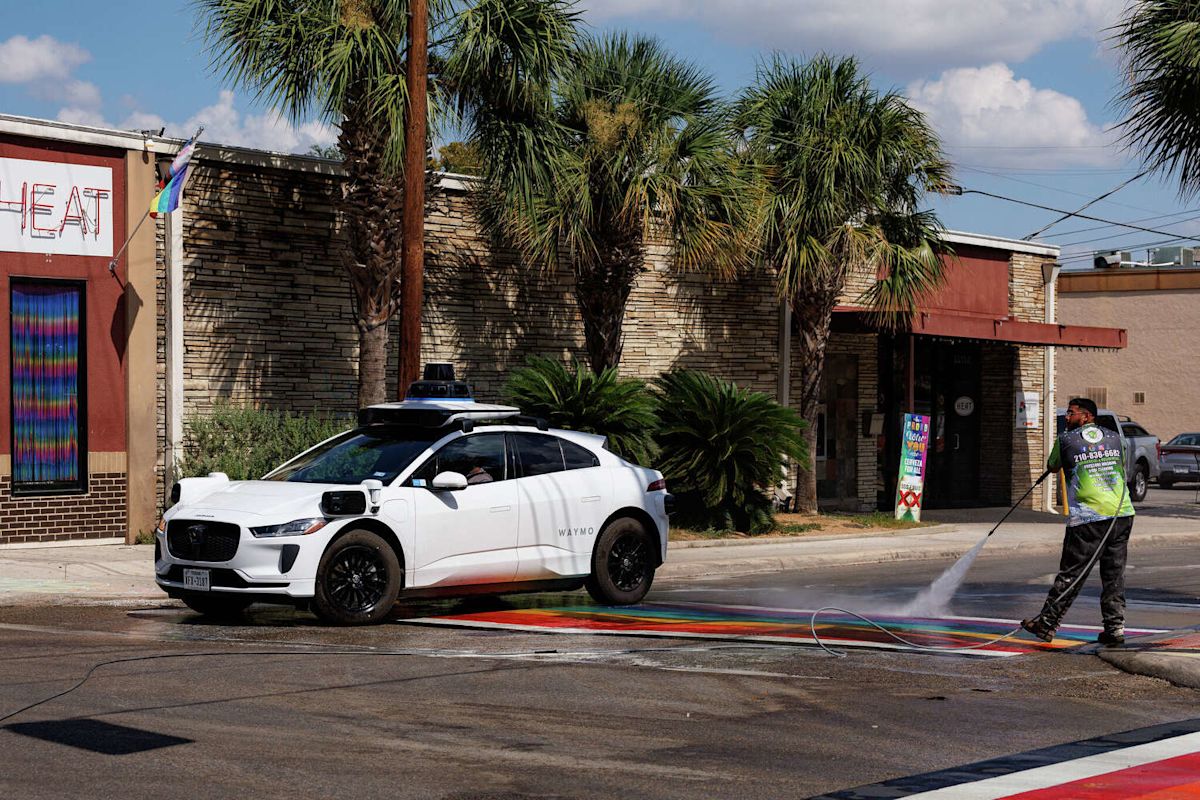
Detailed law enforcement documentation has revealed that Waymo’s autonomous vehicle fleet encountered numerous challenges on San Antonio roadways before the company halted its commercial ride-hailing operations in the city. The operational difficulties, documented across hundreds of pages of municipal emergency logs, illustrate the friction that can occur when automated driving systems navigate complex urban settings designed primarily for human motorists.
A comprehensive review of 270 pages of police records indicates that the autonomous sport utility vehicles frequently required human intervention when encountering unexpected driving conditions or system interruptions. Emergency dispatchers logged reports detailing vehicles trapped in high water, instances of reckless or wrong-way driving allegations, collisions, and numerous situations where the automated cars caused traffic congestion by coming to an unexpected stop.
Among the specific incidents cataloged in the police files were reports of the self-driving vehicles striking three cats. Regarding human safety, the municipal records show that the white Jaguar I-PACE SUVs did not cause any human injuries while traveling in autonomous mode. However, a serious incident occurred in April when a Waymo vehicle operated by a human test driver struck a pedestrian, resulting in the individual being hospitalized.
The company’s commercial ride-hailing service in San Antonio remains inactive following an April incident in which one of its vehicles was caught and swept off a roadway by floodwaters. Despite the suspension of customer rides, the Alphabet-owned autonomous driving company has resumed testing its specialized fleet of Jaguar I-PACE vehicles throughout the municipality.
In response to the documentation, Waymo representative Nye Davidson stated that the law enforcement logs provide an incomplete depiction of how the vehicles function in the city. Davidson emphasized that a clear distinction must be made between police records that simply mention an autonomous vehicle and those specific events where an automated car genuinely required municipal emergency intervention.
Davidson further noted that many of the recorded events lacked definitive evidence indicating whether formal police follow-up occurred or was even warranted. Consequently, the company disputes characterizing the aggregate compilation of emergency dispatch records as 50 distinct operational failures attributable to Waymo’s autonomous platform.
Between June 2025 and April, emergency services received at least 24 separate calls regarding Waymo vehicles that had come to a halt in roadway lanes, driveways, intersections, or highway shoulders. These stoppage calls occurred throughout the company’s designated 60-square-mile operating territory in San Antonio, presenting recurring navigation challenges for surrounding human drivers.
The recorded disruptions were predominantly concentrated along several heavily traveled north-central and near-downtown transportation routes. Frequent incident locations included major corridors such as Interstate 35, Basse Road, San Pedro Avenue, New Braunfels Avenue, Austin Highway, and Harry Wurzbach Road.
Several entries in the police files highlight how unconventional roadway conditions or malfunctioning external infrastructure confounded the automated systems. On April 3, two Waymo vehicles remained stationary at the intersection of Burr and Wurzbach roads after a traffic signal became stuck on red, forcing human drivers to maneuver around the stalled robotaxis. Five days later, another vehicle became immobilized at McCullough Avenue and Basse Road due to malfunctioning railroad crossing gates.
In another April encounter, emergency dispatchers received reports of two autonomous vehicles positioned diagonally across the roadway at the intersection of New Braunfels and Cloverleaf avenues, though the cars had moved before an officer arrived on scene. Earlier in the year, on February 3, two police officers had to physically assist in clearing an immobilized autonomous vehicle from an Interstate 35 frontage road, with responding personnel noting in their logs that they arrived and cleared the car from traffic lanes.
An analysis of the 24 specific traffic obstruction calls shows varying outcomes across the documented encounters. In 12 instances, the autonomous vehicles had already departed or were no longer impeding the flow of traffic by the time law enforcement personnel arrived at the scene. Nine calls required active intervention from police officers, municipal dispatchers, or Waymo personnel, while two lacked a recorded resolution and one was determined not to be a hazard.
Public scrutiny regarding the vehicles has also extended to social media platforms, including a widely circulated photograph that appeared to depict a police officer conducting a traffic stop on a Waymo vehicle at San Pedro Avenue and West Elmira Street. San Antonio Police Department spokeswoman Julyssa DeLuna clarified that the encounter was not an enforcement stop, explaining that the vehicle was already stationary and the officer on scene merely assisted in moving it safely out of the roadway.
To address the recurring interactions between automated vehicles and first responders, the San Antonio Police Department and the local fire department conducted joint training sessions with Waymo in late 2025. These instructional meetings focused on preparing emergency personnel to safely manage and relocate the sensor-laden autonomous vehicles during roadside emergencies and traffic incidents.
The documented incidents in Texas coincide with increased regulatory attention from the National Highway Traffic Safety Administration, which previously issued warnings regarding autonomous vehicle fleets obstructing first responders. As Waymo continues localized testing alongside emerging market competition—including Tesla’s approved development of a robotaxi facility near the San Antonio airport—the records demonstrate the technological learning curve and note that the camera-equipped vehicles have also offered utility in assisting law enforcement investigations.






(0)