
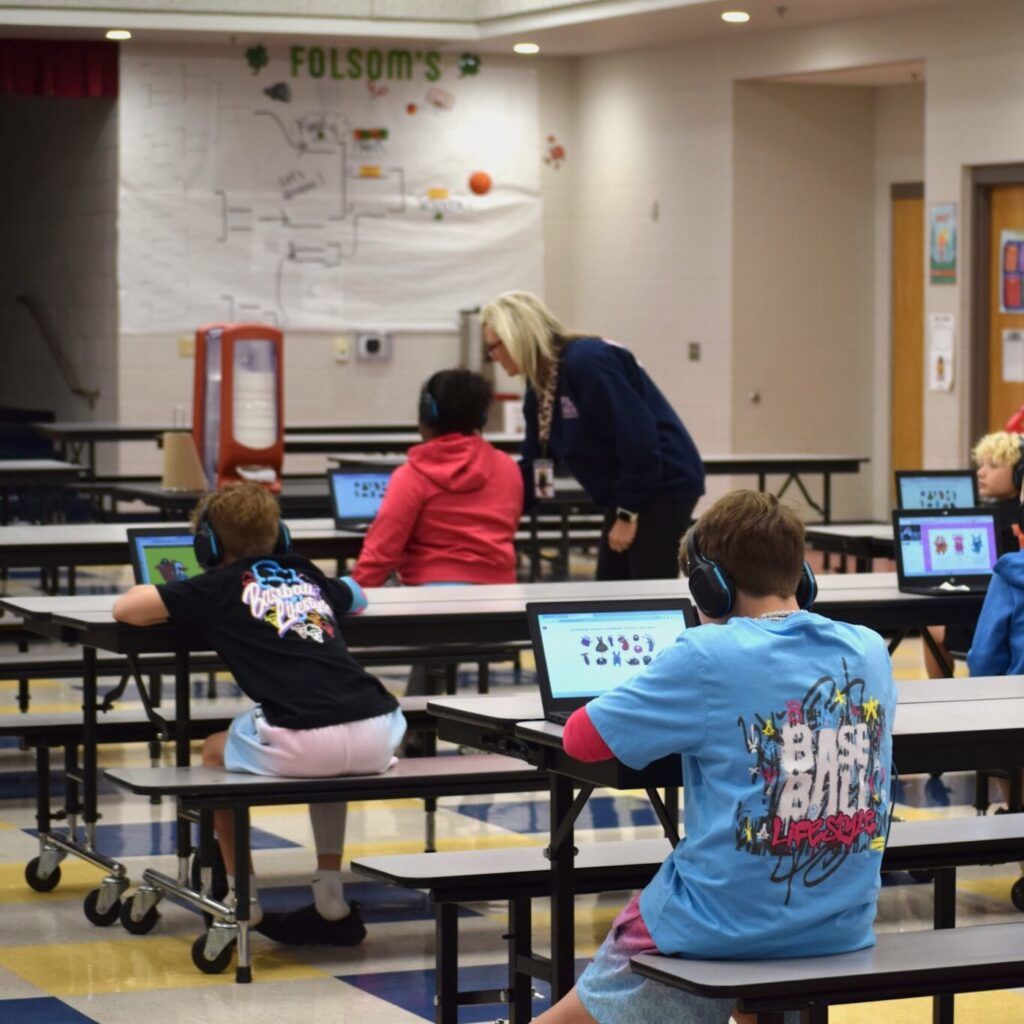
Public school systems across Ohio have entered a critical new phase in digital learning following a statewide mandate requiring every traditional public school district, community school, and STEM academy to formally enact an artificial intelligence policy by July 1, 2026. As educators and students return to physical classrooms, school administrators face the intricate challenge of transforming these newly adopted board policies into meaningful, day-to-day instructional practices.
To assist local districts with compliance, the Ohio Department of Education and Workforce developed a comprehensive model framework. This state-level guidance directs school systems to establish specific rules governing student and staff AI usage, digital privacy, ethical considerations, the vetting of third-party digital tools, educator instructional methods, and the overarching influence of automated technology on academic benchmarks and student evaluations.
While these administrative guidelines establish necessary legal and operational guardrails, education policy analysts note that general compliance does not resolve the most pressing challenge confronting classroom teachers. Even a policy addressing every required statutory category can still leave educators uncertain about whether an artificial intelligence system actively deepened a student's grasp of a topic or merely served as an automated tool to expedite the production of homework.
To bridge this gap between high-level policy and classroom instruction, a "proof-of-learning" standard has been proposed for districts navigating the next stage of implementation. Under this framework, students would be required to submit a short explanatory note whenever artificial intelligence software materially shapes or contributes to an assignment submitted for a grade.
This proposed accountability framework is structured around four distinct self-reported components designed to illuminate the student's personal cognitive process. First, students must document the specific instructions or prompts they provided to the artificial intelligence application, clarifying their initial goals for the digital interaction.
Second, the standard asks learners to explain which machine-generated suggestions they consciously chose to modify or completely dismiss. This element is paired with a third requirement demanding that students document how they independently corroborated and verified the factual accuracy of the information returned by the automated platform.
Finally, the four-part disclosure requires students to demonstrate what they can successfully articulate, solve, or perform entirely on their own without relying on the technological tool. This concluding requirement ensures that the underlying educational objective remains intact regardless of the digital assistance used during the drafting or preparatory stages.
Proponents emphasize that the proof-of-learning requirement is designed with narrow boundaries so as not to overwhelm students with unnecessary reporting. Basic productivity functions—such as digital spellcheckers, standard autocomplete tools, and routine document formatting features—would be exempt from disclosure. Instead, the reporting requirement would be triggered only when AI directly influences core intellectual components, including analytical reasoning, background research, prose composition, programming code, creative design, or academic conclusions.
The necessity of such a standard stems from the unique characteristics of generative artificial intelligence, which can easily create an illusion of genuine subject-matter mastery. Because large language models produce fluent and grammatically polished prose, students can quickly generate authoritative-sounding work before acquiring the foundational knowledge needed to identify factual hallucinations, invented citations, or illogical premises.
Furthermore, relying primarily on automated detection software to govern classroom AI usage presents significant pedagogical drawbacks. Attempting to catch unauthorized digital assistance often creates an adversarial environment in which students focus on concealing tool usage rather than engaging with course material. By shifting the evaluation from technological detection to transparent process documentation, educators can assess the actual intellectual effort exerted by the student.
The proof-of-learning framework is adaptable across a wide spectrum of academic subjects and grade levels. In a social studies or history class, for instance, a student might explain that an AI model proposed several potential causes for a historical event, but the student chose to discard one of the suggestions after cross-referencing assigned primary source documents.
Similarly, in a computer science course, a student could detail how a block of AI-generated code malfunctioned when subjected to an edge-case test, subsequently outlining the manual logic adjustments made to resolve the defect. In career-technical programs, a student might illustrate how an automated procedural outline was modified to conform with established workshop safety regulations and manufacturer equipment manuals.
The education sector's proactive movement on artificial intelligence stands in contrast to broader legislative initiatives within the state. Reporting from the Ohio Capital Journal in May noted that broader statewide efforts to regulate artificial intelligence technologies had encountered delays due to regulatory uncertainty regarding state enforcement mechanisms.
Because the Ohio General Assembly established a firm statutory deadline for local school boards and the state education department provided a foundational template, the K-12 education system has emerged as a viable testing ground for establishing practical standards of human accountability.
In addition to supporting classroom evaluation, learning to document interactions with automated systems offers significant long-term workforce advantages. While modern employers increasingly seek individuals capable of leveraging AI productivity tools, workplace success continues to depend on professionals who can independently detect errors, protect sensitive information, recognize tasks requiring human oversight, and assume responsibility for finished projects.
By embedding proof-of-learning mechanisms into local school district policies, Ohio schools have an opportunity to move beyond teaching basic prompt construction. Instead, students will cultivate the critical-thinking habits necessary to effectively supervise and validate automated technologies throughout their academic and professional lives.






(0)