
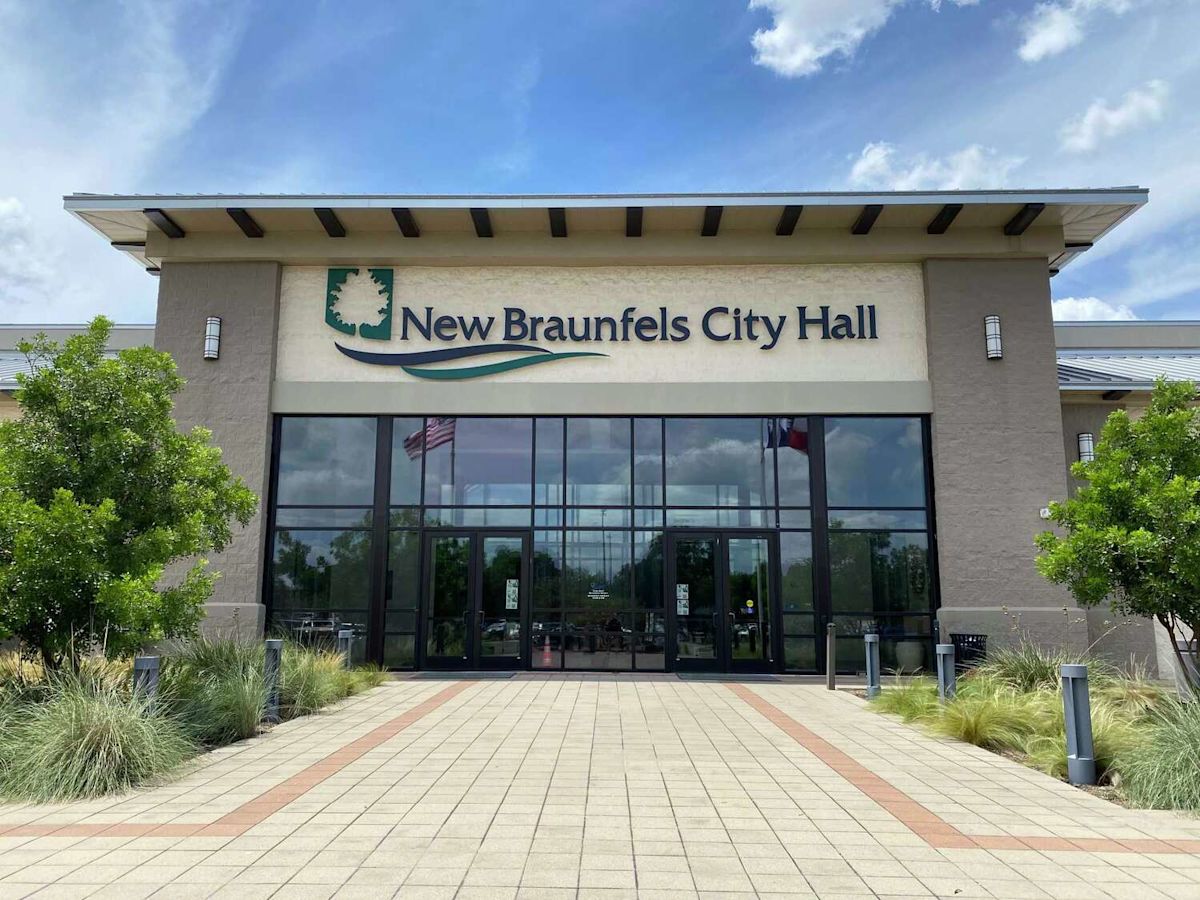
The New Braunfels City Council has voted unanimously to reject a request to waive up to $500,000 in utility impact fees for a planned affordable housing complex. Despite denying the fee relief, municipal leaders emphasized their strong backing for the project and instructed city staff to explore alternative funding strategies to help bridge the development's financial gap.
The proposed complex, known as Park at Dogwood, is envisioned as a 76-unit apartment community slated for construction at 1869 McQueeney Road. The project developer, The Park Companies, is currently grappling with a $2 million funding shortfall on the estimated $22.3 million total development cost, according to Jeff Jewell, the city's economic and community development director.
To address the budgetary deficit, the developer approached both the city council and New Braunfels Utilities with a request to forgive up to $500,000 in infrastructure impact fees. Total impact fees assessed for the project stand at roughly $1.3 million, meaning the requested relief would have resulted in an approximate 40% reduction in utility charges.
New Braunfels Utilities, a city-owned entity that manages municipal water, wastewater, and electric services, requires a formal recommendation from the city council before granting any fee waivers. In a 5-0 vote during Monday’s meeting, council members formally recommended that the utility board deny the request while simultaneously instructing municipal staff to search for other avenues to help close the shortfall. Mayor Michael French and Councilwoman Toni Carter were absent from the proceedings.
If completed, Park at Dogwood is designed to provide income-restricted housing for individuals and families earning between 30% and 60% of the area median income. According to Jewell, this corresponds to household annual earnings ranging between $21,000 and $54,000, depending on the number of family members residing in the household.
Under the current pricing framework, proposed monthly rents for the units would range from $424 to $1,196. These rental rates would be scaled according to apartment unit size and the verified income tier of qualifying tenants, offering below-market rates to local workers and families.
City documentation reveals that the bulk of the $22.3 million development was initially structured to be funded through the federal Low-Income Housing Tax Credit program, which awarded credits to the venture in 2024. However, unexpected delays emerged after the Federal Emergency Management Agency revised regional floodplain maps, forcing the development team to redesign the site plan. The resulting construction delays reduced the anticipated tax credit revenue from $17.6 million down to $15.7 million, sparking the current budget crisis.
In an effort to reduce expenses across multiple areas, the developer has already forged a partnership with the New Braunfels Housing Authority, an agreement that grants the property an exemption from local property taxes. In addition to the utility fee request, city records show that municipal leaders have also evaluated the possibility of waiving approximately $250,000 in roadway impact fees to help minimize the project's shortfall.
While council members expressed a strong desire to see the housing complex reach completion, they voiced significant reservations regarding the use of utility revenues to subsidize construction costs. Councilwoman Nikki Shaw pointed out that New Braunfels Utilities has systematically raised utility rates every year since 2023 to finance ongoing capital improvement projects, making impact fee waivers for new construction difficult to justify to current ratepayers.
Shaw suggested that rather than depleting utility resources, the city should look to the New Braunfels Economic Development Corporation to assemble a financial incentive. The economic development board manages a designated portion of local sales tax receipts intended to stimulate local economic growth and community development.
Shaw noted that granting fee reductions while asking current utility customers to pay higher rates was problematic, stressing that necessary infrastructure improvements associated with new construction must still be paid for through responsible financial mechanisms.
The housing initiative also provoked debate among local residents during the public comment portion of the council meeting. Resident Eva Pepitone criticized the development, arguing that it would place an undue burden on local schools and neighborhood resources while alleging that working single-parent households would be unable to provide adequate after-school supervision for their children.
Council members firmly pushed back against those assertions, defending the integrity of working families and the necessity of affordable housing within the community. Councilman Michael Capizzi emphasized that the city must support residents striving for financial stability, framing the project as a necessary hand up for community members, even as he endorsed exploring alternative funding mechanisms like sales tax incentives.
Councilman D. Lee Edwards offered a personal perspective in support of affordable housing initiatives, sharing his own past financial hardships. Edwards recalled how in 1977, following a sudden loss of income, he was forced to relocate his family and newborn child into a remote single-wide trailer in South Carolina costing $125 per month. He stressed that workforce developments like Park at Dogwood provide working families with the stability needed to overcome economic adversity.
Other community members participating in the meeting echoed the council’s reluctance to utilize utility fee waivers, arguing that granting discounts could shift infrastructure costs onto existing utility customers. With the council's directive now in place, city administration will focus on identifying viable non-utility funding alternatives to help ensure the Park at Dogwood development can move toward groundbreaking.







(0)