
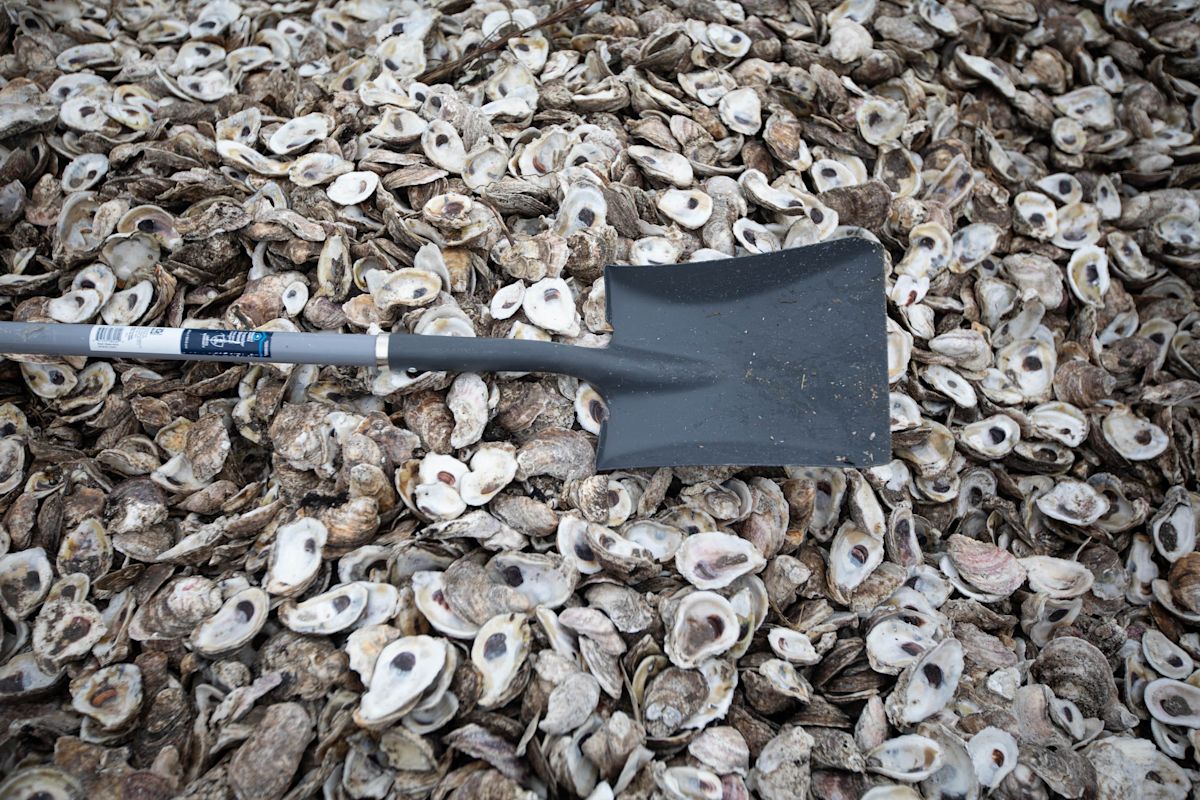
Patrons enjoying freshly shucked oysters at restaurants far from the ocean often think little of the discard left behind on their plates. Historically, discarded shells from inland dining establishments have routinely ended up in municipal landfills, severing a critical ecological chain. A major conservation initiative in Texas is now actively rewriting that trajectory by connecting urban dining rooms directly to marine restoration along the Gulf Coast.
The Sink Your Shucks Oyster Shell Recycling Program, organized through the Harte Research Institute at Texas A&M University-Corpus Christi, has recently expanded its reach beyond the coast. Through a newly announced partnership with the South Texas Coastal Initiative, discarded oyster shells from San Antonio restaurants are now being gathered and transported back to Texas coastal bays to rebuild vulnerable marine habitats.
For years, the removal of oyster shells during commercial harvesting has stripped Texas bays of structural foundations essential for marine life. When consumer shells are discarded as regular trash, the natural replenishment cycle of bay bottoms is disrupted. By reclaiming these shells from restaurant kitchens, researchers and conservationists are turning dining waste into a foundational resource for coastal rehabilitation.
The newly forged inland collection network enables participating San Antonio dining establishments to redirect their discarded shells to the coast. This development marks a significant step forward for the program, which historically focused its collection logistics primarily around local Corpus Christi seafood establishments and nearby coastal communities.
Program organizers emphasize that geographical distance from the coastline should not be a barrier to participating in marine conservation efforts. Sink Your Shucks program coordinator Stephanie Tierce noted in a news release that an oyster consumed in an inland city like San Antonio can directly support the next generation of oysters in Texas estuaries, establishing what she described as a continuous bay-to-table and back-to-bay cycle.
Early collection efforts across San Antonio are already yielding substantial results. Partnering with Mission Compost, the initiative has collected more than 5,000 pounds of oyster shells from an initial roster of prominent local venues. Participating locations include Little Em's Oyster Bar in the King William historic district, along with Pullman Market, Brasserie Mon Chou Chou, and Southerleigh Fine Food & Brewery in the historic Pearl District.
Culinary leaders participating in the project see the initiative as a meaningful way to close the loop on seafood sustainability. Southerleigh Fine Food & Brewery chef de cuisine Aaron Juvera highlighted that returning shells to the coast reflects a deeper responsibility to coastal ecosystems. Juvera stated that participating allows kitchens to holistically support Texas oyster farms, educate diners and staff about regional seafood, and contribute actively to a regenerative marine environment.
The biological necessity of recycling oyster shells stems directly from the life cycle of young oysters. When oyster larvae first hatch, they have no protective shell of their own and spend roughly three weeks swimming freely through the water column. To survive and mature, these free-swimming larvae require hard substrate—ideally the shells of older oysters—to anchor themselves and begin growing their own calcium carbonate structures.
Without established shell beds, young larvae struggle to find suitable surfaces, stunting population recovery across harvested bays. In addition to fostering new oyster generations, robust oyster reefs serve broad ecological functions. The complex three-dimensional structures provide vital nursery habitats for various fish and shellfish species, help naturally filter and purify surrounding bay waters, and act as natural submerged breakwaters that mitigate shoreline erosion from waves and storms.
Since its inception, Sink Your Shucks has successfully diverted millions of pounds of discarded shells back into the Mission-Aransas Estuary system. Restored habitats span Copano Bay, Aransas Bay, and St. Charles Bay, particularly near Goose Island State Park. The program has continued expanding its footprint, including the installation of a new oyster reef situated off Mustang Island in the Upper Laguna Madre.
Hands-on community participation remains a cornerstone of the restoration process. Volunteers of all ages, including students from independent school districts such as Rockport-Fulton, Flour Bluff, and Corpus Christi, regularly participate in field operations, shoveling reclaimed shells into containers and assisting researchers at active restoration sites along the shoreline.
The expansion into San Antonio builds upon a wide network of established restaurant partners that have supported the program over the years. Other participating establishments include Black Diamond Oyster Bar, Castaway's Seafood, Copano's Restaurant, Dai Due, Doc's Seafood and Steaks, Dokyo Dauntaun, Dorado's Restaurant, Fulton Irish Pub, Hometown Seafood, KC's Oyster Shack, Latitude 28°02' Restaurant, Saltwater Grill, The Boiling Pot, Virginia's on the Bay, and Water Street Oyster Bar.
Organizers are encouraging additional San Antonio culinary businesses to join the recycling program as the inland network expands. Interested restaurant operators can reach out to Eric@Ejdcomp.com to obtain more details about participation. Meanwhile, community restoration efforts will continue on the coast, with the next public Sink Your Shucks reef-building event scheduled for Oct. 3 at Goose Island State Park.






(0)