
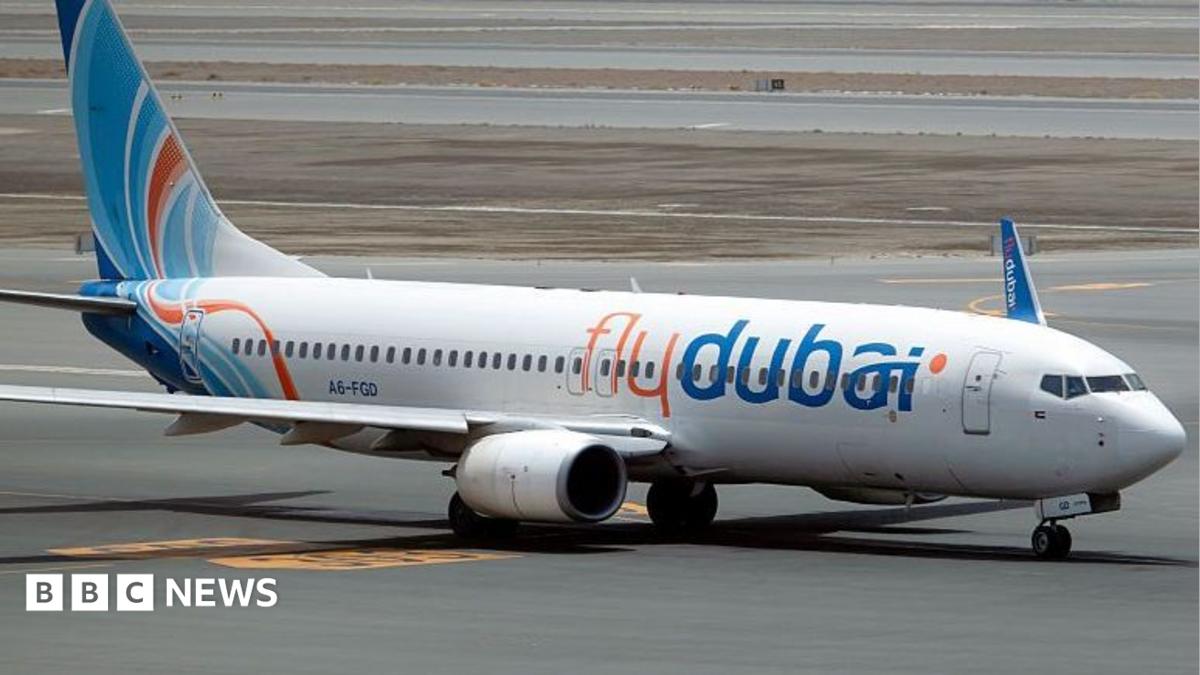
A Flydubai aircraft bound from Dubai to Tel Aviv was unexpectedly diverted on Wednesday morning after a physical altercation erupted between the pilot and co-pilot, according to Israeli officials cited by local media. The Boeing 737 was roughly two hours into its journey when it broadcast a series of escalating emergency transponder codes that prompted a rapid Israeli military response, even though the Israeli prime minister's office said the incident was not believed to be a hijacking.
The aircraft took off from Dubai International Airport in the United Arab Emirates in the early hours of Wednesday, according to the flight-tracking website Flightradar24, which aggregates real-time position and transponder data from aircraft. About two hours into the flight, the jet signalled a general emergency code. Minutes later, it switched to the code used to report a hijacking. It then reverted to a general emergency signal, the tracking website reported — a pattern consistent with confusion or a struggle in the cockpit rather than a deliberate act of unlawful interference.
The sequence of signals, however brief, was enough to trigger a significant security response. The Israeli air force dispatched fighter jets to the region, and Prime Minister Benjamin Netanyahu held urgent consultations about the incident, according to the report. Israeli defence officials told local media that the emergency signal was thought to have been issued following an altercation between the pilot and co-pilot.
The official reaction reflects how seriously transponder alerts are treated in Israeli aviation security, a country whose carriers and airports have faced repeated threats and where hijacking scares have prompted immediate military and political mobilisation. A hijack code broadcast in Israeli airspace — or on a flight heading into it — is treated as a live threat requiring an immediate response from air defences, irrespective of how quickly the code is later withdrawn or downgraded.
Authorities stressed that the diversion was not treated as a hijacking. The prime minister's office said the incident was not believed to be an act of hijacking, and the reported account of a cockpit fight offers a markedly different explanation: an internal disturbance on board rather than an external threat to the aircraft. That distinction matters both for security assessment and for the treatment of the crew and passengers involved.
The flight, which carried around 150 people, most of whom were Israeli nationals, was scheduled to arrive at Ben-Gurion Airport, the country's main international gateway near Tel Aviv. Instead, it landed at Tabuk Airport in northeastern Saudi Arabia — a diversion that would have required the aircraft to turn back or alter course across a wide stretch of desert, under the shadow of a security response unfolding in parallel.
Tabuk, in the northwest of Saudi Arabia, is a long way from the planned destination. Any passenger on board would have experienced the alarm of the emergency signals, the unexplained fighter jet presence and the sudden change of destination without a clear public explanation. Aviation experts note that the standard transponder code repertoire includes a dedicated hijack code, a general emergency code and a communications-failure code, and that switches between them in quick succession are commonly associated with a range of in-flight disturbances, including medical events, technical problems and fights in the cockpit.
The reporting on the cause of the emergency came from Israeli officials speaking to local media, rather than from a formal statement by the airline or the Saudi or Emirati aviation authorities. Flydubai, a low-cost Dubai-based carrier, had not at the time of the report publicly described what happened aboard. The airline operates a network of routes connecting the Gulf with destinations including Tel Aviv, and flights between the United Arab Emirates and Israel have operated alongside the broader suspension and resumption patterns that have periodically reshaped regional connectivity.
Flight tracking services such as Flightradar24, which relies on volunteer receivers and commercial data feeds, are often the first indication that something unusual has happened in the sky, well before official confirmation. Their alerts draw attention to rapid changes in a flight's status but do not themselves establish a cause; the sequence of transponder codes described in this case prompted reporting, and it was Israeli officials who provided the explanation that a fight between the two pilots was responsible.
The consequences for the crew could be significant. Aviation regulators in both the UAE and Israel require detailed investigation of incidents involving cockpit conduct, and a physical fight between flight crew members would typically be treated as a serious matter under standard operating procedures designed to prevent such conflicts — which often include two qualified pilots in the cockpit at all times and clear rules on task-sharing and communication. Investigators would also examine whether crew fatigue, scheduling, or personal conduct contributed.
For the passengers, the immediate priority was a safe landing, and Tabuk provided one. Beyond that, questions are likely to include how and when the roughly 150 people were repatriated or able to continue their journeys, whether the Israeli passengers were given assistance on arrival in Saudi Arabia, and what the investigation into the flight's operation will conclude.
The episode is also likely to prompt a review of how emergency signals from flights in the region are relayed and interpreted, given the speed with which fighter aircraft were scrambled and senior political consultations were convened. Whether the alert ultimately proved to be a cockpit dispute rather than a security threat, the response underlines how quickly a routine-looking transponder code can escalate into an international incident involving military aviation and prime ministerial attention.
As the investigation continues, the confirmed details remain limited: a Flydubai flight from Dubai to Tel Aviv, an emergency declaration, a brief hijack signal, a return to a general emergency code, fighter jets dispatched by Israel, urgent consultations held by Prime Minister Netanyahu, and a landing at Tabuk Airport. The reported cause — a fight between the pilot and co-pilot — is drawn from Israeli defence sources and has not yet been formally confirmed by the airline or aviation authorities.









(0)