
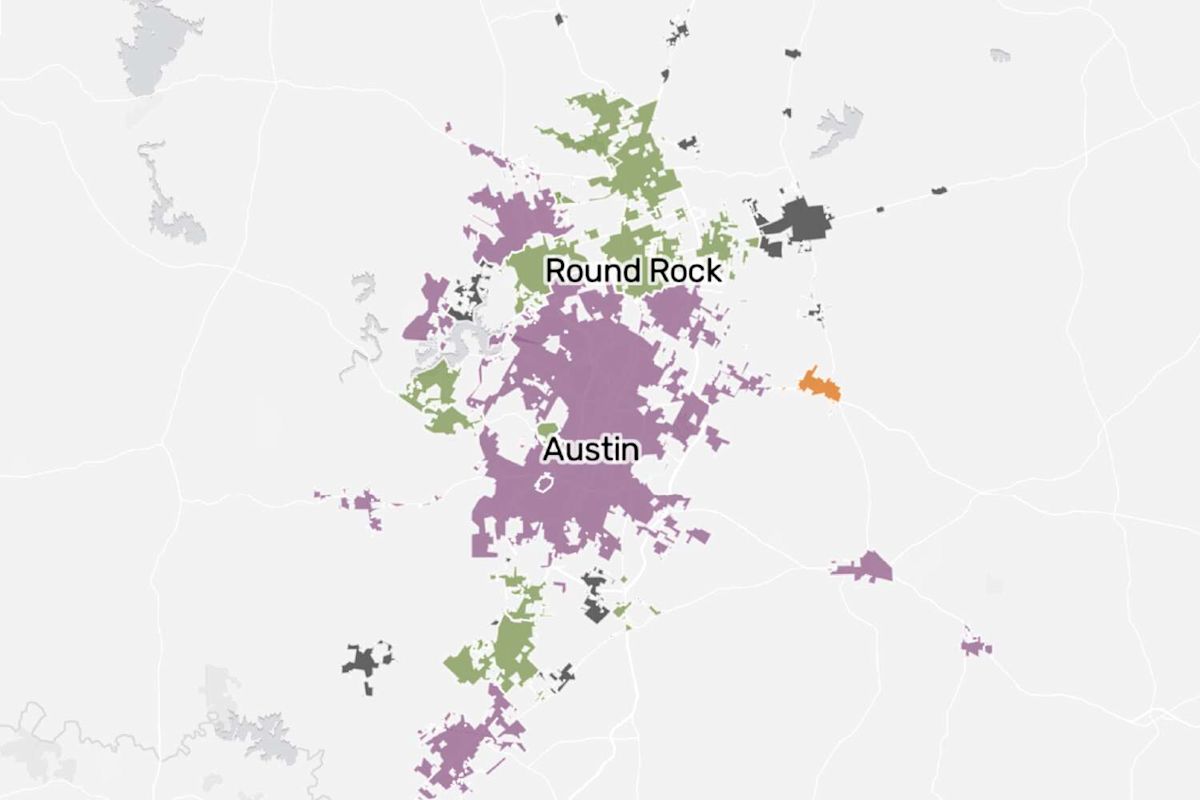
Across Central Texas, municipal leaders are grappling with the expanding footprint of automated license plate reader technology, sparking an intense regional debate over public safety, digital privacy, and municipal surveillance. A review of municipal policies throughout Travis, Williamson, Hays, and Bastrop counties highlights a deeply fragmented landscape, with several local governments eagerly maintaining their camera systems while a growing number of neighboring jurisdictions actively dismantle or suspend them.
The regional assessment reveals a sharp split among local governments. Exactly nine Central Texas communities currently report utilizing automated license plate reader networks within their jurisdictions. In contrast, another nine municipalities have formally terminated their vendor contracts, with one additional city pausing its program and several others choosing not to adopt the surveillance systems at all.
The nine municipalities maintaining active license plate reader programs include Bee Cave, Buda, Cedar Park, Georgetown, Hutto, Lakeway, Mustang Ridge, Round Rock, and West Lake Hills. Law enforcement agencies in these communities continue to rely on the roadside devices to monitor vehicle traffic, identify flagged license plates, and assist officers with active investigations across their jurisdictions.
Conversely, nine local governments have chosen to end their agreements with camera vendors: Austin, Bastrop, Lago Vista, Leander, Liberty Hill, Manor, Pflugerville, San Marcos, and Sunset Valley. In addition to these terminations, municipal leaders in Elgin have decided to pause their program pending further review. Meanwhile, municipal authorities in Dripping Springs, Rollingwood, and Smithville have confirmed that they do not use the surveillance technology.
A significant number of smaller municipalities have left their current operational status unconfirmed. Officials representing Bartlett, Coupland, Creedmoor, Florence, Granger, Jarrell, Jonestown, Taylor, Thorndale, Thrall, Weir, and Wimberley did not provide responses regarding whether their local departments deploy automated license plate readers, leaving questions about surveillance practices in those areas.
The momentum against the widespread adoption of the technology accelerated significantly following recent developments in Pflugerville. On August 25, the Pflugerville City Council voted to terminate its municipal contract with Flock, an Atlanta-based vendor that has become a prominent supplier of automated license plate readers nationwide. The council's decision followed public scrutiny after a local resident requested access to system logs to identify which outside law enforcement agencies were searching Pflugerville’s captured vehicle data.
Pflugerville’s contract cancellation triggered an immediate ripple effect across neighboring communities. In rapid succession, municipal leaders in Bastrop, Elgin, Manor, and Leander moved to end or halt their respective agreements. The Bastrop City Council took the most decisive stance among them, passing a formal measure that banned the use of license plate reader technology within the city entirely.
The municipal pushback in Central Texas coincided with heightened scrutiny at the state level. Texas Governor Greg Abbott previously issued a directive ordering state agencies to cease spending public funds on Flock camera systems, further fueling skepticism among local elected officials regarding the long-term viability and privacy protections of such vendor contracts.
In Austin, the debate over license plate readers has revealed regulatory complexities surrounding inter-agency cooperation. The Austin Police Department’s direct contract with Flock expired in 2025, leaving department personnel without direct access to the vendor’s database. Nevertheless, Austin police officers can still obtain license plate records and surveillance information through partner agencies that hold lawful access to the system.
This indirect arrangement has raised governance and oversight concerns among transparency advocates. Because Austin lacks formal written agreements regulating these data exchanges and does not actively track how often officers request or receive outside license plate data, questions remain regarding how frequently the system is utilized and whether municipal surveillance ordinances apply to information obtained from external partners.
Rather than outright canceling its surveillance program, the city of Kyle has charted a different course. On September 5, the Kyle City Council rejected a proposal to cancel the city’s active contracts with Flock despite significant public backlash. Instead of terminating the service immediately, council members agreed to consider placing a nonbinding measure on the May 2027 municipal ballot to let voters decide whether the city should continue deploying automated license plate readers.
The ongoing regional dispute reflects fundamentally conflicting views on modern public surveillance tools. Proponents of automated license plate readers maintain that the cameras serve as invaluable resources for modern policing, enabling officers to swiftly locate stolen automobiles, track down missing persons, and gather critical leads when pursuing criminal suspects.
In contrast, privacy advocates and critics argue that maintaining extensive, searchable databases of vehicle movements creates a framework for unchecked mass surveillance. Opponents express deep concern that capturing the travel habits of everyday motorists, retaining those records over extended periods, and sharing the information across disparate law enforcement agencies infringes on basic civil liberties and personal privacy.
As Central Texas municipalities continue to navigate vendor contracts, state directives, and resident backlash, the region remains a testing ground for how local communities balance public safety technology against public transparency and privacy rights.







(0)