
Tennessee is making a major push to position itself at the forefront of the emerging quantum technology sector. Through targeted state initiatives, government leaders and scientific institutions across the state are working together to foster cutting-edge research, improve computational capabilities, and establish a comprehensive infrastructure capable of supporting next-generation computing architectures.
At the center of these strategic efforts is the state’s Economic and Community Development agency, known as ECD, which has spearheaded the launch of the QUBIT grant program. This funding framework is designed to direct capital into critical quantum projects, ensuring that public, private, and academic institutions across Tennessee have the resources required to build out advanced technological systems.
The state has published full program guidelines, procedural criteria, and official application materials directly on the ECD website. Prospective applicants and research organizations can consult these materials to understand the structural demands of the initiative and review specific submission protocols required to participate in the funding cycle.
To assist potential applicants as they navigate the requirements, the state has also scheduled an informational webinar for Sept. 29. This digital session is designed to offer clarity on submission timelines, program priorities, and operational criteria for entities seeking to leverage state funding for quantum-related projects.
The grant program targets a broad spectrum of quantum initiatives, reflecting the state’s focus on building both foundational hardware and expansive communication ecosystems. Among the primary eligible project categories is regional quantum network expansion, which aims to extend connectivity and bridge technological clusters located throughout different regions of Tennessee.
In addition to physical network expansion, the state is prioritizing the establishment of open-access quantum networking testbeds. These open platforms are intended to provide researchers, developers, and industry partners with experimental environments where novel protocols, hardware, and algorithms can be tested and validated in realistic operational conditions.
Another major focus of the funding initiative is statewide quantum cloud access. By supporting distributed cloud frameworks, the state aims to make high-level quantum computational power remotely available to institutional users, thereby lowering technical barriers for academic laboratories and commercial innovators.
The initiative also encompasses the deployment of dedicated institutional and regional access nodes. These nodes will serve as key connection points across the broader network, linking major scientific facilities, university campuses, and technology hubs to unified statewide computational assets.
Beyond raw computing capacity, the program places a distinct emphasis on quantum sensing and secure communications infrastructure. As quantum technologies continue to evolve, high-precision sensing and quantum-enabled secure transmission channels are widely viewed as pivotal components for modern industrial, scientific, and public applications.
Relatedly, cybersecurity and interoperability infrastructure represent an essential category for grant eligibility. Ensuring that disparate quantum systems can communicate securely and work in tandem across diverse platforms is critical to preventing fragmentation and safeguarding vulnerable network assets from emerging security threats.
To complement these specialized technical domains, the program also covers supporting infrastructure. This broad category ensures that auxiliary facilities, power distribution, specialized hardware enclosures, and foundational components necessary to operate delicate quantum systems can receive adequate funding support.
A prominent asset within Tennessee’s existing quantum footprint is the EPB Quantum Network. Based in Chattanooga, EPB operates as the city's municipally owned electric power and fiber utility, serving as a pioneer in deploying specialized municipal fiber infrastructure optimized for commercial and research-oriented quantum networking.
Alongside municipal initiatives, major federal and scientific resources are anchored by Oak Ridge National Laboratory in Oak Ridge, Tennessee. The national laboratory represents a premier hub for high-performance computing, materials science, and fundamental computational research within the state.
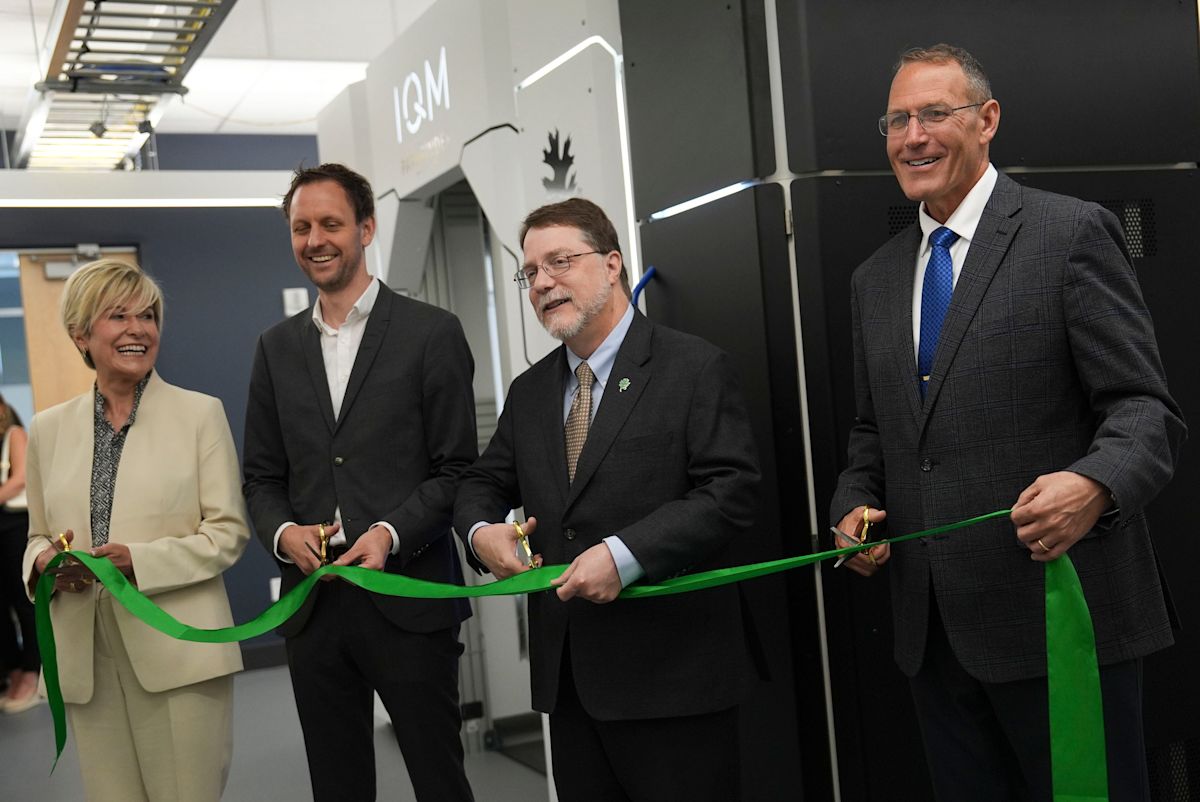
Demonstrating the rapid pace of development in the region, Oak Ridge National Laboratory hosted a ribbon-cutting ceremony on June 16, 2026, to inaugurate a new quantum computer developed by IQM. The milestone highlighted ongoing collaboration between government research facilities and international hardware manufacturers.
Key scientific and administrative leaders participated in the June 2026 event, including Stephen Streiffer, Laboratory Director of Oak Ridge National Laboratory, and Gina Tourassi, Associate Laboratory Director for the Computing and Computational Science Directorate at the laboratory. They were joined by Trey Wheeler, the Department of Energy’s ORNL Site Office Manager, and Jan Goetz, the chief executive officer and co-founder of IQM.
By combining the resources of federal laboratories like ORNL, municipal utility assets like Chattanooga’s EPB, and state funding programs managed by ECD, Tennessee continues to construct an integrated, forward-looking foundation for quantum innovation and technical enterprise.







(0)