
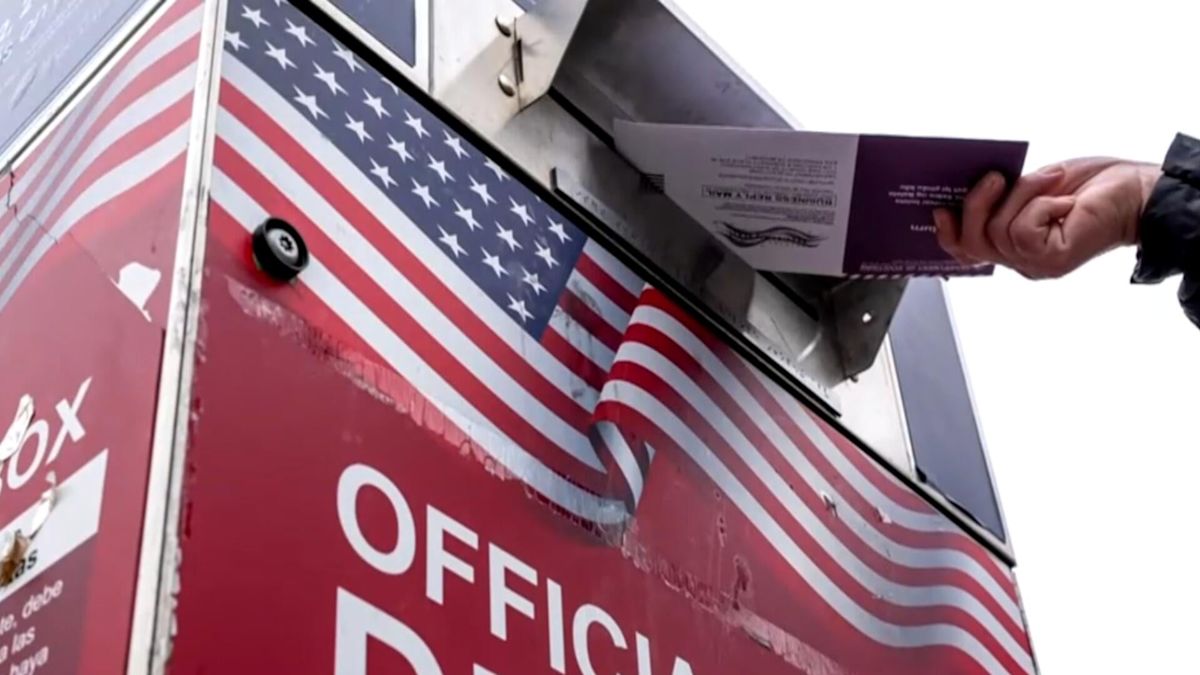
The Supreme Court has declined to reinstate new United States Postal Service regulations governing mail-in ballots, leaving a lower court injunction in place and dealing a substantial setback to the Trump administration’s push to alter voting rules shortly before the November midterm elections.
The high court’s determination ensures that the controversial postal standards, which were completed by the agency late last month, will remain suspended as ongoing legal challenges make their way through the federal court system.
Under the disputed regulations, state and local election administrators faced strict new federal protocols, including mandated envelope designs with specialized unique barcodes. Furthermore, election authorities were directed to upload sensitive data regarding mail ballot recipients to a centralized online database.
The Postal Service had warned that any ballot packages failing to satisfy these updated specifications would be rejected and sent back to local election jurisdictions rather than being processed and delivered to voters or returned to election boards.
In an unsigned order, the Supreme Court determined that the executive branch had failed to demonstrate a probability of ultimate success, stating that the government is unlikely to succeed on the merits of its challenge against the preliminary injunction granted by the district court.
The decision exposed notable divisions among the court's conservative members. Justices Clarence Thomas and Samuel Alito dissented from the ruling, expressing their view that the coalition of state officials challenging the Postal Service requirements had not demonstrated that the policy was unlawful.
Justice Brett Kavanaugh concurred with the majority, charting a distinct legal path. While acknowledging a fair likelihood that the regulations might fall within the statutory purview of the Postal Service, Kavanaugh concluded that enforcing them on the eve of the midterms would be arbitrary and capricious under the Administrative Procedure Act due to the lack of adequate preparation time for election administrators.
State and county election administrators across the country had voiced urgent concerns regarding the feasibility of the measures, pointing out that mail ballots had already been distributed to voters in multiple jurisdictions. Local authorities cautioned that reconfiguring logistical processes on such short notice was virtually unworkable.
The legal action against the administration was spearheaded by Democratic-led states alongside several voting rights organizations. The challengers argued that the federal government was improperly overstepping its constitutional boundaries by infringing upon the traditional authority granted to individual states to oversee and run their own elections.
In their Supreme Court filings, the plaintiffs asserted that meeting the tight compliance deadlines was an impossible task. They cautioned that attempting to execute the rules on the eve of the midterms would trigger widespread confusion, potentially disenfranchising millions of voters who depend on absentee and mail voting systems.
The challengers further warned of potential administrative chaos, asserting that the sudden implementation carried high risks of operational errors, technical malfunctions, agency ineptitude, and severe mail distribution delays.
Conversely, the Trump administration defended the measures as a modest and fully constitutional use of congressional power over the postal network. Solicitor General D. John Sauer argued to the justices that states using the federal postal system cannot claim immunity from standard envelope and address specifications established by the Postal Service.
The administration maintained that the protocols were vital to safeguarding election integrity and mitigating voter fraud, which Sauer characterized in court submissions as a particularly damaging form of fraud that erodes public trust and dilutes lawful votes.
Despite those assertions, the administration did not present evidence showing broad or systemic voter fraud in mail-in balloting. Observers also pointed out that President Trump himself has previously cast mail-in ballots in Florida elections earlier this year.
The current legal standoff originated in late March, when President Trump signed an executive directive instructing the Postal Service to establish comprehensive rules for mail ballots while ordering the Department of Homeland Security to assemble state-level citizenship rosters.
That executive directive prompted swift lawsuits from Democratic state attorneys general. Massachusetts-based U.S. District Judge Indira Talwani subsequently blocked major components of the policy, though the Supreme Court temporarily paused that ruling on August 24 on the grounds that the legal challenge was premature before the Postal Service published its final rules.
Following the formal publication of the completed postal rule shortly before that August order, the litigation resumed rapidly, culminating in the Supreme Court's latest ruling to maintain the freeze and ensure standard mail-in procedures remain intact for the upcoming midterms.




(0)