
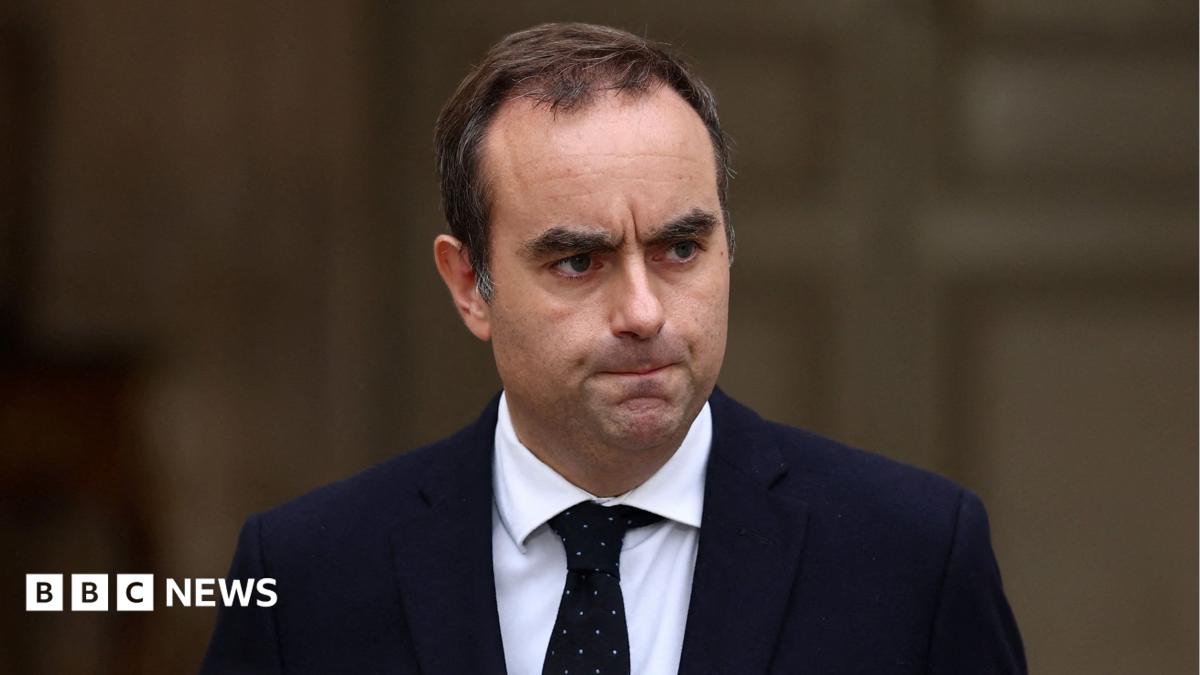
French Prime Minister Sébastien Lecornu has issued a stark warning against any further escalation of the student protest movement sweeping the country, describing such a development as "irresponsible" after authorities arrested 164 people on Monday. The demonstrations, which began in the Paris region last week, have seen teenagers blockading schools and, in some cases, clashing with police, prompting a forceful response from the government and deepening tensions over the state of France's education system.
The protests initially took root in the Île-de-France region surrounding the capital but have since spread to other parts of the country. According to the AFP news agency, four high schools were blockaded in the southern regions of Alpes-Maritimes and Var, while demonstrations were also reported in Marseille, the northern Lille area, and Sedan in the north-eastern Ardennes. The geographic expansion of the movement signals growing discontent among students that extends well beyond the capital's suburbs.
At the heart of the students' grievances are long-standing structural problems within France's lycées, the equivalent of sixth form colleges in the UK or high schools in the US. The Union Syndicale Lycéenne, which represents high school students, cited a lack of teachers and staff, dilapidated school buildings, overcrowded schedules and classes, as well as stress caused by Parcoursup, the national web platform students use to apply to higher education. The union argued these issues are "by no means inevitable" but rather the consequence of a decade of President Emmanuel Macron's policies and insufficient resources allocated to the national education system.
Interior Minister Laurent Nuñez provided a detailed account of Monday's unrest, stating that 12 members of the security forces, 12 students and three school staff members sustained injuries. He added that 180 schools across the country were affected by the disruptions. While Nuñez did not elaborate on the circumstances surrounding the 164 arrests, the scale of the figures underscores the intensity of the confrontations between protesters and law enforcement.
Speaking about the nature of the demonstrations, Nuñez rejected characterising them as conventional protest activity. "It is much more like urban violence, with a number of individuals who were masked, equipped with fireworks in tubes, equipped with projectiles, who clearly wanted to confront the internal security forces," he said. "It wasn't about making demands; it was really violence in its purest form." His comments reflect the government's position that a significant faction of the protesters is motivated by a desire for confrontation rather than legitimate political expression.
Prime Minister Lecornu echoed those concerns in a post on X, referencing reported incidents during the protests. "Fireworks, fires, violence near high schools: nothing justifies endangering students, staff, or police officers," he wrote. He acknowledged that "the difficulties of high schools must be heard and addressed" but insisted that "violence must be condemned unequivocally, and its perpetrators must answer for their actions." The prime minister also accused the far-left France Unbowed (LFI) party of encouraging students to expand the movement, a charge that adds a political dimension to the crisis.
LFI leader Jean-Luc Mélenchon pushed back sharply against the government's narrative, blaming Lecornu's administration for having "ordered the crackdown" on the protests. He described the high school students participating in the movement as "harmless," rejecting the characterisation of them as violent agitators. The exchange between the prime minister and the veteran left-wing leader highlights how the protests have become entangled in France's broader political divisions, with each side seeking to frame the events in ways that serve their respective agendas.
The Union Syndicale Lycéenne defended the protests in a social media post, framing them as a "legitimate response" to the conditions students endure daily. The union called on students to blockade schools again on Tuesday in defence of "their rights and against budget austerity," signalling that the movement intends to maintain pressure on the government rather than disperse. The decision to continue the disruptions suggests that whatever measures authorities take, the underlying grievances are unlikely to dissipate in the short term.
The timing of the student demonstrations has compounded the pressure on the government, as they coincide with a broader day of industrial action. Unions representing teachers, hospital staff and civil servants also called for walkouts on Tuesday to protest against low wages and deteriorating working conditions. The convergence of student protests and labour strikes presents a significant challenge to Lecornu's government, evoking memories of past periods of social unrest in France when disparate grievances coalesced into nationwide movements.
Since the protests began, several incidents involving violence between students and police officers have been reported. In one particularly troubling episode, a police officer reportedly fired a round from a grenade launcher used for crowd control, injuring a high school student, according to France's BFMTV. Investigations have been launched into these incidents, the broadcaster added. Such cases are likely to intensify scrutiny of police tactics and could further inflame public opinion, particularly among young people who already feel marginalised by the education system.
The unrest in schools across France reflects deeper anxieties about the future of the country's education system, which has long been a cornerstone of the French republic's commitment to equality. Critics argue that budget constraints and policy priorities have eroded the quality of public education, leaving students in overcrowded classrooms with insufficient support. The Parcoursup platform, introduced to streamline university admissions, has itself become a source of significant stress for students, many of whom view it as opaque and unfairly competitive.
The government now faces the delicate task of restoring calm without appearing to dismiss legitimate concerns. Lecornu's dual message, acknowledging the difficulties while condemning violence, reflects an attempt to walk that line. However, the prime minister's accusation against LFI and Mélenchon's counter-accusation against the government suggest that finding common ground will be difficult. The involvement of national political figures risks overshadowing the students' original demands and turning the movement into a broader referendum on the government's record.
As Tuesday's planned blockades and walkouts approach, the situation remains fluid. The interior minister's description of the protests as resembling urban violence rather than traditional demonstrations indicates that authorities are prepared for further confrontations. The deployment of security forces and the use of crowd-control measures, including the grenade launcher that injured a student, suggest that the police response may continue to be robust, raising the prospect of additional injuries and escalating tensions.
For students and their representatives, the protests represent more than a momentary disruption. They articulate a vision of an education system that is adequately funded, properly staffed and capable of preparing young people for their futures without subjecting them to unnecessary stress. Whether the government can address those concerns while restoring order will determine not only the trajectory of the current protests but also the broader relationship between France's youth and its political leadership.
The coming days will be critical in determining whether the movement gains further momentum or begins to subside. With unions across multiple sectors joining the call for action, the potential for a wider wave of social unrest cannot be discounted. The government's handling of the student protests, including its willingness to investigate incidents of police violence, will be closely watched both domestically and internationally as a test of its commitment to balancing public order with democratic expression.





(0)