
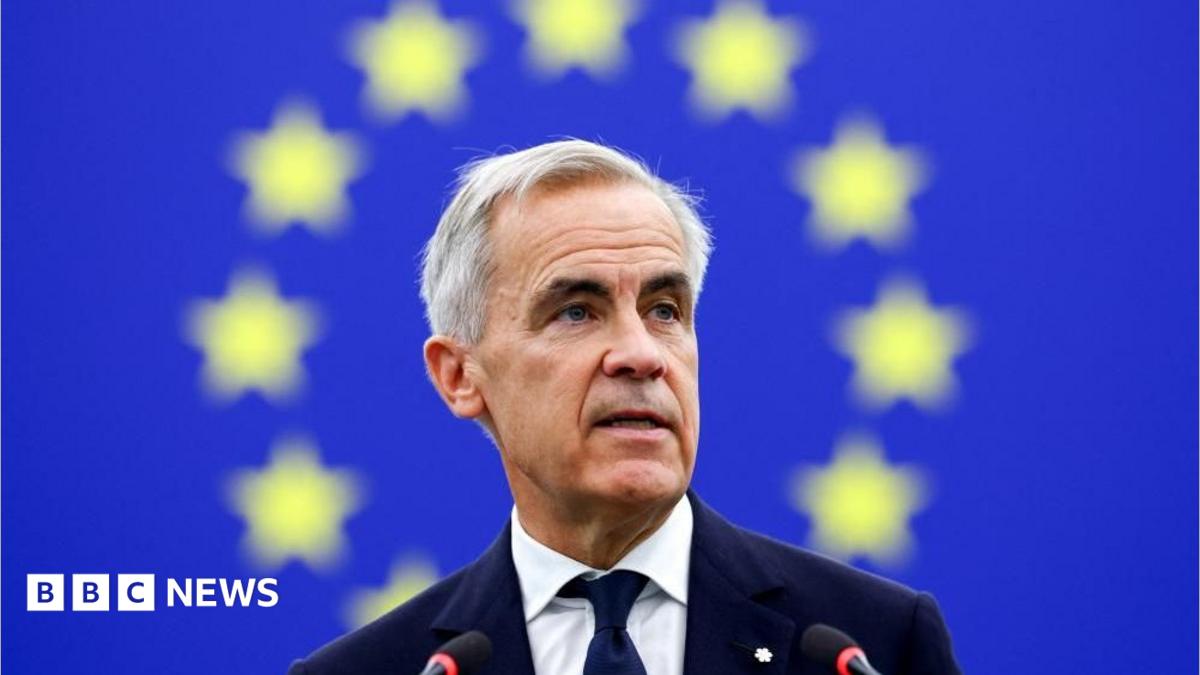
Canadian Prime Minister Mark Carney has formally welcomed an ambitious proposal by the European Union to establish Canada as the bloc's first "associate member." Delivering an address to the European Parliament in Strasbourg, Carney framed the potential alignment as a critical step toward shielding both economies from intensifying geopolitical instability, shifting trade dynamics, and global supply chain disruptions.
The overture was introduced earlier in the week by European Commission President Ursula von der Leyen, who proposed opening the door to a novel associate status for Canada. Under the conceptual framework, both sides would forge significantly deeper ties across key sectors, including defence integration, raw materials, manufacturing capacity, technological development, and broader economic security.
Addressing European lawmakers on Thursday, Carney asserted that Ottawa and Brussels are substantially stronger when working in tandem during a period marked by deep geopolitical rupture. He emphasized that democratic allies must consolidate their partnerships as global institutions and traditional alliances face unprecedented strain.
The diplomatic outreach arrives amid escalating friction between Canada and the United States. Following the breakdown of bilateral trade discussions last month, Washington and Ottawa have engaged in a cycle of retaliatory, tit-for-tat tariffs that has severely disrupted North American commerce.
The initiative quickly drew sharp criticism from US President Donald Trump, who labelled the concept of Canadian associate membership laughable. Trump cautioned that the United States would retaliate by imposing severe tariffs or halting trade with Europe on multiple fronts if Washington interprets the emerging Canada-EU relationship as a hostile act against American interests.
Speaking to journalists at a press conference following his address, Carney firmly dismissed the American warnings. He characterized the transatlantic alliance as an entirely constructive and positive development, reiterating that Canadians remain unified in protecting their sovereignty and will not allow outside powers to dictate their domestic affairs, culture, or international agreements.
During his legislative speech, Carney offered a pointed critique of contemporary economic warfare, noting that international trade is increasingly being weaponized through punitive duties, financial instruments of coercion, and the targeted exploitation of vulnerable supply networks. He warned that modern democratic societies are contending with simultaneous crises, including accelerated climate change and the persistent erosion of democratic standards.
The Canadian leader was careful to specify the limits and scope of the proposed partnership. He explicitly stated that Canada is neither seeking nor in a position to pursue full European Union membership, describing the concept instead as an alternative arrangement designed to bolster sovereign autonomy rather than build a confrontational great-power bloc.
Resource and energy cooperation form a central pillar of the envisioned pact. Carney highlighted Canada’s vast critical mineral reserves as vital for securing transatlantic supply chains, while offering to export hydrogen and liquefied natural gas to support European energy stability in exchange for European technological expertise in clean-energy transitions.
Beyond heavy industry and raw materials, Carney also proposed strengthening technological collaboration and people-to-people connections across the Atlantic. Among the key initiatives mentioned was opening the EU's flagship Erasmus+ educational exchange scheme to Canadian participants, which would allow young people from both regions to study, live, and work more freely across the Atlantic.
The two jurisdictions already share established commercial and political ties, anchored by an existing bilateral free-trade pact alongside active cooperation on joint research initiatives, economic programs, and security affairs. However, advancing to associate membership represents an unprecedented expansion of these links.
Substantial legal and diplomatic obstacles remain before any formal agreement can take effect. Because associate member status does not currently exist within the EU’s institutional architecture, designing and formalizing such a framework could require several years of delicate negotiations.
Furthermore, implementing the new classification would necessitate the unanimous backing of all 27 EU member governments. Several national capitals have previously harboured reservations about creating bespoke membership categories that could complicate the governance structure of the European single market.
Carney noted that Canada is merely at the beginning of a lengthy procedural pathway, confirming that the initiative will eventually be subject to formal debate and a decisive vote within the Canadian parliament. Both sides are scheduled to convene in Montreal at the end of October for a high-level Canada-EU summit, where senior leaders intend to iron out the detailed logistics and regulatory mechanisms of the partnership.




(0)