
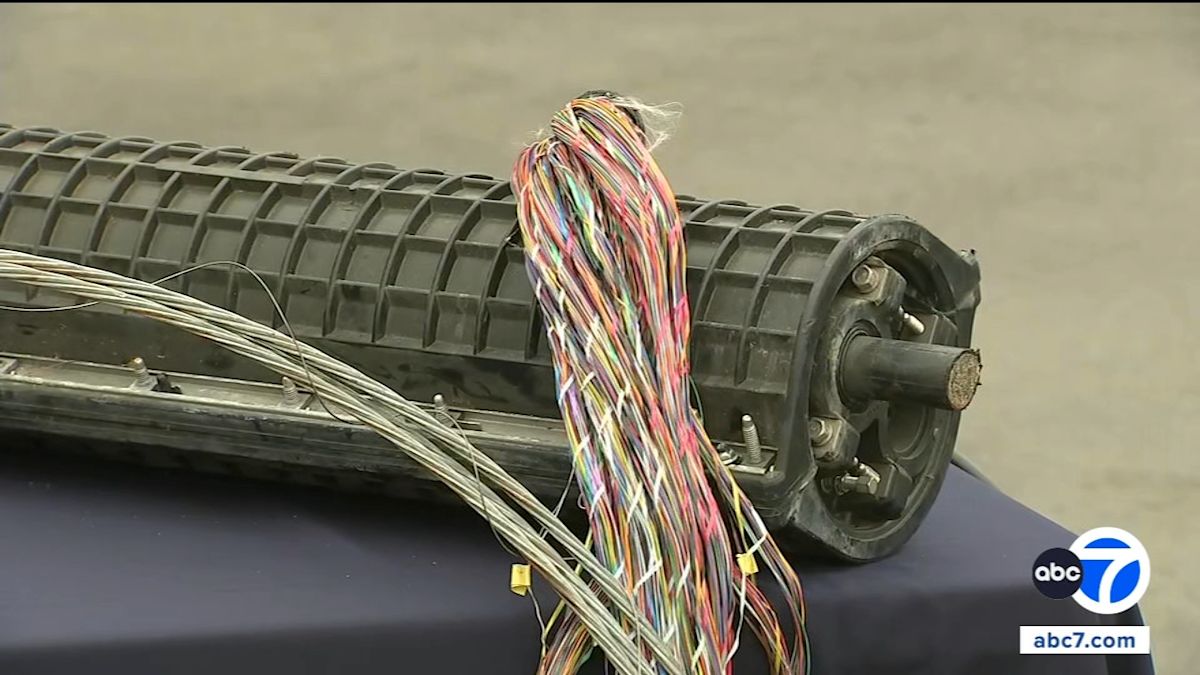
Municipal officials and community leaders across California are confronting a growing infrastructure crisis as organized copper theft rings systematically strip essential wiring from public utilities. In Los Angeles, the scale of the destruction has reached alarming levels, prompting urgent demands for state intervention to deter perpetrators and safeguard critical public safety systems that residents rely on every day.
A diverse coalition comprising municipal politicians, law enforcement representatives, and regional business leaders is formally urging California Governor Gavin Newsom to sign legislation designed to crack down on these illicit operations. The coordinated push comes in direct response to widespread metal thefts that have repeatedly knocked out municipal streetlights, severed vital telephone communications, and drained significant taxpayer resources across Los Angeles and other urban centers throughout the state.
The full magnitude of the issue in Southern California was recently brought to light through public records obtained by 7 On Your Side Investigates. According to the investigative findings, utility records show that thieves have stolen more than 27,000 feet of communications cable from the Los Angeles Department of Water and Power over the course of the past year alone.
To put that figure into perspective, the stolen LADWP communications line spans roughly five linear miles. That total distance is equivalent to the cruising altitude of a commercial passenger jetliner if elevated vertically into the sky. When laid out on the ground from end to end, the missing wire would stretch across the length of approximately 90 regulation football fields or cover the span of 165 Olympic-sized swimming pools.
The repercussions of these widespread thefts extend far beyond the loss of physical metal, directly jeopardizing basic municipal functions and resident safety. When coordinated scavenging networks dismantle wiring from electrical grids and communication lines, entire neighborhood streets are plunged into darkness as streetlights fail, while critical phone services are abruptly severed, compromising vital connections across impacted communities.
In response to the escalating crisis, state lawmakers have advanced Assembly Bill 1941, a targeted legislative measure currently awaiting the governor's signature. The proposed statute seeks to establish a distinct criminal classification known specifically as "organized metal theft," providing authorities with a specialized legal framework to prosecute individuals participating in coordinated metal stripping enterprises.
Under the provisions outlined in AB 1941, individuals who collaborate or team up to steal public metal assets—as well as those who knowingly purchase or traffic in stolen materials—would face elevated criminal accountability. The statute introduces penalties that could include up to one full year of incarceration in jail for those convicted of engaging in or facilitating organized metal theft networks.
The legislation is championed and authored by California State Assembly Member Mark González, who represents a district encompassing parts of Los Angeles. Standing alongside fellow civic leaders and law enforcement figures, González convened a formal press conference on Monday to publicly press Governor Newsom for executive approval of the measure.
Speaking at the gathering, González underscored the imperative of shielding municipal assets from persistent illegal exploitation. "California's infrastructure is not yours to steal. We have an opportunity to give prosecutors a stronger tool to hold organized metal thieves accountable and protecting the systems that keep our communities safe and connected," the assembly member declared during the media briefing.
The location chosen for the announcement was deliberately symbolic: the 6th Street Bridge in Los Angeles. The prominent civic structure has emerged as a frequent and high-profile target for coordinated metal theft rings, suffering repeated bouts of sabotage as crews of thieves systematically rip out internal electrical wiring to sell on the scrap market.
As a direct consequence of these ongoing extractions, the major bridge has routinely been left in complete darkness after nightfall. When thieves rip out the internal wiring that powers the structure's illumination, the resulting blackouts eliminate crucial visibility, presenting severe hazards for motorists, pedestrians, and cyclists traversing the busy thoroughfare.
The financial consequences of the ongoing vandalism on the 6th Street Bridge represent a massive burden for local residents and city agencies. According to figures shared by González, taxpayers have already been forced to spend an estimated $11 million simply to replace and repair the communications and electrical cables stolen from that single bridge structure alone.
Civic advocates and law enforcement leaders argue that without targeted statewide legislation, municipalities will remain trapped in a costly cycle of repairing stolen infrastructure only to have replacement lines stripped away again. The continuous diversion of millions of public dollars to replace basic wiring places an unsustainable strain on municipal maintenance budgets and utility providers like LADWP.
By introducing the specialized category of organized metal theft, proponents of AB 1941 hope to disrupt the entire supply chain that fuels these criminal operations. Supporters emphasize that holding both the thieves who physically dismantle public infrastructure and the illicit buyers who purchase the stolen materials accountable is essential to eliminating the financial incentives behind the widespread destruction.
With Assembly Bill 1941 now formally delivered to the governor's desk, municipal leaders, regional police agencies, and business organizations are closely monitoring the state executive branch. They maintain that swift enactment of the bill by Governor Newsom represents a crucial and necessary step toward securing California's public infrastructure, deterring organized theft rings, and restoring reliable services to local neighborhoods.






(0)