
The Australian government has introduced a comprehensive package of tighter immigration rules aimed at curbing temporary arrivals, focusing specifically on international tertiary students, serial visa extensions, and backpackers. The policy shift represents a concerted effort by federal authorities to reduce overall population intake while reshaping the composition of temporary visa holders across the country.
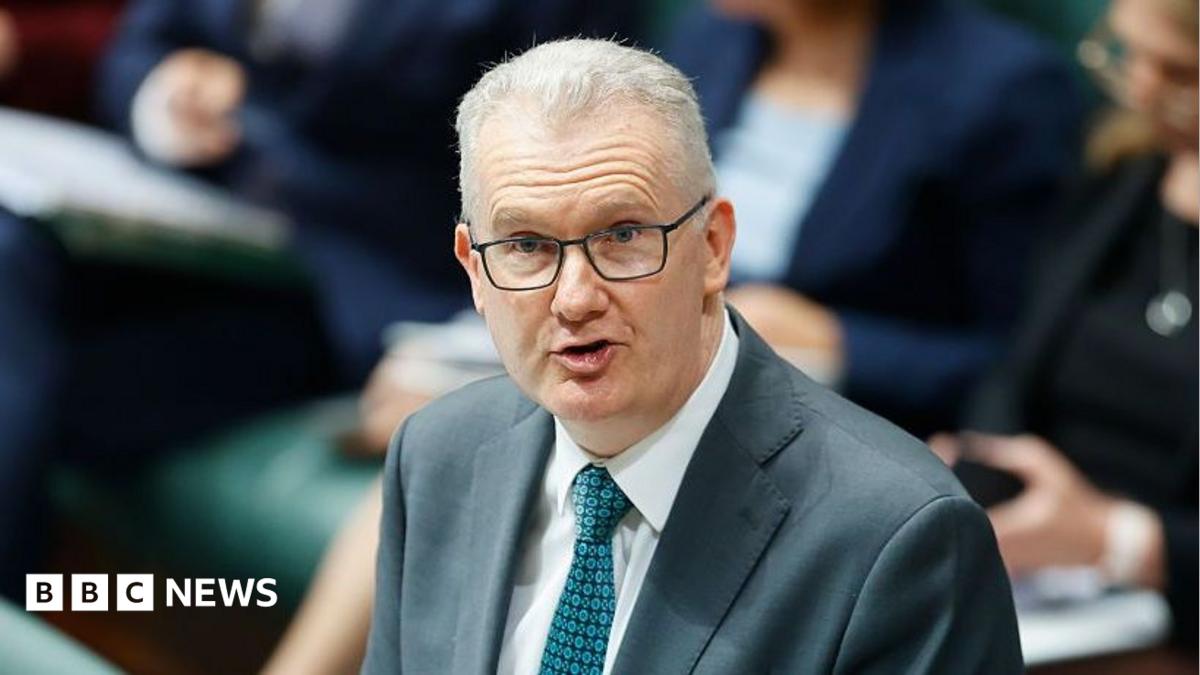
The extensive measures were formally unveiled on Thursday by Home Affairs Minister Tony Burke during a major policy address titled "The work of managing the migration program: who arrives, who stays, who leaves." In his remarks, Burke emphasized that although immigration continues to serve as an enduring foundation of national strength, the system necessitates a significantly heightened level of governmental oversight and control.
Central to the newly announced strategy is the government’s objective to systematically bring net overseas migration down to 225,000 people annually by 2028. Achieving this target requires curtailing several popular pathways that have historically allowed temporary residents to extend their residency or bring dependents into the country.
Under the revised framework for higher education, foreign scholars enrolling in Australian institutions will no longer be permitted to automatically bring family members along with them on student or graduate visas. Burke explicitly noted that the administration would cease expanding the volume of students who arrive accompanied by dependents, closing a pathway that had contributed substantially to overall migration numbers.
The government has nonetheless established specific exemptions to ensure that certain cohorts remain unaffected by the family restrictions. The dependent ban will not apply to international students who are already residing within Australia, nor will it impact prospective applicants arriving from South East Asian nations or Pacific countries.
Furthermore, postgraduate researchers pursuing doctoral qualifications will retain the right to be accompanied by their families. Burke explained that PhD candidates operate under distinctly different personal and professional circumstances compared to standard undergraduate students, warranting an exception to the broader rule.
In addition to family limitations, authorities are executing a decisive clampdown on the practice commonly known as "visa hopping." This trend involves individuals completing an initial academic course and subsequently applying for consecutive programs in order to prolong their stay onshore, frequently enrolling in lower-tier qualifications rather than advancing their education.
Burke affirmed that moving forward, temporary visa holders wishing to prolong their residency through further study must demonstrate upward academic progression. Students will only be permitted to extend their status if they advance to higher-level qualifications, such as transitioning from a completed bachelor’s degree into a master’s program. The crackdown is particularly targeted at deterring transfers into non-genuine courses operated by disreputable educational providers.
Substantial revisions were also announced for the Working Holiday Maker program, a scheme catering to travellers aged between 18 and 30 that serves as a vital labour pipeline for regional economies and agricultural operations. Under current arrangements, working holidaymakers receive an initial 12-month visa, which can be renewed for a second and third year provided they complete specified periods of regional employment—namely three months of regional work for a second year and six months for a third.
Moving forward, qualifying for second- and third-year extensions will no longer be an open entitlement. Instead, eligible applicants will be placed into a competitive ballot system subjected to strict national caps. The intake for second-year working holiday extensions will be capped at 45,000 places, representing a notable reduction from the 57,000 travellers who secured approvals in the previous year.
An even sharper contraction will be applied to third-year backpacker extensions, where the annual ballot limit has been set at just 5,000 visas—a steep decline compared to the 31,000 individuals approved over the preceding twelve-month period. However, British citizens participating in the working holiday program will remain entirely exempt from these newly introduced ballot quotas, protected under the provisions of the bilateral free trade agreement between Australia and the United Kingdom.
The policy announcements coincide with fresh demographic data published on Thursday by the Australian Bureau of Statistics. The figures indicated that Australia’s total population expanded by 1.4 percent over the 12-month period ending in March 2026, reaching 27.9 million people. This annual increase incorporated standard natural variations in births and deaths alongside a net overseas migration intake of 292,100 individuals.
Migration policy has emerged as an intense focal point in domestic political debate, driven by growing public concern regarding escalating living expenses, housing shortages, and strain on public infrastructure and community services. Political pressure has mounted from various factions, including the populist right-wing party One Nation, which recently secured its first lower house seat in May amidst a surge in voter support.
One Nation recently unveiled its own migration blueprint, advocating for a reduction of 750,000 temporary migrant visas over a three-year span alongside a strict annual net migration cap of 130,000. Burke strongly rejected that proposal, warning that such drastic and indiscriminate reductions would risk inflicting severe damage on vital sectors of the domestic economy.
The latest directives build upon earlier migration adjustments rolled out in July, during which the federal government began prioritising onshore permanent visa applications from skilled workers and family visa applicants over offshore submissions, while simultaneously pausing working holiday applications from 24 countries, excluding the United Kingdom.
Despite the government's stated goals, the reforms have drawn scrutiny from settlement and community advocates. Violet Roumeliotis of Settlement Services International cautioned that the national conversation around immigration is increasingly dictated by short-term political considerations rather than strategic national priorities. She highlighted the new restrictions on student family visas as a prominent example, warning that such measures could ultimately undermine Australia's capacity to attract and compete for high-calibre global talent.








(0)